Tim Montgomerie

Is Britain losing its sense of fairness?

From our UK edition

49 min listen

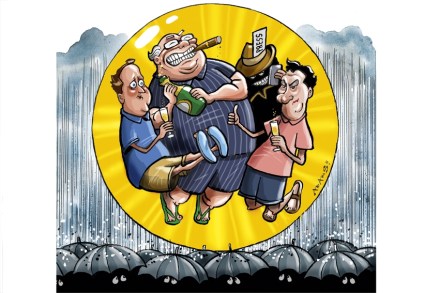
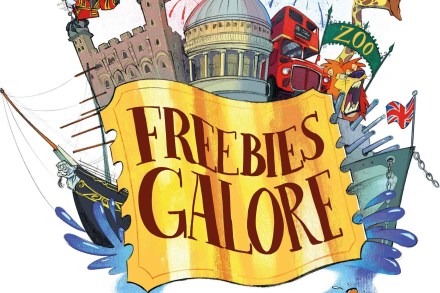
Has Britain become a freeloader’s paradise, asks the Spectator’s economics editor Michael Simmons in our cover piece this week. Michael analyses ‘the benefits of benefits’, at a time when Britain’s welfare bill is burgeoning and most households are struggling with cost of living. For example, while a family of four can expect to pay £111 to visit the Tower of London, that is just £4 total on Universal Credit (UC), and for London Zoo it is £108 compared to £26. Michael is not arguing against the idea of helping those in need, but pointing out that – as the benefits bill continues to increase – this is another case of governments prioritising ‘welfare over work’ and ultimately squeezing the working poor.
Is Britain losing its sense of fairness?

How can the Tories turn it around? Live

From our UK edition

40 min listen

Recorded live in Manchester, during the Conservative Party conference, Michael Gove sits down with Tim Shipman, Madeline Grant and Tim Montgomerie to discuss how the Tories can turn their fortunes around. Do the Tories need to show contrition for their record in government? Has the party basically been split ever since the Coalition years? And does Nigel Farage need to set a deadline for Tory to Reform defectors? Plus – from Canada to Italy – which countries do British Conservatives need to look towards for inspiration? Produced by Patrick Gibbons.

Who is Barack Obama to lecture anyone on foreign policy?

From our UK edition

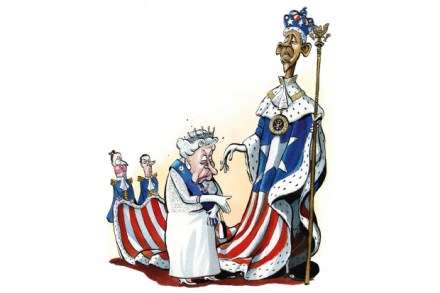
[audioplayer src="http://feeds.soundcloud.com/stream/260046943-the-spectator-podcast-obamas-eu-intervention-the-pms.mp3" title="Janet Daley and Freddy Gray discuss Obama's overreach" startat=27] Listen [/audioplayer]Nobody could describe Donald Trump as lacking in self-confidence, but the billionaire egomaniac is emotional jelly compared with King Barack. Even before he won the Nobel peace prize, Obama was telling America that his elevation to the presidency would be remembered as ‘the moment when the rise of the oceans began to slow’. He doesn’t have Mr Trump’s gold-plated helicopter, private jet, penthouse and yacht. But when it comes to self-reverence and sheer hauteur there is no one to beat him.

Obama’s overreach

From our UK edition

[audioplayer src="http://feeds.soundcloud.com/stream/260046943-the-spectator-podcast-obamas-eu-intervention-the-pms.mp3" title="Janet Daley and Freddy Gray discuss Obama's overreach" startat=27] Listen [/audioplayer]Nobody could describe Donald Trump as lacking in self-confidence, but the billionaire egomaniac is emotional jelly compared with King Barack. Even before he won the Nobel peace prize, Obama was telling America that his elevation to the presidency would be remembered as ‘the moment when the rise of the oceans began to slow’. He doesn’t have Mr Trump’s gold-plated helicopter, private jet, penthouse and yacht. But when it comes to self-reverence and sheer hauteur there is no one to beat him.

Lashing out in all directions

From our UK edition

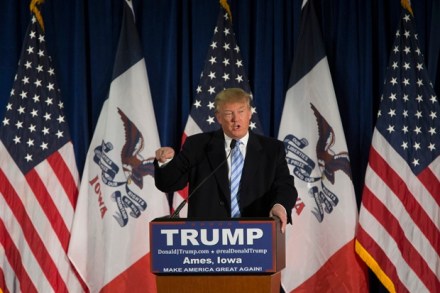
   Washington People think a reckoning is needed. Big business and big banks need taking down a peg or two The best explanation for the Donald Trump phenomenon was given to me by a woman I met at one of his recent rallies. She’d spent the best part of three decades backing conventional Republican candidates. But, she said, ‘not again — not ever again’. A good politician, she said, does enough unpopular things to make a difference to the nation — but not so many that they couldn’t be re-elected. The mark of a good politician is ‘which unpopular causes they choose’. She had had enough of Republican politicians explaining to her that putting a time-limit on abortion was ‘too unpopular’.

Capitalism’s true enemies

From our UK edition

[audioplayer src="http://rss.acast.com/viewfrom22/thecleaneatingcult/media.mp3" title="Fraser Nelson and Freddy Gray discuss the future of capitalism" startat=1326] Listen [/audioplayer]Friends of capitalism feared that the events since 2007 — the financial collapses, bailouts, deficits and austerity — would produce a massive swing to the left, but it hasn’t happened. Voters have consistently chosen sensible, middle-of-the-road parties that undertook to steady the ship rather than sail in completely different directions. In reacting to the biggest crisis to engulf the free enterprise system for decades we’ve learnt that the spirit of the anti-capitalists is willing but their flesh is weak — and also that they’re simply aren’t enough of them.

Which way is right: Tories should seek truth, not comfort

From our UK edition

The below is a response to a piece by Spectator columnist Matthew Parris ‘If you look for truth,’ counselled C.S. Lewis, ‘you may find comfort in the end.’ If, however, you look for comfort ‘you will not get either comfort or truth’. A patriotic politician should reflect on Lewis’s wisdom. In good times almost anyone can succeed in politics but in tough times voters expect more. Voters don’t look to elect politicians, but statesmen, and they can usually smell the difference between the two. Statesmen don’t begin every day wondering how they can win power; they begin by thinking about how they can serve their country.

The bomb in the living room

From our UK edition

During the last parliament William Hague likened the issue of Europe to an unexploded bomb at the heart of the Conservative party — best leave it alone, or it might well detonate. But it still dominates British foreign policy. However far David Cameron has travelled in search of a different world — paying tribute to Nelson Mandela in South Africa or inspecting melting glaciers in Norway — he would always return to find this huge relic from a previous war sat in the middle of the Tory living room. Beneath the everyday hubbub of Westminster life that persistent ticking noise comes from this enduring issue of British politics. The mass of the Conservative party understands this, and wants the bomb defused.

Right to reply: Aid is one of the government’s greatest endeavours

From our UK edition

Peter Kellner recently explained that the BBC licence fee becomes less popular if you describe it as an annual cost rather than as a daily cost. When people are told it costs £145.50 a year 27 per cent more people disapprove than approve. When they are told that’s only the equivalent of 40p a day there's a striking turnaround: 8 per cent more people approve than disapprove. You see a similar thing with Britain’s development budget. When the aid budget is expressed in terms of billions of pounds, people object and they object strongly. When it’s presented in more human-sized ways it is much more popular.

Afraid of being right

From our UK edition

The coalition risks withering because Cameron won’t listen to the wisdom of ordinary Conservatives It’s the Mary Poppins principle of successful government: a spoonful of sugar helps the medicine go down. A government does the necessary things to keep the nation healthy while dispensing regular sweeteners to sustain the patient’s consent for the treatment. Across the country the vast majority of Conservatives are agreed about the tough remedies necessary to restore Britain’s sick economy back to health. They’re also united on the treats that will sugar the pill. The problem is the coalition government.

Right-wingers have a bad reputation, but we do more for the poor than anyone else

From our UK edition

I am a right-winger. There, I’ve said it. I’m out of the closet and proud about it. And what have I communicated to you in this act of confession? Do you picture me in a wide, pin-striped suit? Do you fear that I wouldn’t stop talking about the evils of the European Union if you ever made the mistake of inviting me to dinner? Do you imagine me as someone who doesn’t much like paying taxes unless they go to the purchase of tanks, nuclear weapons and battleships? The right’s traditional way of selling themselves to doubters is to rely on the, well, rightness of their arguments and the Tory right has, to be fair, got a very good record on the big issues of the last ten years.

The next general election will be won and lost on the internet

From our UK edition

Most elections produce a defining campaign event. In 1979 it was Margaret Thatcher’s enlistment of Saatchi & Saatchi and the ‘Labour Isn’t Working’ posters. In 1987 it was the party political broadcast that became known as ‘Kinnock The Movie’. The year 1992 is remembered for the Tories’ devastatingly negative tax bombshell broadcasts. The next campaign is likely to be remembered as Britain’s first internet election. It will certainly be the first election when a large proportion of stories is broken by bloggers. It could be the first election when the best political ads are made on the home computers of political geeks rather than in the glassy offices of expensive advertising agencies.