Tibor Fischer

This is probably not the end for Viktor Orbán

From our UK edition

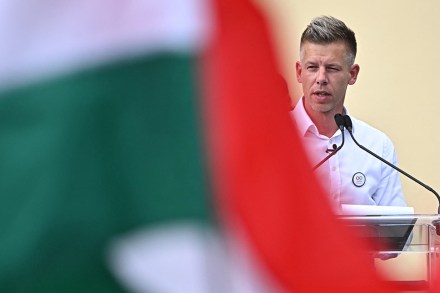
On election night in Budapest yesterday, I was soundly crushed in an underground carriage, crammed in with Tisza supporters raucously celebrating their victory and the downfall of Prime Minister Viktor Orbán. It was as if they had stormed the Bastille, rather than scribbled an ‘x’ on a form. I’ve been in Budapest for every election since the first post-Communist vote in 1990. I’ve never seen elation like this here, or indeed in any other election anywhere else. Most of the Tisza fans out partying were clearly first-time voters or in their mid-twenties, so for them, Orbán has always been part of the firmament. They undoubtedly have high hopes for the new prime minister Péter Magyar.

Ignorance, madness or folly – what exactly constitutes stupidity?

From our UK edition

Best remembered now in the English-speaking world as a lyricist, Friedrich Schiller is often quoted for his line: ‘Against stupidity the gods themselves struggle in vain.’ I was waiting for that observation in A Short History of Stupidity. It didn’t appear, but Stuart Jeffries assembles an impressive team of thinkers who have come to the same conclusion. You can’t win: imbecility will always ace you. The great crime for Socrates was ignorance – something often mistaken for stupidity There is of course the question of what exactly constitutes stupidity. It’s a hard thing to pin down and the definition strays into many areas. Jeffries offers a learned, picturesque ramble through world civilisation in an attempt to come up with some answers.

Vampires, werewolves and Sami sorcerers

From our UK edition

I have to be honest: I’ve never been much concerned with what happened in the Grand Duchy of Lithuania in 1387. I suspect that may even be true for many Lithuanians. In Silence of the Gods, Francis Young pinpoints this year – of the conversion of the duchy to Christianity – as the official triumph of Christianity in Europe over paganism and idolatry. But he then goes on to examine the debris – and the survivors of paganism and their traditions in the northern regions of Europe. The first difficulty is defining and identifying paganism. The book is published by Cambridge University Press, so there is an unmistakably academic, seminar-ready, conference-hardened edge to the text.

The horror of Hungary in the second world war

From our UK edition

I suspect Adam LeBor and his publishers must have struggled to come up with the title The Last Days of Budapest: Spies, Nazis, Rescuers and Resistance, 1940-1945. The book certainly does what it says on the cover, but its pages contain other Magyar-themed subjects. We are offered a wide-ranging reflection on Hungary in the first half of the 20th century, from the harsh measures of the 1920 Trianon treaty to the devastating arrival of the Soviet army in Budapest in 1944. LeBor switches between an Olympian view of European geopolitics, trawling diplomatic archives and political memoirs and focusing on individuals – Hungarian aristocrats, Zionists and nightclub singers – to show how history felt on the ground. He is particularly concerned with the fate of Hungarian Jewry.

Does bitcoin fit the definition of good money?

From our UK edition

Three philosophers walk into a crypto-currency. Resistance Money: A Philosophical Case for Bitcoin, I’d argue, is a slightly inaccurate title. Messrs Bailey, Rettler and Warmke have composed a book that is a meticulous and unphilosophically lucid examination of the origins and properties of bitcoin. No Hegel, no Husserl, no fuss. ‘We don’t prophesy,’ they state. ‘We don’t preach.’ They plead a Socratic humility. ‘We’d forgive you for thinking that three philosophers aren’t up to the task.’ They describe themselves as ‘epistemic trespassers’ in matters of economics and cryptography. Access to bitcoin has changed from a muddy country path to a six-lane highway The editorial sessions for Resistance Money must have been hell.

The Orban acolyte who became his fiercest critic

From our UK edition

All sorts of people are grateful to Peter Magyar for bounding into the arena of Hungarian public life. Journalists, chiefly. Many a grizzled, lugubrious Hungarian hack had tears of gratitude welling as Magyar demolished the tedium and predictability of Hungarian party politics: Viktor Orban trampling a feeble collection of bunglers and chisellers, known as the opposition, again and again. Of course, the foreign correspondents were even more elated. Vilifying Orban? Step this way for your eulogy and hosannas, you smooth-talking cosmopolitan. Magyar is certainly deserving of attention; he’s fought a remarkable one-man blitzkrieg.

What will we do when all our jobs are done for us?

From our UK edition

Laughs are in short supply in the academic world unless that world is serving as the victim of satire. So full marks to the Swedish philosopher Nick Bostrom for loading Deep Utopia – his reflections on life in a ‘solved world’, perfected by technology and science – with self-mockery and slapstick. Bostrom isn’t the first to fret about the travails of extreme leisure. John Maynard Keynes feared that economic abundance would produce more disgusting aristo-like behaviour. It’s nice to see how mighty minds can be so wrong. Bostrom cites John Stuart Mill being seriously depressed by the prospect, as humanity solved its problems, of there not being enough music to keep everyone happy all day.

Have you ever heard of the St. Brice’s Day Massacre?

The St. Brice’s Day Massacre? I must admit I hadn’t heard of this “most just extermination” of Danes in Oxford at the instigation of King Aethelred the Unready in 1002, perhaps because the teaching of history in Britain tends to kick off in 1066. You certainly don’t think of Oxford as a place that pioneered techniques of ethnic cleansing. Crypt is a collection of seven essays that unearth details about how certain people lived and died in the past. If you didn’t already know Alice Roberts’s background as an anatomist and biological anthropologist, you’d have a good chance of deducing it from this book.

Roberts

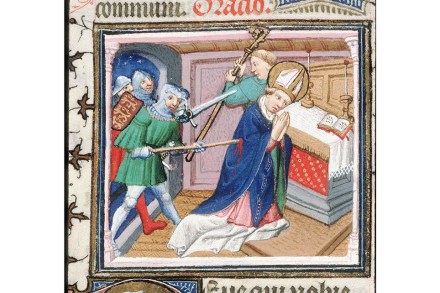
What became of Thomas Becket’s bones?

From our UK edition

The St Brice’s Day Massacre? I must admit I hadn’t heard of this ‘most just extermination’ of Danes in Oxford at the instigation of King Aethelred the Unready in 1002, perhaps because the teaching of history in this country tends to kick off in 1066. You certainly don’t think of Oxford as a place that pioneered techniques of ethnic cleansing. Crypt is a collection of seven essays that unearth details about how certain people lived and died in the past. If you didn’t already know Alice Roberts’s background as an anatomist and biological anthropologist, you’d have a good chance of deducing it from this book.

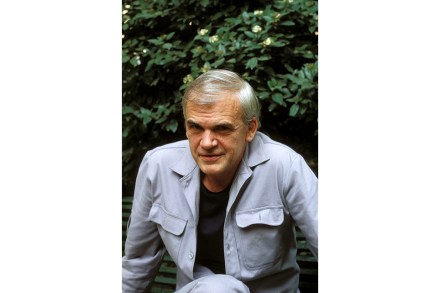
Milan Kundera feels the unbearable weight of disappointment

From our UK edition

If you’re looking for a towering intellect to dispense guidance and illumination on current events, particularly one from Central Europe, the hearth of gravitas, piano sonatas, polyglotism, the reading of Hegel etc, Milan Kundera, in A Kidnapped West, will be a bit of a disappointment. This isn’t Kundera’s fault. The volume contains a short speech from 1967 and an essay from 1983. It’s a pleasure to see a publisher giving oxygen to learned discourse, and while both texts are as urbane and erudite as you would expect, we have moved on a great deal. A Kidnapped West needs to be filed under intellectual history. Not that everything has changed, how-ever.

Accusations of racism have lost all meaning

From our UK edition

The War on the West is Douglas Murray’s latest blast against loony left wokery, chiefly in the areas of race and ‘social justice’. ‘This is not like earlier wars,’ he writes. ‘It is a cultural war, and it is being waged remorselessly against all the roots of the western tradition and against everything good that the western tradition has produced.’ The meticulous, measured way that Murray presents his arguments and evidence suggests a man who knows he’s in for a lot of flak. For instance, he has the audacity to suggest that the death of George Floyd, however brutal and inept the policing, doesn’t actually bear any signs of racism.

The politics of war crimes

From our UK edition

42 min listen

In this week’s episode: Is Putin guilty of war crimes?For this week’s cover piece, The Spectator’s Editor Fraser Nelson looks at the risks and rewards of labelling Vladimir Putin and Russian soldiers war criminals. He joins the podcast, followed by Michael Bryant, the author of A World History of War Crimes, who writes in the Spectator this week about what the limits put on acts of war in the past can teach us about atrocities committed today. (00:52)Also this week: Is Europe facing a political stand-off between progressives and populists? This week Hungarian Prime Minister Viktor Orban was elected for a fourth term in office with a large majority. While in France, Emmanuel Macron faces a much harder fight from Marine Le Pen than many expected.

Like it or not, cryptocurrency is here to stay

From our UK edition

There was a time when you could read a book to keep up to date about a subject. Well, that’s over. If a week is a long time in politics, in crypto it’s like a geological period. By the time a book on crypto hits the shelves it needs to be in the ancient history section. The Cryptopians is an attempt to sum up ‘the first big cryptocurrency craze’ by Laura Shin, a financial journalist who writes for Forbes and who has a successful crypto podcast. Its scope is the first decade of crypto, from the creation of Bitcoin to the current frenzy of DeFi (Decentralised Finance) and NFTs.

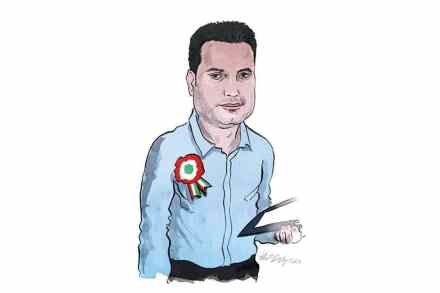
Out of nowhere: Viktor Orbán’s new challenger

From our UK edition

Hungarian politics has a lot to offer: sex tapes, offshore bank accounts, police-dodging MEPs hanging off drainpipes, supposedly left-wing parties cheerfully backing anti-Semitic parliamentary candidates. Nevertheless, most observers would admit that there has been stagnation in the past few years. Hungary’s politics have become a stale exchange of insults between familiar faces. Thank goodness, then, for Péter Márki-Zay, who has opened a window and let in some fresh air. He has been chosen by the opposition to the government as their candidate for prime minister in next year’s general election. And that means practically all the opposition parties in the Hungarian parliament working together.

Louis-Ferdinand Céline was lucky to escape retribution in 1945

From our UK edition

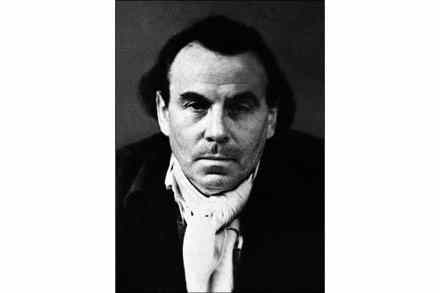
They rather like bad boys, the French. Louis-Ferdinand Céline (1894-1961) is one, in a tradition that stretches from François Villon to the dyspeptic Michel Houellebecq. But provocation doesn’t always get you where you want to be, as the careers of Richard Millet and Marc-Édouard Nabe demonstrate. Journey to the End of the Night, Céline’s first novel, was a huge success when it was published in 1932 and made him a darling of the left, with applause from Trotsky and Jean-Paul Sartre. That didn’t last long. His virulently anti-Semitic pamphlets (so extreme that André Gide thought he was joking) and his arguments for accommodating Hitler resulted in him going on the run at the end of the second world war.

Tortured youths: how childhood misery often makes for genius

From our UK edition

Greatness. Genius. Can you bottle it? Is there a formula? Inspired by his Radio 4 series Great Lives, Matthew Parris delves into the childhood background of some big names to see whether there are common denominators, and rather gives the game away in the title, Fracture: Stories of How Great Lives Take Root in Trauma. He zig-zags between the territories of greatness and genius in his choice of mini-biographies, and slightly blurs the two concepts. Of course there’s a bit of difference between greatness and genius. I wouldn’t dispute that Edith Piaf was a great performer or that Coco Chanel was a great designer — but genius? That can only apply to, say, Marie Curie with her two Nobel prizes. The roll-call of celebs here invites some debate as to their merits.

There’s no single trick to making money — just resist a noble calling

From our UK edition

‘Beauty is pain,’ the model Gigi Hadid asserts. She’s one of the successful, rich people quizzed by William Leith in The Trick: Why Some People Can Make Money and Other People Can’t. We all know a few of the tricks of getting rich. You start by avoiding noble, important professions that benefit everyone but pay poorly: primary school teacher, nurse, book reviewer. Those of my friends and family who’ve made money (although none has made it to rich) went into banking and business. Those who haven’t went into teaching, academic research and museum curating. That much is obvious. Has Leith unearthed a magic formula? His book is part Hunter S. Thompson, part Montaigne: a blend of gonzo journalism and rambling reflection interspersed with learned references.

One insider’s view of the thorny subject of immigration

From our UK edition

Probably this happens to every generation: the moment when you can’t believe what’s going on; when events seem too preposterous to be true. I never thought I’d witness government and parliament in this country tearing themselves to tatters and becoming so irrelevant that Westminster might as well be located on the dark side of Jupiter. Perhaps the most incendiary topic lumbering about in the disintegration of our governance is immigration. No other subject manages to beget such nonsense and fury. The claims of anti-migrant, anti-immigrant sentiment are rife, despite the fact that even on the far right it is almost impossible to find anyone who is completely against the notion of immigration; it’s all about how it should be conducted.

They fill you with the faults they had

From our UK edition

You attempt to write a review with a stiff dose of objectivity, but it’s hard not to start with a degree of fondness for an anthology put together by a magician who has performed in North Korea. Dale Salwak also has a sideline as a professor of literature at Citrus College in Los Angeles, and Writers and their Mothers is a collection of 22 pieces he has edited, by novelists, poets and literary critics, some biographical and analytical, some autobiographical. In his introduction, Salwak makes reference to an assertion by Georges Simenon that writers are ‘united in their hatred of their mothers’, an assertion, I’d suggest, that tells you much more about the whore-mongering Simenon than about writers in general.

The problem with Hungary’s toothless opposition

From our UK edition

The name of the Hungarian Prime Minister, Viktor Orbán, is on the lips of most left-wing, liberal politicians and intellectuals in Europe. They have adorable tantrums, denouncing him as ‘authoritarian’, ‘autocratic’ or, even uglier, ‘dictatorial’, as they congratulate themselves on their righteousness and courage in speaking out. A few months ago I visited Budapest. On the way in from the airport I saw several billboards depicting Orbán and his rich chum Lörinc Mészáros, the mayor of Felcsút, Orbán’s home town. Beneath, in large letters, were two words: ‘They Steal’. It seems to me a rather poor autocracy where that sort of thing goes on.