The Spectator

The confusion in government goes beyond face masks

From our UK edition

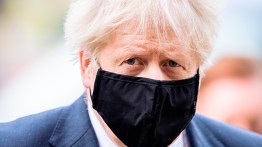
When Michael Gove delivered the Ditchley Annual Lecture last month he spoke about why citizens feel that the political system has failed them. ‘The compact leaders offered — trust that we are the best, trust that we have your best interests at heart, and trust that we will deliver — was broken.’ It was a powerful message. Voters have a right to expect honesty and competence from their leaders, not just decisiveness. So Mr Gove will have thought carefully before saying on television last weekend that face masks should not be mandatory, and people should instead be left to use their own judgment.

Portrait of the week: Face masks in, Huawei out and Amazon’s TikTok trouble

From our UK edition

Home New regulations would compel people to wear a face covering in shops in England from 24 July on pain of a £100 fine. Similar regulations had been imposed in Scotland. A report requested by Sir Patrick Vallance, the UK’s chief scientific adviser, said that, without lockdowns, treatments or vaccines, in a reasonable worst-case scenario, a second wave of infection could see coronavirus deaths in hospital alone range between 24,500 and 251,000, peaking in January and February. At the beginning of the week, Sunday 12 July, total deaths from Covid-19 stood at 44,798, with a seven-day average of 85 deaths a day; but in the following two days the number of deaths was 21 and 11.

The bill for a Banksy: how much does graffiti cost railways?

From our UK edition

Take cover The government has said it will make wearing masks compulsory in shops. Mandatory masks rather run against the general trend in legislation in many countries, with face coverings increasingly banned. In Britain last year a man was fined £90 for covering his face while walking past a police facial recognition camera. Hong Kong banned masks in October to try to stifle student protests. France, Belgium, Denmark and Austria have all passed laws against face coverings in public over the past decade. In Canada since 2013, rioters who cover their faces have risked ten years in jail. In the US, many states have enacted laws on facial coverings dating from 1845 to deal with bandits.

Covid-19 update: most of the UK is almost corona free

From our UK edition

Britain is now doing more Covid-19 testing than anywhere else in Europe, offering a detailed regional picture that shows how rapidly the virus has receded in most of the country. The latest figures were released earlier this afternoon, for 29 June to 5 July, using the German definition: how many weekly positive infections per 100,000 people? The German danger zone is 50. Of 150 upper-tier local authorities in England, only one is over that limit: locked-down Leicester. And even now it’s unclear if this is due to more testing or more virus. Some 73 per cent of local authorities now have a score of 5 weekly infections or less per 100,000 people.

Letters: Why Hugh Dowding deserves a statue

From our UK edition

Police relations Sir: As a former Met Police officer, with a similar background to Kevin Hurley, I was surprised how much I disagreed with his article (‘Cop out’, 27 June). Central to this was the lack of emphasis he placed on the attitude of police officers. The emphasis on violent gang crime undoubtedly leads to a distortion in how young black men are perceived by the police, and this in turn can quickly lead to confrontation on the street. The attitude of young police officers is key to avoiding an escalating reaction between them and members of the public. Senior officers need to develop more holistic ways of addressing crime, and acknowledge that the police cannot arrest their way to safer communities. Communities need to be integral to policing solutions.

At last, we have a foreign secretary who’s not shy to make a stand

From our UK edition

It is hardly a profound observation to say that the government has not functioned as well as it might have done for the past few months. Yet there is one important exception to the general picture of confused and counterproductive activity. Britain, for the first time in years, is developing a logical and — to use the words of Robin Cook — an ethical foreign policy. In the Commons this week, the Foreign Secretary, Dominic Raab, listed the first 49 individuals to fall foul of Britain’s ‘Magnitsky law’ — a provision to freeze the assets of, and impose travel bans on, foreign citizens who have been implicated in human rights abuses.

2462: Over and Out? solution

From our UK edition

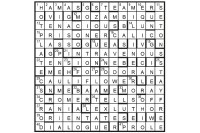
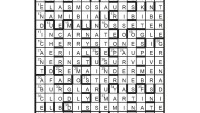
The seventeen entries clued by definition only required removal of the abbreviation BR ( = Britain), in keeping with the highlighted ‘BREXIT POLICY’. First prize Elizabeth Hogg, London SW13Runners-up Peter Moody, Portchester, Hampshire; J.

What are online shoppers most likely to snap up?

From our UK edition

Price of protest Greenpeace was fined £80,000 for defying a court order and occupying an oil rig in the North Sea. What else have protestors been fined for in Britain in recent times? £750 for spray-painting a war memorial in Whitehall in a climate change protest. £430 for spraying slogans on a pavement against Barclays, accusing it of investing in fossil fuels. £400 for eating a raw squirrel at a vegan food market in Soho. £150 for chaining themselves to the gates of a nuclear submarine base. Travel money The tourism industry is opening up again. Who spends the most: Britons holidaying abroad or overseas tourists coming here? — In the 12 months to August 2019 there were 71.6 million trips abroad by UK nationals. In all, they spent £46.

The danger of the Facebook boycotts

From our UK edition

The printed press is not a natural ally of Facebook. Silicon Valley publishers have hoovered up so much advertising that they are seen by newspapers as a mortal enemy. Facebook chief Mark Zuckerberg has ended up with more power over people’s attention than any press mogul. A slight change in his algorithms can direct millions towards any publication or argument. Facebook might not want to be seen as a publisher (especially one that did so much to enable Donald Trump, for instance) but it has ended up becoming the biggest player in the information wars. So when certain advertisers started to pull out of the social media platform — citing the ‘divisive’ content it hosts — newspapers were thrilled. The reaction is understandable, but misguided.

Portrait of the week: Boris does press-ups, pubs reopen and Leicester locks down

From our UK edition

Home Boris Johnson, the Prime Minister, said he was ‘as fit as a butcher’s dog’ and did press-ups to prove it, as he announced infrastructure initiatives to counter the economic crisis brought on by the coronavirus outbreak. With a slogan ‘Build, build, build’, he made a speech in Dudley promising £1.5 billion for hospital improvements and planning changes to make loft extensions easier. Pubs were allowed to open from 4 July, after a fashion, with table service, as were restaurants. Churches could hold services without singing and newlyweds were told to wash their hands after exchanging rings.

Letters: Police must focus on deterring crime, not responding to it

From our UK edition

Deterring crime Sir: Rod Liddle is right to highlight the politicisation of the police as a source of their inadequacies, but I think he misses the crucial point (‘Defund the police’, 27 June). We simply do not have bobbies on the beat to even feel sympathy for, and this means that constructive relationships between a recognisable police officer and their community are a rarity. As Kevin Hurley describes, many black youths in our cities have nothing but hatred towards police officers, and this cannot be a surprise when the only interactions they have with them are being forced to empty their pockets after being suspected of criminal activity.

Portrait of the week: Lockdown eases, debt rises and three killed in Reading

From our UK edition

Home Pubs in England would be allowed to reopen for table service from 4 July, Boris Johnson, the Prime Minister, told the Commons, his words being met by an exclamation from one MP of ‘Hallelujah’. But drinkers would be expected to supply names and addresses before being served. Restaurants, museums, galleries, cinemas, hotels and hairdressers could also reopen, but not bowling alleys. Churches could reopen for services, including weddings, with a limit of 30 people, provided no one sang. The ‘two-metre rule’ was reduced by way of advice to one metre, to be combined with mitigating measures, such as facing in different directions. The government discontinued its daily televised briefings.

Britain is reopening. Now it needs rebuilding

From our UK edition

The Prime Minister’s announcement that pubs, restaurants and many other facilities will be able to re-open on 4 July amounts to a significant and welcome easing of lockdown. As this magazine hoped, the Prime Minister has taken back control from the scientific advisers — who have been unable to resolve their lively disagreements — and put his faith in the British public. This includes moving towards a voluntary system, rather than asking police to enforce edicts. A recent study found only three countries have been more reluctant to leave lockdown than Britain: Nicaragua, Algeria and iran. It's a sad state of affairs - but reflects the failures of recent months.

Which former prime minister earns the most for corporate speeches?

From our UK edition

Voyage into history How did the Labour government respond to the arrival of the Empire Windrush on 22 June 1948? While the ship was at sea, Prime Minister Clement Attlee tried but failed to have it diverted to East Africa so that its passengers could work on the groundnut scheme. He later wrote to concerned MPs that it was ‘a great mistake to regard these people as undesirable or unemployables. The majority of them are honest workers, who can make a genuine contribution to our labour difficulties at the present time.

Letters: Churches have risen to the challenge of lockdown

From our UK edition

Back to schools Sir: I share Lucy Kellaway’s enthusiasm for seeing school-life return and inequality gaps closed (‘A class apart’, 20 June). I was also glad that she debunked the myth that teachers have been on holiday during lockdown. It doesn’t feel like a holiday to me, as I sit contemplating a set of essays, the second set of predicted grades of the year and my annual Ucas references, not to mention daily work postings, live sessions on Microsoft Teams, Zoom staff meetings and a long list of emails. Where we depart is at Lucy’s call for a return to school at all costs, rather than the ‘blended learning’ approach she decries.