The Spectator

Freedom to protest is not freedom to cause chaos

From our UK edition

The concept of normality has been so disrupted over the past 18 months that the Extinction Rebellion protests — usually designed to stop people getting to work — are unlikely to have as much of an impact as they did. Even so, businesses which are trying to recover from the pandemic find themselves once again cut off from their customers. Bus routes are disrupted and commuters are impeded from getting to work — and for far longer periods of time than with traditional protests. The group appears to have acquired a new confidence thanks to a Supreme Court ruling in June which quashed the convictions of four protestors who obstructed the entrance to an arms fair at the Excel Centre in east London in 2017.

Letters: the West has failed Afghanistan

From our UK edition

The blame game Sir: Like many who served in Afghanistan, I have watched with growing dismay the recent events unfolding in Kabul (‘Mission unaccomplished’, 21 August). I have also listened with growing frustration to the grand speeches of politicians, pointing fingers while distancing themselves from this tragic debacle. David Galula, the French military scholar well known for his counter-insurgency thinking, described the role of the military in such operations as providing a secure space for the legitimate government to work safely with the people. He accepted that the military could also be given other suitable and appropriate tasks but was very clear that they must never be in charge. These precepts were at the heart of all our planning and operations.

Portrait of the week: the chaotic evacuation from Kabul

From our UK edition

Home At the virtual G7 emergency summit that he was chairing, Boris Johnson, the Prime Minister, urged President Joe Biden of the United States to prolong the evacuation from Kabul of Nato forces, nationals and dependants beyond 31 August. But the Taliban said no. Britain took 8,600 people out of Afghanistan in ten days, but Ben Wallace, the Defence Secretary, said: ‘We won’t get them all out.’ Tony Blair, the former prime minister who had sent British forces to join in the invasion of Afghanistan in 2001, said that America’s decision to withdraw had been made ‘in obedience to an imbecilic political slogan about ending “the forever wars”’.

Is Brexit really to blame for the shortage of lorry drivers?

From our UK edition

Birth of the Paralympics While Athens can claim to be the home city of the Olympic Games, the Paralympics can be traced to Stoke Mandeville, Buckinghamshire, where, on the day of the opening ceremony of the 1948 London Olympics, neuroscientist Sir Ludwig Guttmann — a German-Jewish émigré — held an archery competition for 16 of his spinal patients. The following year it was expanded into the Stoke Mandeville Games, involving several events for wheelchair-bound patients. In 1952, competitors from the Netherlands were invited to take part too. The first Paralympics coinciding with the Olympic Games were held in Rome in 1960.

It’s time to end furlough – and let the British economy recover

From our UK edition

At the start of this year, Britain looked as if it would be the first major country to vaccinate its way out of lockdown. Kate Bingham and her team had secured Britain a supply of effective jabs delivered at the fastest rate in Europe. This opportunity was then squandered as the government was swayed by advice from Sage advisers, who kept underestimating the vaccines’ effectiveness. Sage produced no fewer than nine scenarios for Covid hospital cases by mid-August, all of which have proved vast overestimates. The government’s reliance on such advice has come at a heavy cost. In America, where most states lifted lockdown restrictions months before Britain, the economy has recovered to pre-pandemic levels.

2517: Final line-up – solution

From our UK edition

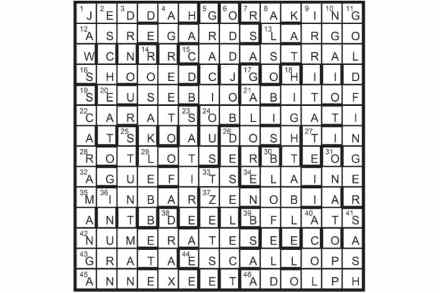
The unclued lights are the eleven England footballers who LINED UP at the kick-off of the Euro FINAL on 11 July. The shaded squares from top to bottom reveal the manager, GARETH SOUTHGATE.

Portrait of the week: the Taliban take Afghanistan

From our UK edition

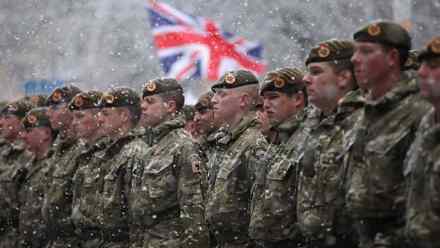
Home Parliament was recalled after the rapid fall of Afghanistan to the Taliban. Dominic Raab, the Foreign Secretary, returned from a foreign holiday on Sunday. Boris Johnson, the Prime Minister, declared as Kabul fell: ‘We don’t want anybody bilaterally recognising the Taliban.’ But Mr Raab said that Britain recognised states, not governments. Britain sent an extra 300 soldiers to help extract British citizens and people such as interpreters now in danger. Ben Wallace, the Defence Secretary, wept when he said on the radio that some people for whom Britain had responsibility ‘won’t get back’ from Afghanistan.

Where did the Taliban come from?

From our UK edition

Student takeover Where did the Taliban come from? — The word ‘Taliban’ means simply ‘students’ in Pashtun. They were originally a group of 50 students from the Sang-i-Hisar madrassa in Kandahar, led by Mohammed Omar, and committed to the overthrow of the warlords who were running Afghanistan in the wake of the Soviet withdrawal in 1989. The movement emerged in 1994. By November of that year it was already in control of the city of Kandahar and two years later took control of the whole country. Hydrogen balloon The government published its ‘hydrogen strategy’, which it claimed could create 9,000 jobs by 2030 and eventually account for between 20% and 35% of UK energy consumption. How big is Britain’s hydrogen economy at present?

Who cut more coal: Thatcher or Wilson?

From our UK edition

Woolly thinking There were protests in Whitehall to save Geronimo, an alpaca due to be put down after testing positive for tuberculosis. How many alpacas are there in Britain? — The British Alpaca Society claims to have 1,500 members who between them own 45,000 alpacas. — The society’s annual show can attract as many as 600 animals for display. — The wool from the animal, a native of South America, was introduced to Britain in 1836 by Sir Titus Salt, the industrialist and founder of Saltaire, the model villagein West Yorkshire.

Letters: Why aren’t Italians fighting for their liberty?

From our UK edition

Wage concern Sir: Martin Vander Weyer’s call for higher wages to end the shortage of British HGV drivers (‘Your country needs you at the wheel of a lorry’, 7 August) should be extended to other hard-pressed economic areas which have lost cheap labour from the poorer EU countries. For far too long, farming, hospitality, construction, care homes and other vital services have failed to recruit and train local staff or pay a decent wage. Low wages at the bottom of the economy increase the cost of social welfare benefits, bring in less or no money from income tax and VAT and thus adversely affect the whole economy.

Portrait of the week: Cameron’s cash, A-grades abound and Tower Bridge won’t budge

From our UK edition

Home With less frightening domestic data on the coronavirus pandemic to ponder, subjects such as the rivalry between Boris Johnson, the Prime Minister, and Rishi Sunak, the Chancellor of the Exchequer, found time for discussion. The seven-day average of coronavirus cases detected by tests remained below 30,000. In the seven days up to the beginning of the week, 637 people had died with coronavirus, bringing the total of deaths (within 28 days of testing positive) to 130,281. (In the previous week deaths had numbered 524.) In a week, numbers remaining in hospital fell from 5,943 to 5,631. Three quarters of adults had received two doses of vaccine, but numbers crept up very slowly for first vaccinations, because of the low uptake by those under 35.

Working from home is a decision for businesses, not government

From our UK edition

After seizing so much power during the pandemic, Boris Johnson’s government is having trouble working out where its remit now ends. The division used to be fairly simple: the state provided public services but left people and companies free to organise their own affairs. Ministers now talk as if they are in charge of everything — including whether people should or should not work from the office. Lockdown would not have been possible without digital technology, which enabled so many to work from home. For many companies, remote working has opened up all sorts of new possibilities. But the drawbacks are obvious. Younger workers are denied the training that the workplace offers. They also miss out on opportunities for building up working relationships, skills and salaries.

2516: Such childish vocabulary – solution

From our UK edition

The unclued lights are the nouns from the opening sentence of The Tailor of Gloucester by Beatrix Potter. TAFFETA was extracted from (T)ISSUE, TULIP(A), (F)AILS, (F)REEST, EQUIP(E)S and NO(TA)TION. First prize Robert Stephens, Bearsted, Kent Runners-up R.

Which industries have the most workers still furloughed?

From our UK edition

Happy valet Police Scotland dropped what they said was a randomly generated codeword — ‘Bunter’ — for the security operation when Boris Johnson visited Scotland. While the name invited comparisons between the PM and Billy Bunter, the overweight public schoolboy in the Greyfriars stories, there is another Bunter in fiction. Mervyn Bunter was the immaculate and well-organised manservant to private detective Lord Peter Wimsey in Dorothy L. Sayers’ crime stories. This Bunter’s defining characteristics were knowledge, accuracy and loyalty — and he was always on hand to correct Wimsey before he committed any social faux pas.

Letters: The problem with the ‘alpha migrants’

From our UK edition

Here illegally Sir: Unfortunately, Charlotte Eagar misses the point (‘The alpha migrants’, 31 July). The Channel migrants may be ‘bright and brave’, and may repay what they gain from the benefit system. But they are here illegally, thus riding roughshod over the immigration system and those who are still waiting to have their asylum applications processed lawfully. This farce must not be allowed to continue as a taxpayer-funded taxi service for people-trafficking gangs.

Portrait of the week: Vouchers for vaccines, cases rise in China and a Christmas baby for Boris and Carrie

From our UK edition

Home After the number of people ‘pinged’ (alerted by an NHS Covid-19 app) neared 700,000, the app was adjusted so that it hunted for contacts of a person testing positive for Covid only from the two previous days, not five. When no more than 68 per cent of 18- to 29-year-olds in England had yet accepted vaccination, they were offered vouchers for Deliveroo to comply. Vaccination was to be offered to 1.4 million 16- and 17-year-olds. A letter from Rishi Sunak, the Chancellor of the Exchequer, urging the Prime Minister to allow fully vaccinated travellers from the United States and Europe to avoid quarantine was leaked to the Sunday Times.