The Spectator

It’s time for NHS GPs to stop hiding behind their telephones

From our UK edition

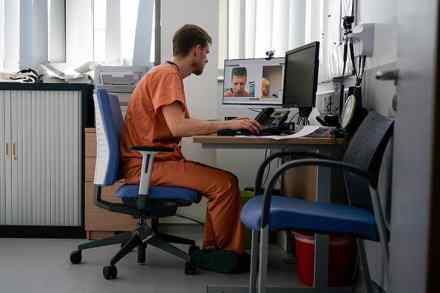
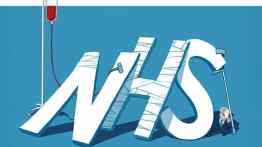
Nye Bevan famously said that he was only able to persuade family doctors to support the creation of the NHS because he ‘stuffed their mouths with gold’. But at least he obtained good service from them — including home visits. Until Tony Blair awarded GPs hefty pay rises while allowing them simultaneously to opt out of night-time and weekend work, they were responsible for their patients’ care 24 hours a day, seven days a week — with practices often pooling resources to provide continuous cover. But the role of GPs has become increasingly unclear: do patients have a right to be seen in person? It was revealed this week that locum GPs are being offered £100 an hour to conduct telephone appointments from their own homes.

Portrait of the week: Britain leaves Afghanistan, hurricane hits New Orleans and Gove goes clubbing

From our UK edition

Home Britain brought its last troops home from Afghanistan, having flown out more than 15,000 people since 14 August; but the operation failed to evacuate perhaps 1,000 eligible Afghans, some of whom had worked for the government, and 100 to 150 British nationals. Pen Farthing, who runs an animal charity in Afghanistan, returned in an aeroplane he had chartered with 94 dogs and 79 cats; ‘Meanwhile my interpreter’s family are likely to be killed,’ commented Tom Tugendhat, the chair of the Foreign Affairs Select Committee, who has served in Afghanistan. In the seven days up to the beginning of the week, 765 people had died with coronavirus, bringing the total of deaths (within 28 days of testing positive) to 132,376. (In the previous week deaths had numbered 697.

Pet project: how many dogs and cats are there in Britain?

From our UK edition

Escape velocity The evacuation of Afghanistan was likened to the fall of Saigon on 30 April 1975. What were the logistics of that operation? — Although most US troops had left Vietnam, 5,000 civilians remained. Some left during the month, but ambassador Graham Martin gave the order to evacuate everyone only on 29 April. — The only available airbase had been shelled and there were no sea or land routes, so the only way out was by helicopter. In 24 hours 7,000 people were evacuated, including 5,500 Vietnamese citizens. Helicopters took off from the US embassy compound every ten minutes. — It was a 50-minute ride to US warships waiting off the coast.

The Oxbridge Files. Which schools get the most pupils in?

From our UK edition

Oxford and Cambridge have released figures showing how many offers they gave to pupils from schools in the 2020 UCAS application cycle. We have combined the figures in this table. It shows how well state grammars and sixth-form colleges compete with independent schools. Over the years, both universities have roughly doubled the proportion of pupils from state schools: 67 per cent, up from 52 per cent in 2000. Of the 80 schools, 35 are independent, 22 grammar, 15 sixth-form colleges, seven comprehensives or academies, and one is a further education college. (Schools are ranked by offers received, then by offer-to-application ratio. If schools received fewer than three offers from one university, this number has been discounted due to UCAS’s disclosure control.

School portraits: a snapshot of four notable schools | September 2021

From our UK edition

Brampton manor academy This co-educational state school in Newham, east London, is setting the standard for the academies programme. With hundreds of high-achieving pupils, its selective sixth-form, which opened in 2012, has attracted attention for its stand-out Oxbridge achievements. This summer, 55 pupils secured Oxbridge places, beating Eton for the first time. The sixth-form receives around 3,000 applications for about 300 places per year, while some two out of three pupils are eligible for free school meals. One pupil puts its high achievement rates down to discipline, highlighting the rules around punctuality (there’s detention if you’re late) and a strict uniform code.

Out now: the September edition of The Spectator World

Twenty years ago, Americans watched as the world changed. Our September 2021 edition reflects on the two decades of defeat since September 11, 2001. Freddy Gray considers the Trumpian echoes in the Biden administration’s handling of the Afghanistan withdrawal. Daniel McCarthy explains why America would never have succeeded in democratizing Afghanistan, while Andrew Bacevich draws a comparison to Vietnam to demonstrate why ‘forever wars’ will always fail. Paul Wood sifts through the ashes of America’s moral authority in Iraq as Robert D. Kaplan shifts his gaze eastward to the geopolitical repercussions in Central Asia. Kelley Beaucar Vlahos looks at how the internal corruption of the US military made an expensive failure inevitable.

Kabul airport rocked by Isis bomb attacks

From our UK edition

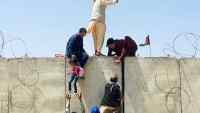
At least 60 people are feared dead from two explosions near Kabul Airport, in what appears to be a sophisticated bombing campaign and suicide attack carried out by Islamic State. Two explosions took place around Abbey Gate near Kabul airport – where US and UK forces have been stationed – with the second blast near or at the Baron Hotel. Twelve US servicemen were killed in the attack. Videos being shared online show piles of bodies on the streets of Kabul – it is likely that casualty figures will rise.  In the past week, thousands of Afghans have been gathering at the airport every day in a desperate attempt to flee the country.

Letters: the West has failed Afghanistan

From our UK edition

The blame game Sir: Like many who served in Afghanistan, I have watched with growing dismay the recent events unfolding in Kabul (‘Mission unaccomplished’, 21 August). I have also listened with growing frustration to the grand speeches of politicians, pointing fingers while distancing themselves from this tragic debacle. David Galula, the French military scholar well known for his counter-insurgency thinking, described the role of the military in such operations as providing a secure space for the legitimate government to work safely with the people. He accepted that the military could also be given other suitable and appropriate tasks but was very clear that they must never be in charge. These precepts were at the heart of all our planning and operations.

Portrait of the week: the chaotic evacuation from Kabul

From our UK edition

Home At the virtual G7 emergency summit that he was chairing, Boris Johnson, the Prime Minister, urged President Joe Biden of the United States to prolong the evacuation from Kabul of Nato forces, nationals and dependants beyond 31 August. But the Taliban said no. Britain took 8,600 people out of Afghanistan in ten days, but Ben Wallace, the Defence Secretary, said: ‘We won’t get them all out.’ Tony Blair, the former prime minister who had sent British forces to join in the invasion of Afghanistan in 2001, said that America’s decision to withdraw had been made ‘in obedience to an imbecilic political slogan about ending “the forever wars”’.

Is Brexit really to blame for the shortage of lorry drivers?

From our UK edition

Birth of the Paralympics While Athens can claim to be the home city of the Olympic Games, the Paralympics can be traced to Stoke Mandeville, Buckinghamshire, where, on the day of the opening ceremony of the 1948 London Olympics, neuroscientist Sir Ludwig Guttmann — a German-Jewish émigré — held an archery competition for 16 of his spinal patients. The following year it was expanded into the Stoke Mandeville Games, involving several events for wheelchair-bound patients. In 1952, competitors from the Netherlands were invited to take part too. The first Paralympics coinciding with the Olympic Games were held in Rome in 1960.

It’s time to end furlough – and let the British economy recover

From our UK edition

At the start of this year, Britain looked as if it would be the first major country to vaccinate its way out of lockdown. Kate Bingham and her team had secured Britain a supply of effective jabs delivered at the fastest rate in Europe. This opportunity was then squandered as the government was swayed by advice from Sage advisers, who kept underestimating the vaccines’ effectiveness. Sage produced no fewer than nine scenarios for Covid hospital cases by mid-August, all of which have proved vast overestimates. The government’s reliance on such advice has come at a heavy cost. In America, where most states lifted lockdown restrictions months before Britain, the economy has recovered to pre-pandemic levels.

2517: Final line-up – solution

From our UK edition

The unclued lights are the eleven England footballers who LINED UP at the kick-off of the Euro FINAL on 11 July. The shaded squares from top to bottom reveal the manager, GARETH SOUTHGATE.

Portrait of the week: the Taliban take Afghanistan

From our UK edition

Home Parliament was recalled after the rapid fall of Afghanistan to the Taliban. Dominic Raab, the Foreign Secretary, returned from a foreign holiday on Sunday. Boris Johnson, the Prime Minister, declared as Kabul fell: ‘We don’t want anybody bilaterally recognising the Taliban.’ But Mr Raab said that Britain recognised states, not governments. Britain sent an extra 300 soldiers to help extract British citizens and people such as interpreters now in danger. Ben Wallace, the Defence Secretary, wept when he said on the radio that some people for whom Britain had responsibility ‘won’t get back’ from Afghanistan.

Where did the Taliban come from?

From our UK edition

Student takeover Where did the Taliban come from? — The word ‘Taliban’ means simply ‘students’ in Pashtun. They were originally a group of 50 students from the Sang-i-Hisar madrassa in Kandahar, led by Mohammed Omar, and committed to the overthrow of the warlords who were running Afghanistan in the wake of the Soviet withdrawal in 1989. The movement emerged in 1994. By November of that year it was already in control of the city of Kandahar and two years later took control of the whole country. Hydrogen balloon The government published its ‘hydrogen strategy’, which it claimed could create 9,000 jobs by 2030 and eventually account for between 20% and 35% of UK energy consumption. How big is Britain’s hydrogen economy at present?