The Spectator

2025 Christmas quiz: the answers

From our UK edition

Events, dear boy 1. Bryan Adams 2. MI6 3. Beijing 4. Jellyfish 5. Vladimir Putin 6. To feed its lions and tigers 7. Afghanistan 8. In Lake Balaton, Hungary 9. Bats 10. Sir Keir Starmer, the Prime Minister Capital fun 1. Topeka 2. Cair Paravel 3. Albany, Georgia, has more than 66,000; Albany, California more than 19,000. 4. Borchester 5. Casablanca, Tangier, Fez, Marrakesh, Salé or Meknes 6. Lemuel Gulliver, in Lilliput 7. Kiel 8. The Emerald City 9. Castlebar 10. Strelsau Royal flush 1. Andrew Mountbatten-Windsor, who had briefly been called Mountbatten Windsor once he was no longer the Duke of York 2. Hinduism 3. The Duchess of Sussex 4. Prince Andrew (now Andrew Mountbatten-Windsor) 5. The King 6.

Poem at the Close of the Year

From our UK edition

Take a walk with me down to the stream. It’s a cold, clear day. Frost underfoot. Tonight there will be stars: approaching home, we’ll crane our necks to count them, while billions of years whoosh past and next-door’s cat creeps over the shed. For now, it’s the stream we’re seeing through: billions of drops absolved of their differences, woven into one, a rippling pathway between two fields. Kneel down with me, and take these cares we’ve nurtured all the year in hand: our meek and jumbled offerings, our unsaid sorries, our pains. Let the cold, clear water stun you into wonder as it carries them away. There is time to do this at the closing of the year on a cold, clear day.

Letters: Why I quit Your Party

From our UK edition

Party’s over Sir: My departure from Your Party, described as ‘disputed’ by Douglas Murray (‘Where was my invitation to Your Party?’, 6 December), was in truth rather mundane: I had naively assumed that a party born to challenge the narrowing horizons of British politics might permit more than one world view at a time. This proved to be a radical proposition. I had signed up to build a broad, pluralistic church; what I encountered instead was a dogmatic project. The boundaries of acceptable opinion narrowed by the week, policed with a zeal that would make a Victorian temperance society blush. To suggest that segments of the working class might hold views formed by family, faith or local tradition was treated not as an insight, but as a form of contamination.

The Year in Review

From our UK edition

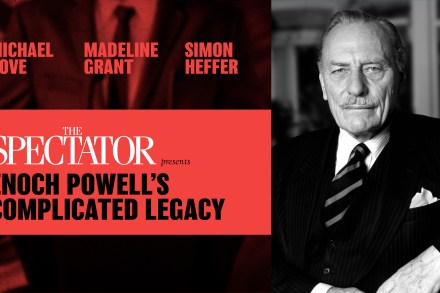
From scandals and cabinet chaos to Trumpian theatre and the ‘special’ relationship that some say is anything but, The Spectator presents The Year in Review – a look back at the funniest and most tragic political moments of 2025. The Spectator’s editor Michael Gove, deputy editor Freddy Gray, political editor Tim Shipman, deputy political editor James Heale, parliamentary sketch-writer Madeline Grant and special guests will all share their favourite moments from the past 12 months. This livestream is exclusive to Spectator subscribers.

2729: Spelled Out 

From our UK edition

The unclued lights are first names of authors known by their initials: W.H. Auden (31), A.S. Byatt (40,2), T.S. Eliot (7,10), C.S. Lewis (35,6A) and P.G. Wodehouse (34,4).

Portrait of the week: ‘Misleading’ Reeves, trial without jury and Great Yarmouth First

From our UK edition

Home What Rachel Reeves, the Chancellor of the Exchequer, told voters about the economy in a special press conference on 4 November was at odds with what the Office for Budget Responsibility had told her, Richard Hughes, its chairman, explained in a letter to the Commons Treasury Committee. Asked directly by Trevor Phillips on Sky if she had lied, Ms Reeves replied: ‘No, of course I didn’t.’ Sir Keir Starmer, the Prime Minister, said: ‘There’s no misleading there.’ Chris Mason, the BBC political editor, concluded: ‘On one specific element of what the Chancellor and the Treasury told us before the Budget, we were misled.

Labour’s dereliction of duty over defence

From our UK edition

Last week, our political editor, Tim Shipman, revealed a recent meeting between Air Chief Marshal Sir Richard Knighton, the Chief of the Defence Staff, and the three heads of the services to discuss the defence investment plan. This plan governs the day-to-day armed forces’ budgets and follows the recent Strategic Defence and Security Review (SDSR), which sets our military aims as a nation. The chiefs agreed to write an unprecedented letter to John Healey, the Defence Secretary, explaining that the SDSR couldn’t be delivered without the requisite funding. That money was not forthcoming in the Budget, so they are forced to contemplate a bleak alternative: immediate cuts to both our forces and ambitions. These looming defence cuts could not come at a worse time.

Should a two-bedroom flat worth £2m be called a ‘mansion’? 

From our UK edition

Many mansions Does a two-bedroom flat worth £2 million deserve to be called a ‘mansion’? — The word ‘mansion’ is borrowed from the old French mansion, which means any old house. And so it was in English until the 18th century. It also had associations with a home lived in by a priest. — The first instance of ‘mansion’ being used specifically for a grand home was in 1512, according to the OED. In 1865, the word was being applied to lodging houses in Brighton, while the Westminster Gazette in 1893 defined it as a house with a back staircase. By 1901 blocks of flats in London were being called ‘mansion blocks’. Juries out David Lammy proposed to do away with jury trials for most court cases. What is the chance of being called up for jury service?

Party Time

From our UK edition

Beyond strange, to find myself in this roomful of ghosts! Or whatever’s left when the person’s gone. Where was I when they all slipped out? In life we shared so much, meals, beds, and life was great, Thanks! It really was. Now I don’t know my hosts, Let alone my fellow-guests... But here’s Someone looking round him, clutching two beers, One in each trembling hand – he’s coming this way, Smiling – Is that one for me? I almost shout, Wondered if you’d make it back! And so on... When suddenly it strikes me: this is how I nightly Move about my own rooms, swaying slightly, Clutching a glass, under the embarrassed eye Of my cat. Miaow...

Poem

From our UK edition

They Oz you up, your Mandyias. They may not mean to, but they do. They give you vast and trunkless legs A sunken shattered visage too. But they were Ozzed up in their turn By Mandyias upon the sand Who half the time had wrinkled lips  And half in sneering cold command. Oz hands on Mandyias to man. Like mighty works atop a shelf  Look on them early as you can Ye mighty and despair yourself.

Letters: Britain’s energy policy is unsustainable

From our UK edition

Unsustainable energy Sir: Sir Richard Dearlove (‘Net cost’, 22 November) succinctly sums up the views of many of us who cannot understand the whole lemming-like net-zero policy. This leap into the abyss was precipitated by Boris Johnson and the torch is now carried by Ed Miliband, who seems to have carte blanche to make matters worse. The destruction of our automobile and energy industries in terms of GDP and Treasury receipts is mindless – more so in a country producing less than 1 per cent of the world’s CO2 emissions. Interestingly, Matt Ridley’s article in the same issue (‘Star power’) gives longer-term hope regarding fusion energy generation, but it will be years before this becomes reality.

Could ‘Your party’ become the shortest-lived political party in British history?

From our UK edition

Party poopers ‘Your party’ holds its inaugural conference this weekend in a state of internal wrangling. Could it become the shortest-lived political party in British history? It was registered on 30 September, meaning it will have to survive until 6 June next year to outlive Change UK – the anti-Brexit party launched in February 2019. It was formally registered on 15 April that year and dissolved on 19 December after flopping in the general election. Other failed political start-ups lasted a surprising length of time: — Veritas, a Eurosceptic party founded by former Labour MP Robert Kilroy-Silk in 2005, was eventually merged with the English Democrats in 2015.

What is a ‘fair’ trial, Mr Lammy?

From our UK edition

Why are jury trials so precious? According to one prominent alumnus of Harvard Law School, who was writing in protest at proposals to drop them during the Covid pandemic, they are ‘a fundamental part of our democratic settlement’. In a separate report, the author noted that, by deliberating ‘through open discussion’, juries deter and expose ‘prejudice or unintended bias’ since ‘judgements must be justified to others’. They added: ‘Successive studies have shown that juries deliver equitable results, regardless of the ethnic make-up of the jury or defendant.’ Trials without juries, they concluded in 2020, are thus ‘a bad idea’. That astute legal mastermind?

Kemi blasts Reeves’s Budget after OBR leak

From our UK edition

Kemi Badenoch has labelled the Budget a 'total humiliation' after Rachel Reeves's big announcement was derailed by an Office for Budget Responsibility leak. 'There is no growth and no plan,' the Tory leader told the Chancellor after Labour hiked tax, froze income tax thresholds and scrapped the two-child benefit cap. Reeves used her Budget to announce that: A new levy will be imposed on properties worth more than £2 million Income tax thresholds will be frozen for another three years from 2028 The two-child benefit cap will be lifted The OBR has updated growth for this year to 1.

The Spectator’s post-Budget briefing

From our UK edition

Watch The Spectator panel discuss the autumn Budget tonight via livestream. Stephanie Flanders, head of economics and politics at Bloomberg will be joining The Spectator’s editor Michael Gove, political editor Tim Shipman, economics editor Michael Simmons and John Porteous, Charles Stanley’s managing director of central financial services and chief client officer, to give you an insider’s take on the autumn Budget, just hours after it is announced. As the cost of Britain’s debt soars, Rachel Reeves faces tough choices about the nation’s finances. With backbenchers allergic to spending cuts and the tax burden already at a post-war high, her options are shrinking fast.

How many illegal migrants does Britain return?

From our UK edition

Condemned leaders Former Bangladeshi prime minister Sheikh Hasina was sentenced to death for crimes against humanity, for using lethal force against student protests last year. But on past records, she might yet live to an advanced age. The last national leader to be executed was Saddam Hussein in 2006, during the Allied occupation of Iraq. Other leaders sentenced to death in their country’s courts have fared better: — Emile Derlin Zinsou, installed as president of Dahomey (now Benin) after a coup in 1968, was sentenced to death in 1975. That was rescinded and he returned to Benin in 1990. He died aged 98 in 2016. — Chun Doo-hwan, who led a coup in South Korea in 1979, was sentenced to death in 1996, later commuted to life imprisonment. He died in 2021 aged 90.

Letters: can you ever come back from Siberia?

From our UK edition

Cross channel Sir: As a supporter of the BBC, it pains me to say that Rod Liddle and Lara Brown both made excellent points in their articles (‘Agony Auntie’ and ‘Pushing it’, 15 November). It strikes me that the BBC could help itself by appointing journalists to the key BBC News roles who are not also seen as being campaigners. Contrast the consummate professionalism of Hugh Pym, the health editor, with the hyperbole of Justin Rowlatt, the climate editor, who gleefully predicts doom every time there’s a storm. It would be interesting to see what would happen if they swapped roles.