The Spectator

Books of the Year 2021

Matt Labash I read a lot of books. Probably well over sixty in the last year. I’m not saying that in some little-kid braggadocious way. After all, I’m fifty-one years old. Though some have said I read on a fifty-two-year-old level. In addition to the couple of books I have open at any time, a good deal of my book consumption comes via audio: I have an audiobook going in my car or on my MP3 player at all times. And at my advanced age, if I don’t dog-ear and underline a book, it’s lost down the memory hole forever, no matter how much I liked it. But one I do remember liking so much that it bears mentioning, is John Green’s The Anthropocene Reviewed: Essays on a Human-Centered Planet (Penguin, $28).

books

Books of the year II — a further selection of the books chosen by our regular reviewers

From our UK edition

Jonathan Sumption The reputation of Sir Edward Grey, Britain’s foreign secretary from 1905 to 1916, has never recovered from the pasting he received in Lloyd George’s war memoirs. Lloyd George thought that his deliberate ambiguity about Britain’s intentions led us into the first world war. If you read just one book of history this Christmas, it should be T.G. Otte’s re-evaluation in Statesman of Europe: A Life of Sir Edward Grey (Allen Lane, £35). This beautifully written biography of one of the most humane, perceptive and intelligent diplomats is a wistful reminder of what Britain might have been like if Lloyd George had not destroyed the Liberal party. If one is not enough, try Ambrogio A.

Does Leeds need trains – or trams?

From our UK edition

Shell out Royal Dutch Shell announced that it is to move its HQ to London and become a fully British company. What’s its history? — The company has its origins with a London antiques dealer, Marcus Samuel, who in 1833 diversified to import oriental shells as fashionable decorations. After his death in 1870, his sons Marcus Jr and Samuel diverted their interests to oil, building a fleet of tankers to import it from Dutch Borneo. The business merged with the Royal Dutch Company in 1907. Take the tram The government is to abandon the eastern leg of HS2 and offer Leeds a tram system instead. Which does Leeds need more? Leeds to London trains cover the 170 miles in 136 minutes — an average speed of 75 mph. HS2 trains would take 81 minutes at an average speed of 126 mph.

Letters: it isn’t climate change scientists who are the hysterics

From our UK edition

Balance of power Sir: Ross Clark sums up the problem with wind power (‘Storing up trouble’, 13 November). It is often inadequate or alternatively excessive, leading in the latter case to the ludicrous position of making payments to operators for producing nothing. A solution to the question of storing electricity to even out the peaks and troughs of wind power would clearly be of great benefit in our quest for net zero. Mr Clark does not appear to be keen on batteries, which make demands on our finite sources of rare metals and can be dangerously volatile. Pumped water storage has limited application. What he did not mention was hydrogen.

Portrait of the week: a Liverpool terror attack, the end of COP26 and the Belarus migrant crisis

From our UK edition

Home The UK terror threat level was raised to severe after a taxi exploded and burst into flames just before 11 a.m. on Remembrance Sunday outside Liverpool Women’s Hospital, killing the passenger. He was Emad Al Swealmeen, 32, a failed asylum-seeker from the Middle East, who had converted from Islam, and was confirmed in 2017 at Liverpool Anglican Cathedral nearby. He had previously been sectioned for six months under the Mental Health Act because of his behaviour with a knife. The detonator seemed to have gone off but not the bomb. The taxi driver, whose wounds required hospital treatment, was praised for his courage. The Countess of Avon, widow of the former prime minister Anthony Eden, died aged 101.

2530: Ups and downs – solution

From our UK edition

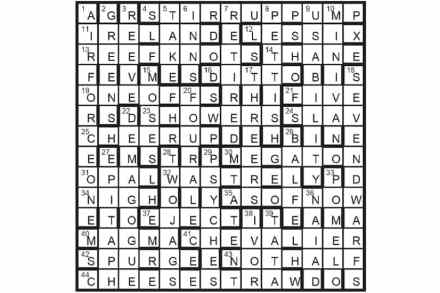
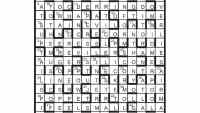
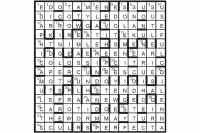
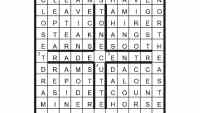
The quotation is ‘LAUGH, AND THE WORLD LAUGHS WITH YOU; WEEP, AND YOU WEEP ALONE’ from Solitude by Ella Wheeler Wilcox. Her two unclued novels are SWEET DANGER (34/24) and A DOUBLE LIFE (3/29). ELLA (on the perimeter), WHEELER (12) and WILCOX (diagonally from 12) were to be shaded.

It’s not too late to scrap HS2

From our UK edition

There are government projects gone haywire – and then there’s HS2. The High Speed rail project should never have been given the nod in the first place. Costs spiralled out of control from the very beginning: it was estimated to cost £32.7 billion in 2012, now this is set to surpass £100 billion. The technology will be out of date before it even comes online. The government is right to ditch plans for an easterly arm of HS2 from Leeds to Birmingham. In contrast to the London to Birmingham section, no buildings have yet been flattened, no earth has been moved. Now is the chance to abandon it, before any more money and effort is spent.

Books of the Year I — chosen by our regular reviewers

From our UK edition

Anna Aslanyan A decade after Londoners, we have another wonderful work of oral history from Craig Taylor. New Yorkers: A City and its People in Our Time (John Murray, £16.99) is a collection of monologues that makes you feel as if you are there, listening to these people. A nurse, an activist, a nanny, a car thief, a personal injury lawyer, a lice consultant, a philanthropic foundation officer, a meditation teacher and dozens of others tell their stories of a place that ‘meant more of everything’ to them and to their interlocutor. Even before finishing the book, I began imagining what Taylor’s next destination might be. I also kept wondering how he infallibly manages to draw so much from his urban encounters.

Is there any evidence climate change is making hurricanes worse?

From our UK edition

Horror shows Eight people were killed when fans of rapper Travis Scott rushed the stage at a concert in Houston, Texas. Some previous deadly concerts: — 11 were killed at a Who gig in Cincinnati on 3 December 1979, after a crush sparked off by concert-goers outside the entry doors mistakenly thinking the band had started playing when they were only tuning up. — Nine were killed at a concert by Pearl Jam at Roskilde, Denmark on 30 June 2000. — 11 people were killed during a festival in Rabat, Morocco on 23 May 2009. Stevie Wonder and Kylie Minogue were on the bill, although not on stage at the time. Third time’s the charm How many people are likely to have a booster Covid jab? By 6 November, 10.

Letters: climate protestors would do better to boycott China

From our UK edition

Heat Sir: May I place some of Nigel Lawson’s comments in a sensible historical context (‘Stupid fuels’, 6 November)? First, he notes that the difference between the average annual temperature in Finland and in Singapore is at present 22°C. However, he is wrong to suggest that we should therefore not be concerned about a predicted rise in the average global temperature of a few degrees. The average global temperature during ice ages was only about 6°C colder than today, but that difference was enough to make the planet unrecognisable: much of the northern hemisphere’s land was covered in glaciers several thousand feet thick, and the sea level was 100 metres lower.

Portrait of the week: Tory sleaze, NHS jabs and Elon Musk’s shares

From our UK edition

Home NHS staff in England will have to be fully vaccinated against Covid by the spring. Britain had ordered 250,000 courses of a Pfizer antiviral pill available from early 2022 shown to cut the risk of hospitalisation or death from Covid by 89 per cent. Britain approved another antiviral pill, developed by Merck, and ordered 480,000 courses. In the seven days up to the beginning of this week, 1,185 people had died with coronavirus, bringing the total of deaths (within 28 days of testing positive) to 141,743. (In the previous week deaths had numbered 1,097.) Numbers remaining in hospital stayed at about 9,000. Rolls-Royce gained the backing of private investors and the government to develop small modular reactors to produce nuclear energy.

From the archive: the nature of Japan

From our UK edition

From ‘The rule of taste’, Anthony Thwaite, 6 March 1959: The society of aristocrats, connoisseurs, wise men and heroes which was the Japan of Yeats’s imagination did exist. It was capable of moments which combine, in the true spirit of Zen, extraordinary aesthetic perception with what looks like plain flippancy. This is revealed, for example, in the anecdote which Sir George [Sansom] tells about the Emperor Shirakawa, who had summoned a stricken old campaigner to the Palace to tell the story of his campaigns. ‘The old soldier began, “Once when Yoshiiye had left the Defence Headquarters for the fortress at Akita, a light snow was falling and the men…” at which point His Majesty broke in and said: “Stop there!

Portrait of the week: Fishing friction, Greta’s singalong and terror in Tokyo

From our UK edition

Home Boris Johnson, the Prime Minister, told delegates to the 26th Conference of the Parties to the United Nations Framework Convention on Climate Change (COP26) in Glasgow: ‘It’s one minute to midnight on that doomsday clock and we need to act now.’ He left the conference the next day. British companies would have to publish plans on reaching net zero by 2050. India said it would reach net zero by 2070. Greta Thunberg, aged 18, stood in Govan Festival Park leading a chorus of ‘You can shove your climate crisis up your arse’ to the tune of ‘Ye cannae shove yer grannie aff a bus’.