The Spectator

Letters: The revelation that could force Boris to resign

From our UK edition

The lie’s the thing Sir: Your leading article (‘Partygate’s hangover’, 2 April) maintains that if the Prime Minister receives a fixed penalty notice, he shouldn’t have to resign. No fair-minded person would disagree with this, for such a resignation would indeed be absurd. However, there is a more serious issue. The Prime Minister repeatedly assured the House of Commons that all Covid guidelines were followed in Downing Street. If it is found that he knowingly misled MPs with these claims, then the Ministerial Code is entirely clear: he would have to resign. John Hatt Firbank, Cumbria Thatcher’s war Sir: Charles Moore writes that if Margaret Thatcher had failed to retake the Falklands, she would probably have had to resign (Notes, 2 April).

Letters: To achieve net zero, we need to go nuclear

From our UK edition

Nuclear future Sir: It is refreshing to see Martin Vander Weyer note that, properly and fully costed, nuclear power is cheaper than power from wind and solar sources (Any other business, 26 March). That is because, as he says, ‘wind and solar require excess capacity and battery storage to compensate for periods of low output’. It cannot be predicted when those periods of low output will occur, and the proportion of our electricity provided by wind at any one time can be anywhere between 2 per cent and 40 per cent. Martin supports the aim to meet 25 per cent of UK energy needs using nuclear by the net-zero deadline of 2050. However, he has not yet asked the crucial question of where the non-nuclear portion of our energy might come from in 2050.

How much of a litre of fuel is now tax?

From our UK edition

Common knowledge Tensions in the visit of the Duke and Duchess of Cambridge to Jamaica led some to speculate that the Commonwealth might not long survive the present Queen’s reign. Who came up with the idea of naming the successor organisation to the British Empire after a term first used by Oliver Cromwell? – Lord Rosebery is recorded as referring to a ‘Commonwealth of nations’ in 1884, a decade before he became prime minister. – The term was first used officially in the Commonwealth of Australia Constitution Act 1900, which established a federation of British colonies. – The idea of a British Commonwealth first surfaced at the 1926 Imperial Conference. – The word ‘British’ was dropped in 1949.

Portrait of the week: Partygate penalties, Oscars drama and Dairy Milk shrinks

From our UK edition

Home Twenty fixed-penalty fines were issued after the police inquiry into Downing Street parties that broke Covid rules, but the Metropolitan Police refused to say who was fined for which events. Peter Hebblethwaite, the chief executive of P&O Ferries, admitted to a parliamentary committee that the company had broken the law by sacking 800 workers without consulting unions. He said that foreign replacements would earn an average of £5.50 per hour, which is below the British minimum wage. Grant Shapps, the Transport Secretary, said he’d change the law to stop that. Lord Grade of Yarmouth, a former BBC chairman, was announced as the preferred candidate to be chairman of the media regulator Ofcom.

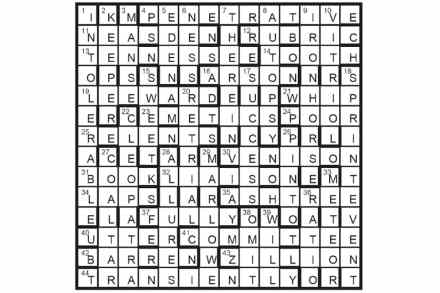
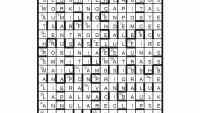
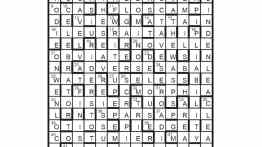
2546: Picture book – solution

From our UK edition

NICOLAS POUSSIN painted ET IN ARCADIA EGO and A DANCE TO THE MUSIC OF TIME. The latter inspired ANTHONY POWELL, whose novel sequence of the same name introduced the egregious Kenneth WIDMERPOOL.

Fight for the right

Sohrab Ahmari Modern American conservatism is composed of three distinct traditions: libertarian economics, foreign-policy hawkism and social traditionalism. This “fusion” was born of a contingent historical moment, the Cold War, when the Soviet threat forced different social classes and their ideological spokesmen to band together in common cause. There was no eternal principle demanding that these groups tie their destinies together — a fact that became apparent with Donald Trump’s rise, which divided the three camps along various axes of alliance and enmity. Fusionism is dead. Well and truly dead.

conservatism fusionism

Portrait of the week: Spring statement, weapons for Ukraine and no more free-range eggs

From our UK edition

Home Britain had provided Ukraine with more than 4,000 Next Generation Light Anti-tank Weapons, the Ministry of Defence said. Shell reconsidered its decision to pull out of investing in the large Cambo oil field, 75 miles off the west coast of Shetland. The government was expected to put into special administration Gazprom Marketing & Trading Retail Ltd, with which several councils have contracts to buy gas, though it does not come from Russia. Among those seeking to buy Chelsea Football Club, on sale after the sanctioning of its owner Roman Abramovich, a group called the True Blue Consortium was given support by John Terry.

Which countries have ditched daylight savings time?

From our UK edition

Time for a change A bill before the US Senate would abolish daylight saving time. Some countries which have previously practised daylight saving but no longer do so: – Algeria (last changed clocks in 1981); Brazil (1932); China (1991); Colombia (1993); Egypt (2015); Falkland Islands (2010); Hong Kong (1979); Iceland (1968); India (1945); Indonesia (1963); Iraq (2007); Pakistan (2009); Peru (1994); Philippines (1990); Russia (2014); South Africa (1944); South Korea (1988). Pumped up The price of unleaded petrol reached an average of 165.37p per litre. How does that compare with spikes in petrol prices in the past?

The return of fiscal conservatism

From our UK edition

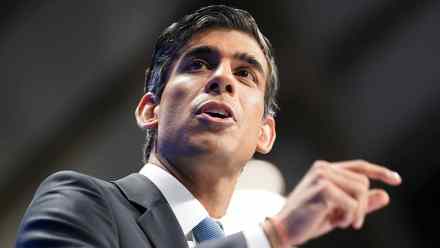
Next month, Rishi Sunak will break a Tory manifesto pledge by increasing National Insurance as the tax burden heads to a 77-year high. By declining to increase departmental spending for inflation – and using the saved money to cut the basic rate of income tax – the Chancellor has started a cautious fightback against Big Government conservatism. Much has changed in the two years since Sunak took over as Chancellor. Back then, inflation appeared dead and buried: long-term forecasts did not envisage it going above 2 per cent. Sajid Javid, Sunak’s predecessor, said he expected rates to be ‘low for long’ – and planned to borrow and spend on that basis. The Tories had quite simply lost their fear of inflation.

2545: With a twist – solution

From our UK edition

Suggested by 41, the other unclued lights were worms entered backwards in the grid. To comply with the preamble, 6 down needs to be CESTODE (the individual worm) rather than CESTODA (the subclass). First prize Leslie Verth, Newton Mearns, Glasgow Runners-up Roslyn Shapland, Ilkeston, Derbyshire.

Rishi’s fightback against big government Toryism

From our UK edition

Next month, Rishi Sunak will break a Tory manifesto pledge by increasing National Insurance as the tax burden heads to a 77-year high. By declining to increase departmental spending for inflation – and using the saved money to cut the basic rate of income tax – the Chancellor has started a cautious fightback against Big Government conservatism. Much has changed in the two years since Sunak took over as Chancellor. Back then, inflation appeared dead and buried: long-term forecasts did not envisage it going above 2 per cent. Sajid Javid, Sunak’s predecessor, said he expected rates to be ‘low for long’ – and planned to borrow and spend on that basis. The Tories had quite simply lost their fear of inflation.

The soft censorship of the Online Safety Bill

From our UK edition

The arrest of a reporter who held up a poster during a Russian news broadcast criticising the war in Ukraine reminds us how dictatorships operate. One of Vladimir Putin’s first acts on the home front, after sending his tanks over the Ukrainian border, was to pass a law specifying jail terms of up to 15 years for anyone who dares to disseminate ‘fake news’ – i.e. anything which contradicts his government’s lies – about the Russian war effort. Britain is a very long way from that kind of suppression of speech. If a publication wishes to condemn Boris Johnson for his handling of the Ukraine war, Covid or for anything else, its writers and editors will not be ‘disappeared’. But the stories themselves might be.

Who coined the name ‘Londongrad’?

From our UK edition

Thamesky Prospekt Who first coined the place name ‘Londongrad’? The name was used in a BBC sitcom called Comrade Dad, written by Ian Davidson and Peter Vincent, and first broadcast in 1984. It was set in a Britain of 1999 when the Soviet Union had annexed the country. However, the first use of the term has been traced to an obscure columnist, Senator Soaper, writing for the Montana Standard in 1931. Ridiculing George Bernard Shaw’s fondness for communism, he gave Shaw’s address as ‘Whitehall Courtsky, Londongrad’. Whitehall Court, on the Embankment, has become a favourite of Russian investors. Igor Shuvalov, deputy prime minister of Russia between 2008 and 2018, is believed to own two apartments in the building.

Portrait of the week: Russian forces move in on Kiev

From our UK edition

Home More than 100,000 people registered interest in giving a place in their homes for Ukrainian refugees under a government scheme, after widespread criticism of bureaucratic obstacles, though refugees would still require a visa. The scheme was the responsibility of Michael Gove, the Levelling Up Secretary; asked if he would take in a refugee, he said: ‘Without going into my personal circumstances, there are a couple of things I need to sort out – but, yes.’ He thought it might be an idea to lodge refugees in oligarchs’ empty properties. Anarchists occupied a house in Belgrave Square belonging to Oleg Deripaska; four were arrested.

It’s time to drop the net zero agenda

From our UK edition

For years British energy policy has been an exercise in wishful thinking. We’ve been living in a fantasy world in which Britain can somehow achieve ‘net zero’ by 2050 without paying any serious economic price, and with no one significantly poorer as a result. ‘Not a hair-shirt in sight,’ said the Prime Minister, though most independent assessments said net zero would cost between £36,000 and £50,000 per household. Reality, now, is biting. Reducing emissions is important but security of supply is vital, and Europe has been forced to come to terms with its dependence on Russian oil and gas. The dependence is so entrenched that it is possible Vladimir Putin thought that Europe would rather leave Ukraine undefended than impose sanctions.