The Spectator

Innovator of the Year Awards 2023 – entries close 16 June

From our UK edition

The Spectator’s prestigious Economic Innovator of the Year Awards, in partnership with Investec, are now in their sixth year. These Awards, celebrating the shining talents of British entrepreneurship and widely recognised in business and investment communities throughout the UK, have attracted growing numbers of entries year by year. Potential winners are passionate about their innovative products and services, determined to make a positive contribution to society, financially resilient and capable of scaling up nationally and internationally.

The Boris distraction

From our UK edition

Boris Johnson should not be forgiven for his handling of lockdown. He needlessly criminalised everyday behaviour when voluntary guidelines would have sufficed. Nannies were prosecuted for delivering birthday cards to children; friends were apprehended for meeting up in the park. Meanwhile, the officials who had created these rules flouted them regularly. Johnson wrongly denied that his staff were having parties. But compared with everything else that went wrong during that period, his false denial is trivial. It is surprising, then, that the House of Commons seems obsessed by it, rather than by the collapse of the democratic apparatus during lockdown, or the fact that the government was allowed to deploy emergency powers long after the crisis had passed.

How healthy do we think we are?

From our UK edition

Beyond a joke Is it time to rewrite an old joke? A letter published in Time in 1963 suggested that heaven would consist of French chefs, British police, German engineers, Italian lovers and Swiss bankers, while hell would consist of English chefs, German police, French engineers, Swiss lovers and Italian bankers. British police, however, have sunk in the world’s estimation – a poll last year revealed that only 44% of people trust them, which puts us behind France and Germany. The most trusted police are in Denmark and the Netherlands, where they are trusted by 58%. The good news is that British chefs are no longer staffing hell’s kitchens. According to a YouGov survey of 24 countries in 2019, British food came mid-table, with Scandinavian countries filling the bottom places.

Letters: The dangers of certainty

From our UK edition

Uncertain times Sir: Kate Andrews’s article on the era of economic certainty (‘Crash test’, 18 March) is not the first article I have read – especially in the financial press – telling us that we live in uncertain times, as though at some stage in the past everyone knew exactly what was going to happen. I am unable to recall such a time. I would argue that what we really should worry about is certainty. When people start talking about the end of history, claiming that there is a certain fortune to be made in buying cryptocurrencies or when ‘everybody’ knows the most important thing is to achieve net zero, that is the time to be worried. ‘Why did we not see it coming?’ the late Queen is reported to have asked about the 2008 banking crisis.

Unemployment and Britain’s missing million

From our UK edition

There was plenty of miserable economic news in this week’s Budget: the highest taxes imposed by any peacetime government, the worst post-pandemic recovery in the G7, the most painful cost-of-living squeeze since records began. But there was also a statistic which, on the face of it, seems to herald a remarkable success. The official unemployment rate stands at just 3.7 per cent – less than half the rate of a decade ago, as low as it has been in half a century. In his Budget, Jeremy Hunt boasted that ‘Conservatives believe that work is virtue’. Sadly, as this magazine revealed several months ago, there is rather more to the figures than meets the eye. There may be only 1.

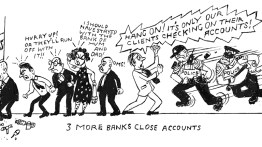
How often do banks fail?

From our UK edition

Eyes on the ball Viewing figures for Match of the Day rose by 500,000 when Gary Lineker was suspended from the show for tweeting about the government’s asylum bill and his fellow pundits walked out on strike in support.  – First broadcast on the then new BBC2 on 22 August 1964, the show was initially controversial not because of the views of its presenter Kenneth Wolstenholme but because football clubs feared it would discourage fans from attending games.  – They need not have worried: the first episode, featuring highlights of Liverpool vs Arsenal, attracted just 20,000 viewers.  – Viewing figures rose sharply, however, after England won the World Cup in 1966 and the programme was moved to BBC1.

Letters: The problem with celebrity TV presenters

From our UK edition

Channel anger Sir: I fear that in your leading article (‘Our duty to refugees’, 11 March) you find yourself in the same bind as the Labour party and at odds with majority opinion in the country. While people in the UK are vexed by the Channel crossers, this is only because it is the most obvious example of the failure of the political class to control immigration as a whole. The population of the UK is increasing fast: this is almost wholly as a result of immigration. Despite government propaganda about the necessity of migration to ensure an adequate supply of labour to support an ageing population, it remains very unpopular. Migrants are going to get old too: are we to expand our population endlessly?

School portraits: snapshots of four notable schools

From our UK edition

Roundhay School, Leeds ‘While we were taught about racism and sexism, there was too little time spent making sure everyone could read and write,’ said Liz Truss of her alma mater three years ago when she was minister for women and equalities. Roundhay School’s record begs to differ – it has been ranked ‘outstanding’ by Ofsted for more than a decade now. In 2020, the same year as Truss’s speech, the school received a World Class Schools Quality Mark. Roundhay is based in Leeds, and educates 2,600 pupils across a gorgeous 22-acre site on the outskirts of the city.

Our duty to refugees

From our UK edition

It is hard to deny that the government must take tough action on the issue of migrants arriving in Britain by small boats. A large proportion of those entering the country are not refugees fleeing danger but young men in search of better economic opportunities. Indeed, the largest increase in arrivals comes from Albania, an EU accession state that is neither at war nor under malign dictatorship. Ferrying such people to Britain is a criminal racket that should not be tolerated. If all ‘irregular’ arrivals are to be classed as illegal, genuine refugees will be unable to apply for asylum But under Home Secretary Suella Braverman’s plan, the Illegal Migration Bill will deport every person who enters the country by what the Home Office used to call ‘irregular’ methods.

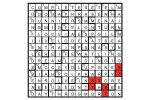
Solution to 2592: Uncle Victor

From our UK edition

The unclued Across lights were some of the radio communications alphabet and the unclued Down lights are part of the current Nato alphabet, all listed under ROGER (solution at 16 Across) in Brewer. ‘Uncle’ and ‘Victor’ are two further examples from the respective alphabets. First prize Revd John Thackray, Ipswich, Suffolk  Runners-up Paul Harrison, Wilpshire, Blackburn, Lancs; R.B.

How often does spring bring a cold snap?

From our UK edition

Out of service  Conservative MPs criticise the proposed appointment of Sue Gray as Keir Starmer’s chief of staff. It is not unknown, however, for civil servants to switch to political careers, including two prime ministers of recent times.  – Edward Heath began his career in the Ministry of Civil Aviation, having come joint top in the civil service entrance exams in his year.  – Jim Callaghan did not intend a career as a civil servant, but on joining the Royal Navy during the second world war he was found to have tuberculosis, and for a while was seconded to work at the Admiralty in Whitehall, where his duties included writing a guide to the Japanese for the benefit of British servicemen who might come into contact with them. He later saw active service.

Letters: Putin isn’t winning

From our UK edition

Friends like these... Sir: I much admire Peter Frankopan as a historian but his article ‘Is Putin winning?’ (4 March) is misleading and plain wrong. He argues that the vote at the UN on Ukraine on 23 February demonstrated that Russia’s strategy is winning new friends in Africa, Central and South America, and Asia; friends who are refusing to vote with the US and the West, and are supporting Russia. An inspection of the actual figures at the UN vote shows this claim to be foolish: 24 African states condemned Putin’s Russia. Only two, Eritrea and Mali, supported Putin. In South and Central America, 16 states condemned Putin. Only Nicaragua supported him. In Asia, 31 states condemned Russia. Only North Korea and Syria supported Putin.

Matt Hancock and the anatomy of a scandal

From our UK edition

Last summer, Rishi Sunak told this magazine about what happened inside government during lockdown. The policy, he said, had been pursued with little consideration of the drawbacks. To even discuss the impact of lockdown – to acknowledge the damage being done to schools or NHS waiting lists – was seen as treachery. At the time, Sunak’s testimony was said to be an exaggerated ploy at the end of a bruising Tory leadership campaign. This week, documents have emerged that prove that government lockdown discussions were even worse than Sunak said. The health secretary created a record of the modus operandi of a government in crisis Seldom do journalists come into possession of such rich material as the texts that are now in the hands of the Daily Telegraph.

Portrait of the week: Sunak’s Brexit deal, Hancock’s WhatsApp messages and a cucumber crisis

From our UK edition

Home The Northern Ireland Protocol was modified by something called the Windsor Framework, agreed between Rishi Sunak, the Prime Minister, and Ursula von der Leyen, the President of the European Commission. He said that Stormont would be able to apply a brake to new EU goods rules; the brake would allow the UK government to apply a veto. Goods from Britain for Northern Ireland would travel through a ‘green lane’ with fewer checks, and those that might move on into the EU through a ‘red lane’. The ban on importing British chilled sausages and seed potatoes would end. After announcing the agreement, Mrs von der Leyen was granted an audience with the King at Windsor Castle. Mr Sunak visited Northern Ireland.

2591: Get over it – solution

From our UK edition

The theme word was FORD (in line 4), and the sets of unclued lights were 1A, 20, 21 (makes of car), 18, 39, 43 (US presidents), and 11, 31, 33 (characters in The Merry Wives of Windsor).