The Spectator

Why the economic war against Russia has failed

From our UK edition

There was much mirth in the West this week when Vladimir Putin’s Victory Day parade through Red Square included just one tank, itself a relic from a museum. The inference was that Russia has lost so much military kit in Ukraine that it is a shadow of the military superpower the Soviet Union used to be. Russia has certainly borne heavy losses (although any country conducting a foreign war would presumably have its military hardware on active duty rather than on ceremonial parade). But we should avoid being smug. The truth is that the war is not going well for the West either – at least in one respect. When Putin sent tanks into Ukraine on 24 February last year, western countries rapidly adopted a two-pronged strategy.

Which countries have scored ‘nul points’ the most times?

From our UK edition

Machine learning Who came up with the phrase ‘artificial intelligence’? – The term was coined by US computer scientist John McCarthy in 1955, arising from a summer school held at Dartmouth College in New Hampshire. The blurb for the project declared: ‘the study is to proceed on the basis of the conjecture that every aspect of learning or any other feature of intelligence can in principle be so precisely described that a machine can be made to simulate it.’ However, McCarthy seems to have had a slightly loose concept of what constitutes AI. He once had a debate with a colleague in which he asserted that even a thermostat could be said to have ‘belief’ on the grounds that it believed a room should be set at a particular temperature.

Letters: The real AI threat

From our UK edition

Irreligious tolerance Sir: Your editorial ‘Crowning glory’ (6 May) celebrated the religious tolerance in Britain that will permit a multifaith coronation. However, it didn’t acknowledge that in modern Britain nearly half of people have no religious belief. This acts as a buffer, making religious differences of opinion of less importance. Britain is one of the least religious countries in the world. In more strongly religious countries, such tolerance is harder to find. Michael Gorman Guildford, Surrey Admirals on horseback Sir: If Admiral Sir Tony Radakin only had to march at the coronation (Admiral’s notebook, 6 May), he was fortunate. At the 1953 coronation, Lt Cdr Henry Leach (later Admiral of the Fleet Sir Henry Leach) was in charge of the naval element.

Bridge | 13 May 2023

From our UK edition

What an extraordinary two weeks for Richard Plackett and his team. First, they went to Tignes in France for the European Winter Games, where they fought some of the world’s best teams over seven gruelling days, and emerged with the crown. Elated but exhausted, three of them – Richard, Espen Erichsen and Peter Crouch – flew straight on to Bristol, where they teamed up with Andrew Robson, Alexander Allfrey and Peter Bertheau for the Spring Fours. Another five days of battle –another triumphant victory. Both events were thrilling to watch, and I’m delighted for them – particularly my old friend Espen, whose mental toughness has always dazzled me.

How the coronation will celebrate multifaith Britain

From our UK edition

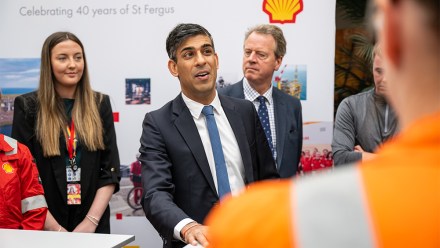
What the world will see when Charles III is crowned is not just the rare spectacle of a monarchy that still practises lavish coronations, but the equally rare spectacle of a thriving multifaith democracy. When Prince Charles declared in 1994 that he wished to be seen as the ‘defender of faith’ rather than just the Defender of the Faith, he caused controversy. But his coronation will bear out the wisdom of his earlier comment. There will be a reading from Rishi Sunak, a Hindu. Also in attendance will be the Home Secretary, a Buddhist; the mayor of London, a Muslim; and Humza Yousaf, the First Minister of Scotland and the first Muslim to lead any western European country.

Portrait of the week: Coronation preparation, nurses’ strike and street piano hits a sour note

From our UK edition

Home Scotland sent the Stone of Scone to Westminster for the coronation of King Charles and Queen Camilla at Westminster Abbey. The ceremony included the recognition of the King, his oath to maintain the ‘Protestant Reformed Religion established by law’, his anointing (with oil free from civet oil or ambergris from whales), investiture with orb and sceptres and his crowning, enthronement and reception of homage. The Queen was also to be anointed and crowned. The ceremony was set within a Church of England service of Holy Communion. The Prime Minister, Rishi Sunak, accepted an invitation to read the Epistle. Jews, Sunni and Shia Muslims, Sikhs, Buddhists, Hindus, Jains, Bahais and Zoroastrians were invited. The Duke of Sussex popped over for the event, but the Duchess did not.

Stone Island Archipelago

From our UK edition

They appear to believe they’ve laid the patio of everyone’s dreams: beautiful, lovingly made, fashionably disordered. You can see from their faces they’re proud of their work, proud of themselves — though it’s a haphazard, crazed mess, compounded of slabs of different sizes that simply don’t fit together — gaps chinking through — some slabs broken, others cracked, or dribbled with paint. And they’ve put in no foundations, no hard- core, no sand, and it’s all just plonked down on the grass of their back garden. They tell me, it does what it’s meant to do, for them, it works well, it works fine.

How heavy is King Charles’s crown?

From our UK edition

Uneasy lies the head In a 2018 BBC documentary Elizabeth II commented on the weight of the crown at her coronation, complaining that if you wore it for too long ‘your neck would break off’. What will be the burden on Charles III’s head? – At the moment of the coronation Charles will wear St Edward’s Crown, made for Charles II in 1661. That weighs 2.07kg. Prior to 1911 it weighed 2.6kg – although both Victoria and Edward VII were spared having to wear it. – However, for his departure from Westminster Abbey that crown will be removed and he will wear the Imperial State Crown instead, which weighs 1.06kg.  – By contrast, most full-face motorcycle helmets (just about the heaviest thing people wear on their heads in day-to-day life) weigh between 1.

Letters: How to save red squirrels

From our UK edition

Fire-fighting Sir: Your editorial raised the persistent problem of predicting major international disasters in a timely enough way to prepare (‘Eclipses and revolutions’, 29 April). The US academic Joseph Nye said that a good model for wars is to identify three types of cause: deep (the logs for a fire), intermediate (the kindling) and immediate (the sparks). The dilemma is that there are often so many crises on the brink of igniting that preparing early for dozens stretches many governments. Struan Macdonald Hayes, Kent Brain drain from Africa Sir: The majority of Sudanese doctors working in Britain will have been trained in Sudan at local government expense (Eclipses and revolutions’, 29 April).

Our app is better than ever

From our UK edition

The new Spectator app has a fresh look and plenty of new features to help you make the most of our world-class writing and broadcasts. Get instant worldwide delivery of the weekly issue to your device from 4 a.m. on Thursdays. Or, get the latest analysis on the breaking news of the day in the Coffee House section. Make the most of your subscription – download the Spectator app today. App highlights: • A daily mixture of political commentary, cultural criticism and humour • Each issue of the weekly magazine published every Thursday at 4 a.m.

Why wasn’t the Foreign Office prepared for Sudan?

From our UK edition

The fiasco in Khartoum is being widely interpreted as a tragic failure of intelligence. James Cleverly, the Foreign Secretary, is facing questions about how and why the government was caught unawares as Sudan descended into bloody chaos. There are bodies on the streets of Khartoum, foreigners have fled the city, and those who remain are braced for a resumption of war. A United Nations-brokered truce turned out to be illusory. It is tempting to think of diplomats as an unnecessary luxury in the 21st century, but they are vital The British military managed to evacuate about 100 diplomatic staff but most of the estimated 4,000 British nationals remain in a place that evokes the mayhem of the panicked evacuation of Kabul.

With Love to Mozart

From our UK edition

It is the fear by which all fears are fed, The certainty one day you will lie dead. Such fear is groundless, some might call it rot: Consider, where death is there you are not. Truly, this should have no power to scare, Like you, it will be neither here nor there. Just wait, the harmless truth shall be revealed, You flourished as a flower of the field. You won’t be struggling for a breath of air, Or fretting in the dust, still half-aware. Fear not, there’s no foul limbo in-between The fact that you once were and now have been. There is one who evokes this comedy Precisely and entire, most perfectly Don’t speak of hell or everlasting bliss, I simply want to be where Mozart is.

Letters: what’s wrong with adoption?

From our UK edition

The sins of the world Sir: Matthew Parris (‘Cross purposes’, 22 April) claims that Paul invented the Church’s teaching about redemption on the cross and that Christ was silent on the topic. This is simply not true. An obvious example is found in the gospel of Mark, chapter 10, verse 45: ‘For even the Son of Man did not come to be served, but to serve, and to give his life as a ransom for many.’ But it is Jesus’s words of institution at the Last Supper which provide the most clear explanation of what his death would achieve: ‘This is my body which is given for you… This cup is my blood of the new covenant poured out for you.’ Jesus could not have been clearer that his death was going to be a sacrifice for sins which he would make on behalf of his disciples.

We’ll miss Rupert Murdoch when he’s gone

From our UK edition

The idea that Donald Trump was denied victory in the 2020 presidential election by conspirators determined to fiddle with the electoral system was never more than a fiction dreamed up by a frustrated losing candidate. At such times, the role of the media is crucial. If there were genuine evidence of vote-rigging then it should of course be investigated. But to amplify conspiracy theories for the sake of ratings could have grave consequences. The editorial decision to try to give legs to the stolen election claim is now costing Fox News dearly. This week the company reached a $788 million settlement with Dominion, a company which supplies vote-counting technology for US elections and had been accused of involvement in rigging the election.

We’ll miss Rupert Murdoch when he’s gone

From our UK edition

The idea that Donald Trump was denied victory in the 2020 presidential election by conspirators determined to fiddle with the electoral system was never more than a fiction dreamed up by a frustrated losing candidate. At such times, the role of the media is crucial. If there were genuine evidence of vote-rigging then it should of course be investigated. But to amplify conspiracy theories for the sake of ratings could have grave consequences. The editorial decision to try to give legs to the stolen election claim is now costing Fox News dearly. This week the company reached a $788 million settlement with Dominion, a company which supplies vote-counting technology for US elections and had been accused of involvement in rigging the election.

Portrait of the week: Strikes, Scottish arrests and stabbings

From our UK edition

Home Nurses in England belonging to the Royal College of Nursing union rejected the government’s pay offer and hurried to go on strike over the first May bank holiday and thereafter on chosen dates till Christmas. Members of Unison voted to accept the NHS pay offer. More than 196,000 hospital appointments were cancelled because of the junior doctors’ strike in England the week before. Strikes by public-sector workers contributed to the complete lack of growth in GDP in February, according to the Office for National Statistics. Humza Yousaf, the First Minister of Scotland, declined to suspend Nicola Sturgeon, his predecessor, from the Scottish National party as police investigated its finances.

Song (After Heine)

From our UK edition

Who invented the clock, pray tell, time’s division, the ticking spell? An ice-cold man that hated song, who sat and thought the whole night long and listened to the starved mice brawl and beetles pacing in the wall. What invented the kiss? I’ll tell: a lovely mouth, you know full well, that kissed and did not think at all; it was in May, the wondrous call of bird and bloom adorning earth, the sun-god roaring golden mirth.