The Spectator

CoffeeHousers’ Wall, 18 May – 24 May

From our UK edition

Welcome to the latest CoffeeHousers' Wall. For those who haven't come across the Wall before, it's a post we put up each Monday, on which – provided your writing isn’t libellous, crammed with swearing, or offensive to common decency – you’ll be able to say whatever you like in the comments section. There is no topic, so there’s no need to stay ‘on topic’ – which means you’ll be able to debate with each other more freely and extensively. There’s also no constraint on the length of what you write – so, in effect, you can become Coffee House bloggers. Anything’s fair game – from political stories in your local paper, to chat about the latest football results.

Just in case you missed them… | 18 May 2009

From our UK edition

...here are some posts made on Spectator.co.uk over the weekend: Fraser Nelson reveals how Norway won the Eurovision song contest Blair-style, and suggests how David Cameron could expose the long tail of waste. James Forsyth analyses the latest opinion poll findings, and reports on the growing movement against the Speaker. Peter Hoskin tracks Gordon Brown's efforts to overtake Cameron on expenses, and fisks the PM's article for the News of the World. Clive Davis reveals how they made the Great Depression even worse. Alex Massie reports on a billionaire's secret life. And Americano highlights the breathtaking recklessness of Donald Rumsfeld.

Letters | 16 May 2009

From our UK edition

A charted course Sir: Charles Moore has lost his bearings and entered ‘terra incognita’ in his recent exploration of the Royal Geographical Society’s remit and work in the 21st century (The Spectator’s Notes, 9 May). To be clear, the society stays true, today as over its 170-year history, to its founding charter to ‘advance geographical science’. The suggestion that the society is not fulfilling its charter is a misinterpretation and makes a travesty of the society’s work with schools and universities, with the public and policy-makers — and not least to the hundreds of professional researchers that the society currently supports to advance new understanding of all aspects of our world.

Parliament of spivs…

From our UK edition

This week, the nation beholds Parliament with a collective contempt unrivalled in living memory. We need a modern-day Trollope to do justice to this wave of revulsion, triggered by the remarkable revelations in the Telegraph. Gilbert Burnet, the great ecclesiastical and political historian of his time, wrote of the corrupt MPs elected in 1710 that ‘this is the worst Parliament I ever saw’. And so it seems in 2009: the Palace of Westminster is home not to an ancient institution but to a disgraced rabble of second-rate spivs who have dishonoured the public trust as flagrantly as they have raided the public purse.

…and a Prince of good sense

From our UK edition

At a moment of such alarming disconnection between the political class and the electorate, it is cheering to be reminded that not every part of our constitution is faltering, or at odds with the grain of public opinion. On Tuesday, the Prince of Wales addressed the Royal Institute of British Architects, 25 years after his famous attack on the proposed National Gallery extension as a ‘monstrous carbuncle’. At the time, he was mocked as a fogey and a reactionary. But his cry from the heart against the vandalism wrought by modern architecture proved to be the act of a popular tribune — not least because it reflected common sense as opposed to Corbusian delusion.

The week that was | 15 May 2009

From our UK edition

Here are some of the posts made on Spectator.co.uk over the past week: Matthew d'Ancona thinks that David Cameron has proved himself over the expenses scandal, and suggests that Lord Tebbit is speaking for the electorate as a whole. Fraser Nelson watches Gordon Brown resort to bully tactics, and sets out the significance of Andrew MacKay's departure. James Forsyth says that there is nothing British about the BNP, and sets out the Tory verdict on whose claims are defensible and whose aren't. Peter Hoskin tracks the growing movement to oust Michael Martin, and outlines how the BNP are campaigning. Toby Young highlights some hypocrisy on the part of journalists. Martin Bright thinks the sky has fallen in on Parliament.

CoffeeHousers’ Wall, 11 May – 17 May

From our UK edition

Welcome to the latest CoffeeHousers' Wall. For those who haven't come across the Wall before, it's a post we put up each Monday, on which – provided your writing isn’t libellous, crammed with swearing, or offensive to common decency – you’ll be able to say whatever you like in the comments section. There is no topic, so there’s no need to stay ‘on topic’ – which means you’ll be able to debate with each other more freely and extensively. There’s also no constraint on the length of what you write – so, in effect, you can become Coffee House bloggers. Anything’s fair game – from political stories in your local paper, to chat about the latest football results.

Just in case you missed them… | 11 May 2009

From our UK edition

Here are some of the posts made on Spectator.co.uk over the weekend: Fraser Nelson reports on MPs getting away with everything they can, and sets out the Margaret Moran doctrine. James Forsyth picks up on another blow to the Budget's credibility, and suggests that the Tories are also tainted by the expenses revelations. Peter Hoskin says that Cameron must act over the expenses scandal, and speculates about Alistair Darling's future. Martin Bright wonders how the Labour Party will rebuild itself. Alex Massie celebrates Townes van Zandt. And Melanie Phillips recommends the work of Robin Shepherd.

Letters | 9 May 2009

From our UK edition

Taxing questions Sir: Fraser Nelson writes (‘A tale of two Gordons’, 2 May) that internal Treasury documents justify the 50p tax rate on the basis that ‘Karl Marx’s progressive tax structure was designed so that the tax burden was heaviest on those who were most able to contribute’. Certainly, Labour spokespersons daily repeat this cosy doctrine about the taxation of the rich, in exactly these words. But where is Marx supposed to have said it? For Marx, the demand for progressive taxation was purely part of his revolutionary programme to destroy existing social institutions, not to make them fairer. In his time, the most that reformers were demanding was that all rich people should pay the same amount in tax as everybody else.

An outbreak of common sense

From our UK edition

We did not need to be told to keep calm and carry on — that seems to be our instinctive, collective British reaction to crises. In the case of swine flu, as with bird flu, (or even Spanish flu) the public has reacted with commendable common sense. There has been no mass absenteeism from work, no fad for face-masks; not even the closure of schools has provoked a panic. The national mood was summed up by the infected schoolgirl who announced that it was actually no worse than having a cold. Even the 24-hour news channels, though desperate for any story that can fill their air time, have given up trying to whip people up into a swine-flu fever.

The New Avenger

From our UK edition

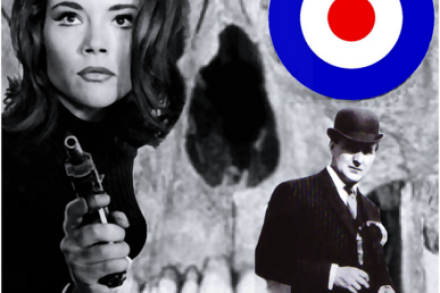
The Prime Minister’s epic catalogue of early summer mishaps, mistakes and misjudgments lengthens by the day: if he is not making a fool of himself on YouTube, he is misreading the mood of the Commons on MPs’ expenses, or posing in front of swastikas. But, as wretched as they are, these incidents pale into insignificance compared to one truly monstrous strategic error: Number 10’s failure to acknowledge Joanna Lumley’s requests for a private meeting with the PM. Part of New Labour’s political genius in its early years was to hoist a Big Tent, a welcoming canvas which stretched over everyone with influence.

Just in case you missed them… | 5 May 2009

From our UK edition

...here are some of the posts made on Spectator.co.uk over the bank holiday weekend: Fraser Nelson marks the 30th anniversary of Margaret Thatcher becoming Prime Minister, and reports on Hazel Blear's intervention. James Forsyth notes three things keeping Gordon Brown down, and says that Harriet Harman's friends may be doing the PM a favour. Peter Hoskin wonders whether Brown is preparing a purge of the Labour backbenches, and reports on some more Lib-Lab fun and games. Martin Bright notes John Prescott's determinedness. Clive Davis reveals the case against the Gurkhas. Alex Massie says that Harman disappoints again. Melanie Phillips highlights the secular inquisition. And Americano charts a Rebublican Ridge to the future.

CoffeeHousers’ Wall, 4 May – 10 May

From our UK edition

Welcome to the latest CoffeeHousers' Wall. For those who haven't come across the Wall before, it's a post we put up each Monday, on which – provided your writing isn’t libellous, crammed with swearing, or offensive to common decency – you’ll be able to say whatever you like in the comments section. There is no topic, so there’s no need to stay ‘on topic’ – which means you’ll be able to debate with each other more freely and extensively. There’s also no constraint on the length of what you write – so, in effect, you can become Coffee House bloggers. Anything’s fair game – from political stories in your local paper, to chat about the latest football results.

Letters | 2 May 2009

From our UK edition

Broken pledges Sir: Labour has lost all credibility, having broken a clear manifesto pledge not to raise taxes but then doing so. It is the second pledge that it has failed to honour, the first being its failure to hold a referendum on the EU constitution. If directors of a company break clear pledges made in a prospectus, then they face prosecution under the Companies Act and possible fines or imprisonment. But Labour seems to regards its manifesto commitments as an exam paper: only keeping three commitments need be attempted. Why should we be surprised that the reputation of our politicians has fallen so low and that so many people will not bother to vote at the next election?

Independent Schools Listings (M-Z)

From our UK edition

The Spectator guide to independent schools 2009 Your guide to using the tables An independent education can, and often does, lead to a head start in life for those fortunate enough to experience it. For parents, grandparents and others involved, it is a big decision. From prep to sixth form, an independent school education for one child can cost well over £250,000. So how do you choose? Academic results are one of the more tangible, but by no means the only, factor (see ‘What to look for in an independent school’ on page 7). A list of grammar schools is also included by way of comparison. Please take care in using these tables.

Independent Schools Listings (A-L)

From our UK edition

The Spectator guide to independent schools 2009 Your guide to using the tables An independent education can, and often does, lead to a head start in life for those fortunate enough to experience it. For parents, grandparents and others involved, it is a big decision. From prep to sixth form, an independent school education for one child can cost well over £250,000. So how do you choose? Academic results are one of the more tangible, but by no means the only, factor (see ‘What to look for in an independent school’ on page 7). A list of grammar schools is also included by way of comparison. Please take care in using these tables.

The panic pandemic

From our UK edition

‘In 1918, half a million Americans died. The projections are that this time, the virus will kill one million Americans.’ These were the words of the President’s chief health adviser, as he warned about the dangers of swine flu. But he wasn’t speaking this week. The year was 1976, the President was Ford, and the adviser had, it transpired, overestimated the death toll by 999,999. Swine flu has already proved more lethal this time round. There are 152 probable deaths in Mexico (though only 20 cases are confirmed) and 1,614 sufferers under observation there. At the time of writing two British cases have been confirmed, with another 14 being investigated. But the lessons of 1976 are just as relevant today. In the words of the late Douglas Adams: don’t panic.

A 30-year blip?

From our UK edition

Thirty years ago this Sunday, Margaret Thatcher was elected Prime Minister with a Commons majority of 43. In the 11 years that followed, she took an economic basket case, the sick man of Europe, an offshore banana republic, and transformed it: inflation was curbed, penal tax ended, the unions tamed, and Britain’s confidence on the world stage reasserted by victory in the Falkland Islands and the strength of the Iron Lady’s alliance with President Reagan. Her greatest achievement, paradoxically, was to transform not one party but two: New Labour was the offspring of Thatcherism too.

The week that was | 1 May 2009

From our UK edition

Here are some of the posts made on Spectator.co.uk over the past week: Fraser Nelson watches Gordon Brown play politics over troop numbers, and sets out why we need a proper debate on 50p tax. James Forsyth says that the Gurkha victory is a victory for the House, and wonders what the Tories' policy on Trident is. Peter Hoskin reports on the ID card scrap, and says that Brown's position is getting more and more unstable. Toby Young tells the story of his bicycle accident. Daniel Korski honours our soldiers. Etan Smallman reveals the changing face of the super-rich. Martin Bright observes the first outing of the Clegg-Cameron coalition. Clive Davis writes on Obama's 100 days and the limits of power. Alex Massie makes some suggestions for a foreign policy film festival.