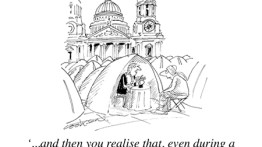
The Surreal Mccoy 3
From our UK edition
From our UK edition
From our UK edition
From our UK edition
From our UK edition
From our UK edition
From our UK edition
From our UK edition
From our UK edition
From our UK edition
From our UK edition
Economy packSir: Of your ten suggested remedies for the UK economy (‘Get it right, George!’, 19 November), not one mentions the obvious answer: recognise that communications technology is transforming every business and social model on the planet and accelerate Britain’s dozy and halfhearted commitment to invest in its communications infrastructure — broadband and mobile. Give the people the tools and they will generate the growth. Peter Krijgsman Somerset Sir: The big ideas in your last issue will have a limited immediate impact on the one million youngsters out of work; something more radical is required. I suggest that the government spends money created by quantitative easing directly on infrastructure projects, matched to the available labour.
From our UK edition
Cook’s recipeShares in Thomas Cook fell 60 per cent after the tour operator entered talks with its banks. — The company’s name has been synonymous with package tours since 1841, when Leicester cabinet-maker and temperance campaigner Thomas Cook took 500 supporters on a day trip to Loughborough on the newly opened railway line for a shilling each. — The first Thomas Cook holiday took place four years later: a trip to Liverpool, or for the more active, a steamboat journey on to Caernavon followed by a night ascent of Snowdon. Incapacity crowdOne in 14 working-age people is out of work and receiving incapacity benefit.
From our UK edition
HomeDavid Cameron, the Prime Minister, said: ‘Getting debt under control is proving harder than anyone envisaged.’ In a speech to the Confederation of British Industry he blamed in part ‘paralysis in the eurozone’. His words came a week before the Chancellor was due to make his autumn statement, and the Office for Budget Responsibility to publish projections for the public deficit, which looked most unlikely to be expunged by the end of this parliament. Mr Cameron had earlier held talks with Chancellor Angela Merkel of Germany and was thought to have discussed a ‘narrow’ amendment to the Lisbon Treaty that would not be subject to a referendum in Britain.
From our UK edition
Just a few weeks ago, calling someone a ‘technocrat’ was a soft insult. The word meant, in effect, an efficient dullard. Now, technocrats appear to be inheriting the earth. They represent a new global elite, and they have recently added Greece and Italy to their empire. When Egypt’s military faced riots on the streets this week, it sought to assuage the crowds by replacing the government with a cabinet of technocrats. The Libyan rebels are doing the same. We have seen two very different types of regime change this year. The Arab Spring is driven by popular uprising; Europe has pioneered the reverse: an uprising of an unelected European elite deposing democratically elected governments. In both, technocrats seem to triumph.
From our UK edition
Here are some of the posts made on Spectator.co.uk over the past week: The Spectator Book Blog interviewed Tottenham MP David Lammy about the riots. Fraser Nelson says that George Osborne has chosen more debt over more cuts, and asks: how ambitious is Cameron on Europe? James Forsyth pinpoints Ed Miliband's opportunity in the economic debate, and says that the party funding reforms won't happen. Peter Hoskin reports on Nick Clegg's latest scheme, and transcribes his observations from a discussion about the squeezed middle. Jonathan Jones sifts through the latest immigration figures, and sees the Republicans use Obama's own words against him. Daniel Korski wonders about the International Criminal Court's future.
From our UK edition
Welcome to the latest CoffeeHousers' Wall. For those who haven't come across the Wall before, it's a post we put up each Monday, on which — providing your writing isn't libellous, crammed with swearing, or offensive to common decency — you'll be able to say whatever you like in the comments section. There is no topic, so there's no need to stay 'on topic', which means you'll be able to debate with each other more freely and extensively. There's also no constraint on the length of what you write — so, in effect, you can become Coffee House bloggers. Anything's fair game, from political stories in your local paper, to chat about the latest football results.
From our UK edition
…here are some of the posts made at Spectator.co.uk over the weekend. Fraser Nelson thinks Nigel Lawson's right: blaming 'global imbalances' for our economic problems does no one any good, and says a good many in the British establishment will be worried about what Saif Gaddafi may reveal. James Forsyth says we can't forget the social problems exposed by the riots, and that the Popular Party's victory in Spain is good news for Cameron and Osborne. Peter Hoskin looks at the proposed changes to assessing sickness, and asks what'll happen now Saif Gaddafi's been captured. On the Books Blog, David Davis shares his literary tastes. The Arts Blog interviews Spectator cartoon editor Michael Heath.
From our UK edition
From our UK edition
From our UK edition
From our UK edition