28-5
From our UK edition
From our UK edition
From our UK edition
From our UK edition
From our UK edition
From our UK edition

From our UK edition
From our UK edition
From our UK edition
From our UK edition
Inside the dragonSir: How refreshing to read some sharp insight on ‘The Chinese question’ (24 March). We have all had enough of handsome Niall Ferguson on our television screens, one moment telling us that China is running the world, then abruptly changing tack and saying that the People’s Republic is collapsing. Jonathan Fenby offers something different — a measured interpretation of an impossibly complicated story. But it’s a shame that even he can’t shed more light on the scandal surrounding Bo Xilai. For all the microbloggers in China, we westerners still cannot fully understand the mystery of the rising east.
From our UK edition
HomePeter Cruddas resigned as co-treasurer of the Conservative party after being recorded by undercover reporters from the Sunday Times encouraging donations with the prospect of private dinners with David Cameron, the Prime Minister, in his Downing Street flat. ‘Hundred grand is not Premier League. It’s not bad. It’s probably bottom of the Premier League,’ he said. ‘If you donate, you will be invited to events where the Prime Minister is.’ Downing Street rapidly published details of all Conservative donors who have had dinner there with Mr Cameron. German Gorbuntsov, a former Russian banker, was shot several times on the Isle of Dogs, where he lived, and taken to hospital, with a police guard. The temperature at Aboyne in Aberdeenshire reached 23.
From our UK edition
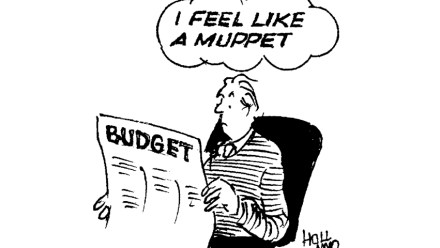
‘When the Cold War ended, we thought we were going to have a clash of civilisations,’ wrote the American author and businessman David Rothkopf. ‘It turns out we’re having a clash of generations.’ As the aftermath of last week’s Budget demonstrated, this clash is well under way in Britain. Behind it lies the idea that the baby-boomers have stolen their grandchildren’s future, hoarding all the property, accumulating debt and then running up NHS bills as they enjoy a retirement funded by the young. This analysis was first advanced by the right, notably by the universities minister, David Willetts, in his book The Pinch. But the left bolted on its own conclusion: that it is time to tax the oldies, and claw the money back.
From our UK edition
Here is a selection of articles and discussions from this week on Spectator.co.uk... Most discussed: Peter Hoskin on fuel for the political bonfire. Most read and shared: Nick Cohen on the tweet police. And the best of the rest... Fraser Nelson unveils the grey recovery and looks at what politics has become. James Forsyth says Cameron needs a proper party chairman and believes David Davis took the opportunity to strike. Peter Hoskin asks what the Prime Minister will do after his u-turn on donor secrecy and provides a guide to Osborne's fiscal rules. Jonathan Jones looks at a plan that could change the face of future Budgets and thinks the government is keen to avoid the chaos of the 2000 strikes.
From our UK edition
In his new book, Wired for Culture, Mark Pagel — a professor of evolutionary biology at the University of Reading — argues that social structures and culture are vital components in human evolution. Human beings are altruistic, helpful, and cooperative in ways that other mammals are not. Pagel says our facility for culture is the key to our success as a species. Without a propensity for culture, the traits that make us stand above other mammals — in Darwinian terms — such as: consciousness, language and intelligence, would not exist. He spoke to The Spectator about the idea of “the self” as an illusion, how most human behaviour is a form of copying, and why religions have been beneficial to humanity.
From our UK edition
Perhaps one of the best things to come out of Birmingham, Mike Skinner, mastermind behind The Streets, lets us know what he's reading in this week's Shelf Life. He reveals an interest in 20th Century history, what he once managed to get 10,000 people to do and a fondness for Philip Marlowe's bon mots. His memoirs The Story of the Streets are out now. He tweets @skinnermike. 1) What are you reading at the moment? All Hell Let Loose by Max Hastings and The Art of Fielding by Chad Harbach. Both in their different ways incredibly well researched. 2) As a child, what did you read under the covers? I didn't read really. Actually I did read a lot of magazines but books didn't work for my attention span when I was young. Though I used to write a lot.
From our UK edition
...here are some posts made on Spectator.co.uk over the weekend: Fraser Nelson believes the Lib Dems are an easier target than the Prime Minister and looks at the borrowing behind Osborne's Budget. James Forsyth examines Ken's identity crisis. Peter Hoskin believes spending will become more significant as 2015 approaches and looks at the 'next big scandal' detonating under Cameron. Rod Liddle says farewell to Dame Liz Forgan. On the Book Blog, Louise Mensch is this week's bookbencher. And on the Arts Blog, Jessica Duchen asks why classical music and comedy aren't mixed more often.
From our UK edition
From our UK edition
From our UK edition
From our UK edition
From our UK edition