The Spectator

From the archives: Why England and France will never be best friends

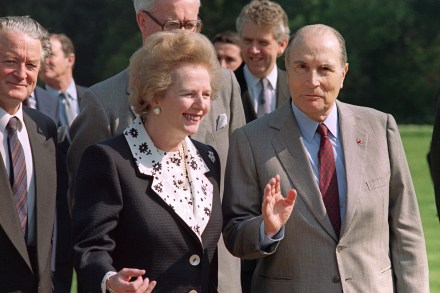
To mark David Cameron’s get-together with Nicolas Sarkozy today, we’ve dug up this essay from the Spectator archives by Lord Powell. As foreign policy advisor to Lady Thatcher and Sir John Major, Powell provides a first-hand insight into the incompatibilities that separate our two nations. A fundamental incompatibility?, Charles Powell, The Spectator, 3 September 1994

Just in case you missed them... | 13 February 2012

…here are some posts made on Spectator.co.uk over the weekend: Fraser Nelson provides an extended version of his interview with Nassim Taleb. Peter Hoskin says the debate over the 50p tax rate isn’t going away any time soon, and reports on Cameron’s defence of Andrew Lansley and his NHS reforms. James Forsyth has the latest

The shale revolution

Shale, what is it good for? How about fuelling Britain’s energy needs for decades to come? The Sunday Times reported yesterday (£) that the reservoir of shale gas discovered in the North West could — depending on how it extracts — supply us with energy for up to 70 years. And we devoted our leader in

Letters | 11 February 2012

China’s foreign policy Sir: As Hillary Clinton just stated, China and Russia ‘neutered’ the UN by vetoing the sanctions on Syria. Russia did it because Syria is an ally with which it does business. China vetoed because it wants no judgments on how it has mauled its own population since ‘Liberation’ in 1949. Beginning with

Barometer | 11 February 2012

Long to reign over us The Queen has become only the second British monarch to spend 60 years on the throne. To overtake Victoria, she would have to reign until 10 September 2015, but would still then be 19 years short of Sobhuza II of Swaziland, who began his reign on 10 December 1899, at

Portrait of the week | 11 February 2012

Home A judge granted bail to Abu Qatada, once described by a Spanish judge as ‘Osama bin Laden’s right-hand man in Europe’, who was to be freed from Long Lartin prison and allowed to leave a fixed address in London for two one-hour periods a day, in order to take his youngest child to school.