The Spectator

Letters | 24 March 2012

From our UK edition

Unmentionable questionSir: Peter Hitchens is no doubt right that the collapse of marriage among heterosexuals is a more serious matter than extending marriage to same-sex couples (‘The gay marriage trap’, 17 March). The damage to the family started with the removal of stigma from having children out of wedlock and divorce on demand; and the redefinition came with same-sex adoption, which in human terms was more radical than same-sex marriage, because there were no long-term studies of what the psychological effect on the adopted children would be. Beyond the issue of the effect on society of the extension of gay rights, however, is the question as to whether conjugal sex and gay sex are morally equivalent.

Barometer | 24 March 2012

From our UK edition

The Chicago schoolDavid Cameron has called for the building of a new generation of ‘garden cities’. In Britain the term is most associated with Letchworth, founded in 1903 by Ebenezer Howard, who formed the Garden City Association in 1899. His concept was for a series of towns with populations of up to 32,000, spread over 6,000 acres. — But the original garden city was, ironically, a city now more associated with the birth of the skyscraper: Chicago, which adopted the motto Urbs in Horto, ‘city in a garden’, in 1837, to describe the patchwork of buildings and gardens in its heart. — Howard lived in the city in the 1870s, a few years before some of those gardens disappeared beneath the early skyscrapers.

Portrait of the week | 24 March 2012

From our UK edition

HomeIn the Budget, George Osborne, the Chancellor of the Exchequer, raised the threshold for workers to start paying income tax at standard rate to £9,205 and announced a gradual reduction of the rate for those earning more than £150,000 from 50 per cent. He imposed a higher level of stamp duty on houses costing more than £2 million and promised measures to make people pay. Child benefit would be withdrawn from fewer families. Tobacco and drink duties went up by 5 per cent above inflation. Taxpayers will each be sent annual details of the tax they pay and what it is spent on. The Office for Budget Responsibility had raised its expectations for growth in the economy a smidgeon, and the Chancellor expected to eliminate the national deficit by 2016-17.

Budget battles

From our UK edition

For the past couple of months, government business has been bogged down in the detail of taxation policy. Higher personal tax allowances, a lower top rate, more stamp duty for £2 million mansions, a tycoon tax — all have been batted across the coalition ping-pong table at dizzying speed. While engaged in this game the government has refused to consider the other side of its ledger: the spending side. This is seen as a great untouchable, thus considerably reducing George Osborne’s room for manoeuvre. This is why this was a Budget that laid the foundations for an economic recovery, rather than starting one in itself. The tax cuts which the Chancellor did make were welcome, as far as they went.

Bookbenchers: Louise Mensch MP

From our UK edition

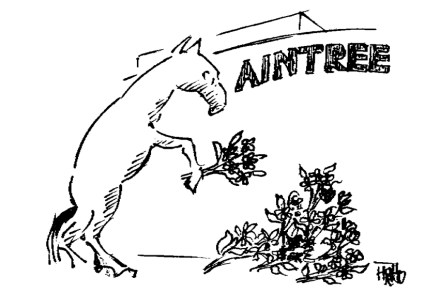
In the hot-seat this week: Louise Mensch, the Conservative MP for Corby. Author of 15 bestselling novels, she knows a good read when she sees one. She has a string of recommendations for those in search of light relief after a stressful week; and she lists some Old English classics for those who want a challenge. 1) Which book's on your bedside table at the moment?   I've Got Your Number by my friend Sophie Kinsella (Madeline Wickham). She never fails with brilliantly light comic romance. A perfect stress-buster.   2) Which book would you read to your children? The last one wasThe Story of Ferdinand, an early favourite of both mine and my father's, and it worked with them too.

From the archives: the fall of Saloman Brothers

From our UK edition

Back in August 1991, Michael Lewis examined the disintegration of his ex-employer — investment bank Salomon Brothers — for The Spectator. His semi-autobiographical story, Liar's Poker, went onto to become an international best seller. Here is the article in full for CoffeeHousers: The Judgement of Salomon, Michael Lewis, The Spectator, 24 August 1991 We never be told the truth about what happened at Salomon Brothers over the past few years. I'm not even sure that it matters. The firm has admitted to breaking the rules in five separate US Treasury auctions, to fraudulently using the names of its customers, and to submitting an illegal bid for $1 billion worth of US Treasury bonds as a 'practical joke'.

The week that was | 23 March 2012

From our UK edition

Here is a selection of articles and discussions from this week on Spectator.co.uk... Most read: Nick Cohen on the spectre of militant secularism.  Most discussed: Douglas Murray asking how to solve to a problem like Baroness Ashton.  Most shared: Nick Cohen speculating on whether Osborne will close the 'Livingstone Loophole'.  And the best of the rest... Fraser Nelson approves of new roads but not a pensions raid, highlights twelve points about the Budget and urges Osborne to break free of Gordon Brown's traps.  James Forsyth reports the Lib Dems are happy with their contribution to the Budget and says the real test for the Tories is whether the Budget delivers growth.

Interview: Colm Tóibín

From our UK edition

Colm Tóibín began his writing career as a journalist. Although he wrote his first novel, The South, in 1986, it took him a further four years to find a publisher. Since that seminal moment, Tóibín has delivered five other novels; two books of short stories; two plays, as well as several works of non-fiction. He has been nominated for the Booker Prize three times, and won The Costa Novel Award, for Brooklyn. In his latest book of essays, New Ways to Kill Your Mother, Tóibín explores the odd relationships that various writers, including W.B Yeats, Samuel Beckett, John Cheever and Thomas Mann, had with their families, and asks how it informed their work.

Transcript: Osborne defends his Budget

From our UK edition

Here's the full transcript of this morning's Today programme interview with George Osborne: Evan Davis: If you believe in using the tax system to cut the incomes of those at the top and in using the welfare system to hand money to the poor, then yesterday’s budget was probably not for you. The Chancellor  hinted at big further cuts to welfare and he clearly thinks the tax system has gone too far in trying to harvest cash from those at the top. Yes, he’s ironing out some loopholes but for him 50p rates don’t work. Believe him, and the game’s over for those who want government to iron out the extremes of inequality in Britain. Oh, and for him too, pensioners can no longer be seen as sacrosanct. A courageous Chancellor or an uncaring one?