Hmmm
From our UK edition
From our UK edition
From our UK edition
From our UK edition
From our UK edition
From our UK edition
Home George Osborne, the Chancellor of the Exchequer, said the autumn statement would be on 5 December, and commentators said he would confront the dwindling chance of meeting debt targets set for 2015. Vince Cable, the Business Secretary, said the government would set up a ‘business bank’ to lend to companies. The Commons Public Accounts Committee said a £1.4 billion Regional Growth Fund set up in April last year had created only 2,442 jobs. Delegates to the Trades Union Congress voted to support co-ordinated strikes against a public sector pay freeze. Tories from the right of the party started a group called Conservative Voice.
From our UK edition
For richer, for poorer? Sir: Liza Mundy (‘The richer sex’, 8 September) concludes that ‘history has shown that human beings are above all adaptable’, and should therefore adapt to women earning more than men. Her article appears to be mostly about women who are already married and I think this is probably true of married couples — they will adapt. As for the ‘partner’ brigade, I think the inequality will prove to be just another excuse for an easy break-up. Michael Holden Lewes Sir: As a 17-year-old girl, I’d like to congratulate Liza Mundy on her refreshing, well-balanced piece. I was heartened by the idea that more men will embrace a domestic role, wielding blowtorches for the crème brûlée and so on.
From our UK edition
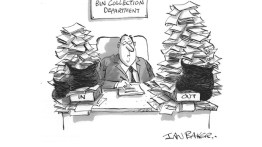
The start of the tape Business secretary Vince Cable announced another crackdown on red tape. But where did red tape come from? It seems to have been a product of the Holy Roman Empire. — Spanish officials in the reign of Charles V (1516-56) would tie up documents relating to issues which had to be discussed on the Council of State with red tape; other, lesser documents were bound with rope. — The tape was called Boldoque, after the Dutch city in which it was manufactured (S'Hertgenbosch in Dutch). The Spanish have retained the word for red tape. — As for the Dutch, they have made amends by inventing the 'one in, one out' rule, now adopted by Cable's department, under which for every new piece of legislation an old law must be abolished.
From our UK edition
From our UK edition
José Manuel Barroso gave his annual 'State of the Union' address in Strasbourg yesterday. If you are a glutton for punishment, you can read the full speech here, but in this week's Spectator, Quentin Letts offers the president of the European Commission a transcript for the speech he should have given. Here is a snippet of what Barroso should have said: For years we have dreamed of a Europe with level economies, a Europe with equality of outcomes. Our patience will soon have its reward, for all our economies will soon be equally knackered. Our Union thus becomes truly egalitarian. Let us salute the blue stars on our federal flag. Let us hum Beethoven’s Ode to Joy. Hum it, indeed, for unfortunately there is no money to pay for an orchestra.
From our UK edition
Exactly three years ago, The Spectator devoted its cover to a revolutionary proposal for welfare reform. The proposed Universal Credit seemed, then, to be one of those ideas too sensible actually to be implemented. It proposed replacing the rotten, complex layers of benefits with a single system that paved the way to work rather than dependency. Its goal was as simple as it was audacious: that everyone should be able to keep a significant chunk of the money they earn. The welfare trap, in which so many millions are caught, would be dismantled. Its author, Iain Duncan Smith, had then abandoned hope of getting back into government, which perhaps explains his boldness.
From our UK edition
Kate Tempest started out as a 16-year-old rapper in London. Now she performs the spoken word, reading her poetry, rhymes and prose to stage audiences across the world. She has also written a play called ‘Wasted’, which toured Britain earlier this year. She is involved in a spoken word project at the Battersea Arts Centre. You can find more details by visiting her website, katetempest.co.uk. 1). What are you reading at the moment? I'm reading Robert Walser Selected Stories and a book of plays by Martin McDonagh. Also Christopher Logue's War Music. 2). As a child, what did you read under the covers? The Wizard of Earthsea trilogy by Ursula Le Guin was a favourite for a long time, and my Dad gave me Lord of the Rings when I was so young I could hardly pick it up.
From our UK edition
All government reshuffles tend to be presented as Greek tragedies; the coverage focuses on the demeanour of sacked and promoted ministers who troop to No. 10. But this week’s reshuffle will come to be remembered less for the personnel changes, and more for the defeat of various bad ideas which characterised David Cameron’s early years as Conservative party leader. The Prime Minister’s original remodelling of the Conservative image was built around environmentalism: his was going to be the ‘greenest government ever’. In taking a sleigh ride in Svalbard he staged one of the most expensive (and, ironically, energy-consuming) political photo shoots in history.
From our UK edition
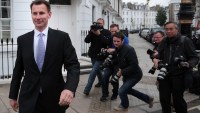
Home David Cameron, the Prime Minister, shuffled the Cabinet a little, with Sir George Young being replaced as Leader of the House by Andrew Lansley, who was replaced as Health Secretary by Jeremy Hunt, who was replaced as Culture Secretary by Maria Miller. Justine Greening was replaced as Transport Secretary by Patrick McLoughlin, who was replaced as Chief Whip by Andrew Mitchell, who was replaced as International Development Secretary by Justine Greening, whose move, according to Boris Johnson, the Mayor of London, showed that the government wanted to ‘ditch its promises and send yet more planes over central London’. Caroline Spelman was replaced as Environment Secretary by Owen Paterson, who was replaced as Northern Ireland Secretary by Theresa Villiers.
From our UK edition
Save our salmon Sir: On a Winston Churchill scholarship to discover what other North Atlantic host countries were doing for beleaguered salmon numbers in the 1990s, I found that the Canadian government considered hydroelectric schemes far less green than wind farms (‘Something’s fishy’, 1 September). The Canadian experience was that hydro units minced fish, interfered with the movement of migratory species, and often produced electricity in amounts well below original specification targets. On return to the UK, I looked closely at ‘my’ Scottish river, Carron Kyle of Sutherland. Water is abstracted from headwaters to feed turbines in a neighbouring catchment.
From our UK edition
Patrick Hennessey was a founder member of the Junior Officers' Reading Club, formed when the Grenadier Guards toured Iraq in 2006. He is the author of The Junior Officers' Reading Club — the story of how a ‘wise-arse Thatcherite kid’ became a thoughtful soldier. It is among the best examples of British military witness written since 1945. Hennessey, now a barrister, has recently penned a sequel of sorts, called Kandak: Fighting With Afghans. It is published by Penguin tomorrow. He has answered this week’s Shelf Life questionnaire. 1) What are you reading at the moment? I’m finally getting round to reading Life and Fate which is, so far, living up to its impressive reputation. 2) As a child, what did you read under the covers?
From our UK edition
This was a live blog from 4 September 2012. The latest entries at the top and you can scroll down to read the event as it happened. 20:00: That's all folks - it's time to close up the blog. Downing Street have released their final list of ministerial appointments today. We hope you have enjoyed our live coverage of David Cameron's first cabinet reshuffle and do come back to Coffee House for the latest developments from Westminster. Good night! 1938: Looks like Cheryl Gillan's ex-PPS Glyn Davies is pleased to free from his shackles: Like frisky young heifer in spring when first turned out to grass - free to gambol. Now my boss has gone, not fettered by PPS restraints. — Glyn Davies (@GlynDaviesMP) September 4, 2012 1915: More junior roles are being announced. No.
From our UK edition
Tim Farron is president of the Liberal Democrats and shares his reading list with Spectator readers. Hopefully he is not thinking of the state of his own party when he suggests Lord of the Flies as the book that best sums up 'now', but in case he is, the next book he plans to read is all about 'the empty promises of love, money and power'. 1) Which book's on your bedside table at the moment? The Redeemer by Jo Nesbo. 2) Which book would you read to your children? Currently reading The Horse and His Boy by CS Lewis. 3) Which literary character would you most like to be? Ellie Arroway, the hero in Contact by Carl Sagan. 4) Which book do you think best sums up 'now'? Lord of the Flies by William Golding. 5) What was the last novel you read? A Troubled Man by Henning Mankel.
From our UK edition
Peter Wishart is the SNP Member of Parliament for Perth and North Perthshire, and the party's Westminster spokesman on culture, media and sport, among other areas. He shares his own books choices with Spectator readers this weekend. 1) Which books are on your bedside table at the moment? On my bedside table (or rather bedside ipad) just now is Skagboys by Irvine Welsh, the prequel to Trainspotting, and tributes and selected writings about Douglas Crawford, my SNP predecessor from the 70s. 2) Which book would you read to your children? Given he is now 21, and a student, it would probably be the current condition of the bank of dad. But when he was small he, and I, loved The Tiger Who Came to Tea by Judith Kerr (that was one bad cat) and the tales of Katie Morag.
This week, the GCSE results envelope landed on doormats across the country. The results ought, on any rational basis, to shame the nation. Never mind how well or badly pupils may have done individually, taken as a whole the results point to a chillingly predictable trend for anyone in a comprehensive school. A pupil can look at their postcode, and see where it ranks in the government’s Index of Multiple Deprivation. If they live in a relatively prosperous area, they can be expected to have done fairly well. If they live on a sink estate, the odds are that they will have done badly. Parents have long known about this link, which is why so many go to such lengths to rent property in more affluent catchment areas a year before their child is enrolled in school.
From our UK edition
Home After being granted asylum by Ecuador, Julian Assange, the founder of WikiLeaks, addressed a crowd of supporters from a balcony of the Ecuadorian embassy, to which he had fled in June to avoid extradition to Sweden, where he faces questioning over allegations of sexual assault. The Foreign Office had annoyed Ecuador by drawing attention to the Diplomatic and Consular Premises Act 1987, which might allow police to enter the embassy to arrest Mr Assange. George Galloway, the Respect party MP, said that what Mr Assange was accused of ‘might be really sordid and bad sexual etiquette, but whatever else it is, it is not rape’. Asil Nadir was found guilty on three counts of theft totalling £5.