Soup
From our UK edition
From our UK edition
From our UK edition
From our UK edition
From our UK edition
From our UK edition
From our UK edition
From our UK edition
From our UK edition
From our UK edition
From our UK edition
From our UK edition
From our UK edition
Moore for less Sir: Niru Ratnam (Arts, 19 January) is wrong on a number of counts and omits much else. The sale of Henry Moore’s ‘Draped Seated Woman’ would be most unlikely to raise the £20 million he claims; £5 million is thought to be much nearer the market value — 0.3 per cent of Tower Hamlets’ annual expenditure of £1.53 billion, and scarcely likely to relieve the current financial pressure on its council. Moreover he neglects to mention that the Museum of London has offered to house and maintain the work on its Docklands site, giving it the public profile in London, and impact on daily lives, that Moore himself so desired. This matters today as much as it ever did.
From our UK edition
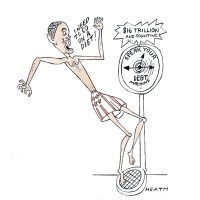
Four sworn Barack Obama achieved a remarkable feat last week: he managed to take the oath of office for a fourth time. Under the 22nd Amendment to the US constitution, which was passed in 1947, no president may be elected to office more than twice. — In 2009 Obama took his oath a second time, in the White House, after chief justice John Roberts confused his lines, leading to suggestions that Joe Biden was president. — The constitution demands that 20 January be inauguration day. As it fell on Sunday, Obama took an oath in private, followed by a re-run at the official ceremony on Monday. — Only one other president has taken the oath four times: Franklin D. Roosevelt, who was inaugurated for a fourth time in 1945.
From our UK edition
Home David Cameron, the Prime Minister, at last delivered his speech on Europe, postponed during the Algerian hostage crisis. He wanted to ‘negotiate a new settlement with our European partners’, and before the end of 2017, ‘when we have negotiated that new settlement, we will give the British people a referendum with a very simple in or out choice. To stay in the EU on these new terms; or come out altogether. It will be an in/out referendum.’ The government started trying to hurry through a Bill to change succession to the Crown. Blockbuster, the DVD rental firm, went into administration and announced the closure of 160 of its 528 shops. Tom Albanese resigned as the chief executive of Rio Tinto after the company wrote off £8.
From our UK edition
It was almost worth the wait. The substance of David Cameron’s speech on Europe was disclosed in this magazine a fortnight ago, but his delivery was excellent. He offered a clear-headed and almost touchingly optimistic vision of the type of union that the British public would find acceptable: one based on free trade, not bureaucratic diktat. One where power can flow back to countries, not be leached from them. And one founded on genuine popular consent, rather than broken promises and dodged referenda. Such a settlement would be nothing more than what the British signed up to when last consulted. The Prime Minister based his speech on the most important point: that the Europe question is no longer about political factions. It is about the people.

From our UK edition
From our UK edition
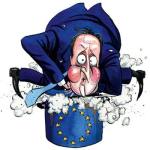
Just for Coffee House readers, here is a sneak preview of the leading article from this week's Spectator. Download our iPad and iPhone app to read the rest of the magazine first thing tomorrow. It was almost worth the wait. The substance of David Cameron’s speech on Europe was disclosed in this magazine a fortnight ago, but his delivery was excellent. He offered a clear-headed and almost touchingly optimistic vision of the type of union that the British public would find acceptable: one based on free trade, not bureaucratic diktat. One where power can flow back to countries, not be leached from them. And one founded on genuine popular consent, rather than broken promises and dodged referenda.

From our UK edition
While David Cameron's EU speech today made all the front pages, it is far from fresh news. Two weeks ago, James Forsyth revealed to Spectator readers what the Prime Minister would say in his speech. But as far back as last May, we revealed that a referendum on EU membership was almost certain: A referendum on Europe is the obvious answer. It is one the leadership seems set to embrace. The popularity of Cameron’s EU veto made his circle realise how much of a political asset Euroscepticism could be, if used in the right way. There is also concern in No. 10 that if the Tories don’t offer the public a vote, Labour will. One source intimately involved in Tory electoral strategy told me recently that a referendum in the next manifesto was ‘basically a certainty’.
From our UK edition
This morning I want to talk about the future of Europe. But first, let us remember the past. Seventy years ago, Europe was being torn apart by its second catastrophic conflict in a generation. A war which saw the streets of European cities strewn with rubble. The skies of London lit by flames night after night. And millions dead across the world in the battle for peace and liberty. As we remember their sacrifice, so we should also remember how the shift in Europe from war to sustained peace came about. It did not happen like a change in the weather. It happened because of determined work over generations. A commitment to friendship and a resolve never to re-visit that dark past - a commitment epitomised by the Elysee Treaty signed 50 years ago this week.
From our UK edition
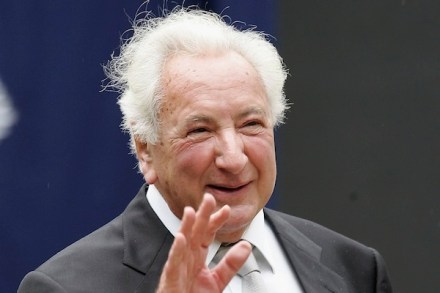
Journalist and film director Michael Winner passed away today aged 77. He was a popular diarist in the pages of The Spectator, with his most recent offering appearing in January 2010. In that column, he described the filming of his TV series 'Michael Winner's Dining Stars', and mused about what might happen if it flopped: There’s a nasty Hollywood crew saying about artistes: ‘Bring on da puppets.’ That was largely the attitude of the production team. I’d have fired most of them. I know I’m not Leonardo di Caprio, Johnny Depp, Meryl Streep or anyone near the top of the star tree. But courtesy would have been appreciated. It was a great experience regardless. I loved the warmth, consideration, and sometimes confrontation, from people who hosted me for dinner.