Whatever
From our UK edition
From our UK edition
From our UK edition

From our UK edition
From our UK edition
From our UK edition
From our UK edition
From our UK edition
From our UK edition
From our UK edition
From our UK edition
From our UK edition
Reforming criminal justice Sir: Crime continues to fall under this government and is now at its lowest level since the crime survey began in 1982. But we can’t be complacent. We still see too many of the same faces going round and round the criminal justice system, as Theodore Dalrymple notes in his article ‘The rehabilitation game’ (26 January). We are already addressing the problems Dalrymple describes. We are changing the law so every community sentence will include punishment and introducing satellite tagging to keep a much closer eye on persistent and high-risk offenders. I am looking at the use of cautions.
From our UK edition
A desert mystery Insurgents were reported to have burned tens of thousands of ancient manuscripts in Timbuktu as French troops surrounded the city. Timbuktu has long been a byword for a distant and unreachable place. But how did it come to be so? — No European is known to have visited Timbuktu until Robert Adams, a sailor captured after a shipwreck off the West African coast, claimed to have been taken there as a slave in 1812. He turned up in Tangier the next year, having been sold to tobacco merchants. — Three years later, he published an account, The Narrative of Robert Adams.
From our UK edition
Home Britain decided to send 40 ‘military advisers’ to Mali, 70 more with an RAF Sentinel surveillance aircraft and 20 with a C17 transport plane, and 200 to neighbouring states in a training role; Britain was ‘keen’, according to Downing Street, to aid France there. David Cameron, the Prime Minister, visited Algeria. The British economy shrank by 0.3 per cent in the fourth quarter of 2012, according to the Office for National Statistics, meaning that there was no growth at all last year. The FTSE 100 share index went above the 6,300 mark for the first time since May 2008. Qatari Diar, the property arm of the emirate of Qatar, put its £3 billion development project at the Chelsea Barracks under review.
From our UK edition
When the letters ‘NHS’ appeared to the world above the dancing nurses at the Olympic opening ceremony, many in Britain will have imagined two darker words hovering alongside: ‘Mid Staffs’. Few of those affected will have been able to forget what now seems to be one of the greatest scandals in the history of British health care. Its horrific details will be laid out in full next week when Robert Francis QC publishes his report into Mid Staffordshire NHS Foundation Trust. What we already know about the level of care at the Trust is shocking — and goes far beyond patients left in soiled bedclothes.
From our UK edition
From our UK edition
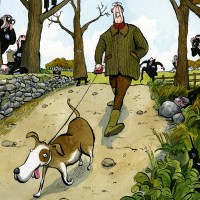
Is the RSPCA morphing from animal welfare charity into an animal rights group? In this week's Spectator, Melissa Kite writes that following the charity's successful prosecution of the Heythrop hunt, its chief executive Gavin Grant now has his sights set on the racing industry: Buoyed by the success of his prosecution of the Heythrop hunt, I am reliably informed, he has set his sights on the racing industry next. ‘His modus operandi for these big campaigns is to target high-profile events and people,’ a well-placed veterinary expert told me. ‘So you won’t see him having a go at Badminton, where horses also get injured, because it’s not a household event. He will go for the Grand National because the entire country watches it.
From our UK edition
From our UK edition
From our UK edition
From our UK edition