Volunteer
From our UK edition
From our UK edition
From our UK edition
From our UK edition
Benedictions Sir: John O’Sullivan’s summary of Pope Benedict XVI’s ‘extraordinary contribution’ to Catholic thought was masterful (‘Benedict’s reformation’, 16 February) — and how interesting that the Pontiff’s writings and speeches have helped create a new ‘Catholic atheist’ movement. It is a shame, however, that O’Sullivan didn’t mention another area in which Benedict has challenged western ideas: his repeated denunciation of ‘unregulated financial capitalism’ as a threat to world peace. Adam Smith would have agreed with him. I hope that O’Sullivan’s omission was not ideological blindness as to the nasty side of free markets.
From our UK edition
Home Unemployment fell by 14,000 between August and November to 2.5 million, with the number in work rising by 154,000 to 29.7 million, meaning that 580,000 more people were in work than a year before. David Cameron toured India with an entourage of trade delegates. ‘Britain wants to be your partner of choice,’ he said. His visit came days after India suspended a £480 million contract to buy 12 Westland helicopters, following the arrest in Italy over bribery allegations of the chief executive of Finmeccanica, an Italian firm that makes AgustaWestland helicopters in Britain. The government auction of a spectrum for 4G mobile phones raised £2.34 billion; the Office for Budget Responsibility had forecast £3.5 billion.
From our UK edition
Dyeing and dying A teacher in Harrow complained to his MP that he had been banned from marking pupils’ work in red ink in case it upset them. Some origins of ink: Black Made from burned bones, tar and pitch in India by the 4th century BC. Made from soot in China by the 3rd century BC. Red Blood was used in medieval England (red ink from blood is said to have been used by poor monasteries; hence its association with debt). Made with brazilwood from the 16th century in Europe. Blue Made from various vitreous pigments added to black ink in 11th-century Europe. Purple Made in ancient Tyre, in the 7th century BC, from a secretion of shellfish. Epidemic of fear Eight hundred people in the Swansea area contracted measles in a now rare epidemic of a once universal disease.
From our UK edition
What have obesity, misbehaving banks, unaffordable London housing and farting cows all got in common? They are all problems which, according to various campaigners over the past week or so, can be cured through the imposition of new taxes. Those calling for fiscal therapy included the Academy of Medical Royal Colleges, which suggested a 20 per cent levy on sugary drinks, the Liberal Democrats, who want wealthy home-owners to be subjected to a new mansion tax, and the Swedish Board of Agriculture, which wants a levy on meat to reduce methane production from livestock.
From our UK edition
From our UK edition
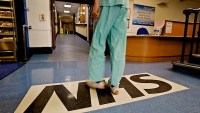
Health tourism is raised every now again by politicians, but never has it been raised so forcefully by such a senior doctor. In this week's Spectator, Professor J.Meirion Thomas, a consultant surgeon with the NHS and one of Britain's leading cancer experts, speaks out about health tourism. He writes: I am frustrated at seeing the NHS targeted by patients who are ineligible for free care, but who usually get through the net. Specialist units may be especially vulnerable. Reluctantly, I have decided to share my concerns. The final trigger to write this article was a potentially ineligible patient who accused me of unethical behaviour because I would not promote his application with my Trust for immediate and free NHS care.
From our UK edition
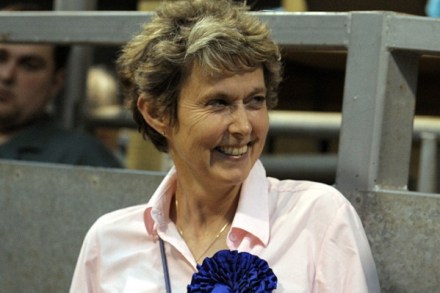
Anne McIntosh is the Conservative MP for the Thirsk and Malton constituency, as well as being Chair of the Environment, Food and Rural Affairs Select Committee. She shares her favourite books with Spectator readers this weekend. 1) Which book is on your bedside table at the moment? It's Headhunters by Jo Nesbo, and it's actually in Danish. I'm half Danish and I try to keep my language up but I have to say it does take me a while – I do read quite slowly anyway. It was written in Norwegian but translated into Danish and English. That's the one I'm reading at the minute. It's quite exciting. 2. Which book would you read to children? I would read the fairy tales of Hans Christian Andersen, they're for children but they have a moral to them as well, and there are loads of them.
From our UK edition
From our UK edition
From our UK edition
From our UK edition
From our UK edition
From our UK edition
From our UK edition
From our UK edition
From our UK edition
From our UK edition
From our UK edition