Vicar 3
From our UK edition
From our UK edition
From our UK edition
From our UK edition
From our UK edition
From our UK edition
From our UK edition
From our UK edition
From our UK edition
From our UK edition
From our UK edition
From our UK edition
From our UK edition

From our UK edition
From our UK edition
Health tourists must pay Sir: The extent of the use made by non-entitled patients from abroad (‘International Health Service’, 6 April) should come as no surprise. This increasing stream of information demonstrating the volume and variation will cause even louder gasps and shock. The NHS is the standard-bearer of the politics of equality and, like all great collective institutions of the left, however altruistic, is fundamentally corrupt. The corruption is so insidious that only those inside gain insight after the collapse. In the health service there are often concealed two or more levels of care with varying degrees of competence.
From our UK edition
Soon after Margaret Thatcher was elected leader of the Conservative party she came for lunch at The Spectator and our then proprietor, Henry Keswick, wanted to offer his congratulations — and his advice. It was time to crush the trades unions, he told her. ‘Mr Keswick,’ she replied. ‘You have spent the past 14 years in Hong Kong, where such things may be doable. I have spent them in Britain, where things are very different.’ She was advocating a simple principle: practicality comes before ideology. The only point in fighting battles is to win them. Her victories were so decisive and spectacular that it is possible — as we have seen in the last few days — to dwell almost entirely on them (and those who didn’t like them).
From our UK edition
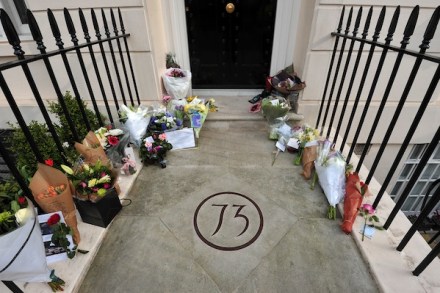
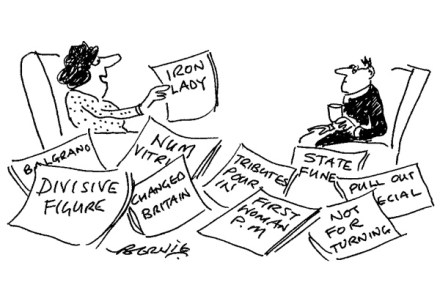
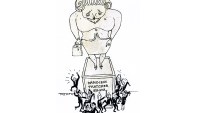
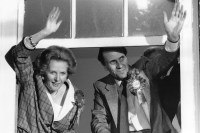
Home Margaret Thatcher, the prime minister from 1979 to 1990, died aged 87. She had suffered a stroke while reading in her room at the Ritz hotel, where she had been staying since being discharged from hospital at the end of 2012 after a minor operation. David Cameron, the Prime Minister, cancelled talks in Paris with President François Hollande and returned to Britain. News broadcasts and newspapers were dominated by coverage of her political career. Seven policemen were injured when perhaps 200 people gathered at Easton, in Bristol, celebrating the death and setting fire to dustbins after dark. Both Houses of Parliament were recalled for a day in tribute to Lady Thatcher, a life peeress since 1992.
From our UK edition
As Isabel said yesterday, the standout speech in the Upper Chamber yesterday came from Norman Tebbit, who served for six years in Margaret Thatcher's Cabinet, first as Secretary of State for Employment, then as Secretary of State for Trade and Industry, and finally as Chairman of the Conservative Party.
From our UK edition
Cecil Parkinson: Underestimated – but unbowed Even among Mrs Thatcher’s original shadow Cabinet, there were those who simply did not believe that she would be capable of dealing with the problems of a declining country. To a man they were wrong. Each underestimated the determination of Margaret Thatcher. She did not regard the manifesto on which she had been elected as a set of pledges designed merely to win an election and to be abandoned when the going got tough. She intended to honour hers: to reduce the role of the state; to transfer power to the people. Trade union members were given the right to elect their leaders at regular intervals and to vote before being called out on strike.

From our UK edition
In 1975, when Keith Joseph dropped out of the race for the Tory leadership and his campaign manager stepped into his place, almost no one took it seriously. She was ‘precisely the sort of candidate… who ought to be able to stand, and lose, harmlessly’ said the Economist. Only one publication in Britain backed her then, and our endorsement is reprinted in our supplement. The values she represented are the ones The Spectator has championed for decades: small government, low taxes and personal freedom. And a preference for those who enter politics to do something, rather than be someone.
From our UK edition
One of the highlights of today's Commons tributes to Margaret Thatcher was the contribution of Malcolm Rifkind, who served in Thatcher's government throughout her time as Prime Minister.