Brown
From our UK edition
From our UK edition
From our UK edition
From our UK edition
Gnome territory This year only, garden gnomes are allowed at the Chelsea Flower Show. Some other places to see them: Germany. The home of the gnome, where the first batch were manufactured in 1841, has an estimated 25 million. European Gnome Sanctuary, Barga, Italy. A town whose parks and gardens have become a dumping ground for stolen gnomes, promoted by an underground Gnome Liberation Front. Bed of Wast Water, Cumbria. In 2005 the North West Police Underwater Search Unit removed a gnome on the lake bed blamed for luring several inexperienced divers to their deaths. More gnomes promptly appeared — this time below the depth limit at which police divers work. Taxing calculations David Cameron wrote to British dependencies asking for more help fighting tax avoidance.
From our UK edition
Stay Conservative Sir: Dr John Hyder-Wilson wrote (Letters, 11 May) of my calls to ‘shift Tory party policy rightward’ to meet a threat from Ukip, which he felt was inconsistent as he could not remember me advocating a leftward shift in response to a threat from the SDP/Alliance in the early 1980s. Of course he could not. I am afraid that he is in a muddle. I responded then to the SDP/Alliance, and would do so now to Ukip in exactly the same way, by advocating Conservative policies for the Conservative party. As Dr Hyder-Wilson may remember, Margaret Thatcher won her third election victory on Conservative policies after eight years in office governing on those policies. In that victory she secured more votes than at her first victory.
From our UK edition
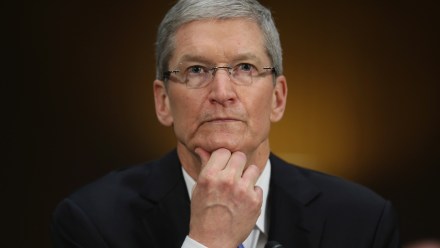
Anyone who googled ‘tax avoidance’ this week will have been confronted (between adverts for accountancy firms) with endless stories about Google’s own tax avoidance schemes. If the company’s reputational management team was striving to stem the flood of bad publicity, it was not succeeding. Salvation for -Google arrived only when Apple’s tax avoidance became the big story instead. That is what the internet has created: a sometimes frightening, uncontrollable world in which information flows from place to place almost instantly and (mostly) unimpeded. Few would deny, however that the internet has had a benign and enriching influence on our lives overall.
From our UK edition
Home A senior figure in the Conservative party with strong social connections to David Cameron, the Prime Minister, was reported by the Telegraph and Times to have said that Conservative constituency associations ‘are all mad swivel-eyed loons’. Lord Feldman, the party’s co-chairman, said it was not he. Mr Cameron sent an email to party activists saying: ‘I am proud of what you do. And I would never have around me those who sneered or thought otherwise.’ The rumpus erupted as Conservative voters defected to the UK Independence Party, and Conservative MPs became impatient with the leadership of Mr Cameron.
From our UK edition
From our UK edition
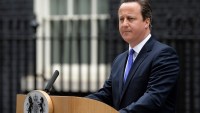
What happened yesterday in Woolwich has sickened us all. On our televisions last night, and in our newspapers this morning, we have all seen images that are deeply shocking. The people who did this were trying to divide us. They should know something like this will only bring us together and make us stronger. Today our thoughts are with the victim and with his family. They are grieving for their loved one and we have lost a brave soldier. This morning I have chaired a meeting of Cobra and I want to thank the police and the security services for the incredible work they do to keep our country safe. There are police investigations and security service operations underway, so obviously there is a limit on what I can say.
From our UK edition
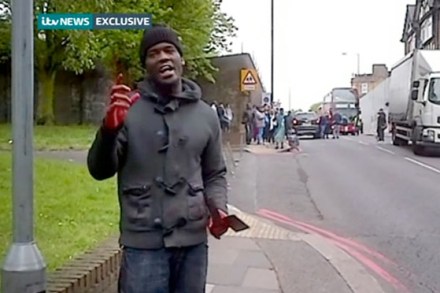
Summary: A British solider has been reported to have been beheaded on the streets of Woolwich, south east London by two men at 2:20pm afternoon. The BBC is reporting the murder may have been filmed over cries of 'Allahu Akbar' . ITV has released footage of a man carrying a bloodied knife saying 'remove your governments - they don't care about you.' Home Secretary Theresa May chaired a meeting of Cobra, the government's emergency response committee, suggesting that the incident was a terrorist attack. Police shot two men, who had lingered at the scene. They are receiving emergency treatment at separate hospitals.
From our UK edition
This is the full Hansard of list of how MPs voted on tonight's third reading of the Marriage (Same Sex Couples) Bill. It was a free vote, and the Bill passed 366 to 161.
From our UK edition
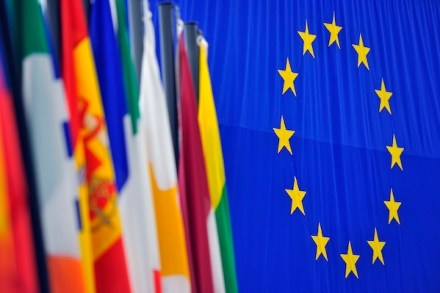
Ben Goldsmith, Partner at WHEB Partners and signatory to Business for Britain In the private sector, every business must provide regular and accurate accounts. Yet when you try to look into the European Union’s income and expenditure there is just obscurity, masking a black hole of inefficiency and waste. The EU’s finances are a mess - the Court of Auditors has refused to sign off the EU’s accounts for eighteen years successively. The costs of EU membership to the UK are high – around £8.9 billion in 2010/11, with the threat of increases to come.
From our UK edition
From our UK edition
From our UK edition
From our UK edition
From our UK edition
From our UK edition
From our UK edition
From our UK edition
From our UK edition