The Spectator

Leader: Ring-fencing the NHS is only making matters worse

From our UK edition

According to popular wisdom on the left — and even among some in the Conservative party — this ought to have been a tough week for the government. On Monday, the new £26,000 cap on benefits came into effect and with it a new principle: that no one on welfare should receive more than the average working family. Such a move, it was said, would expose the Conservatives to what is supposed to be their weak point: that they are the ‘nasty party’ who care about money, not people. Yet something remarkable has happened. Iain Duncan Smith’s welfare cap is turning out to be not just the boldest but the most popular reform undertaken by this government.


Letters: The Met Office answers Rupert Darwall, and a defence of Bolívar

From our UK edition

Wild weather Sir: Weather and climate science is not an emotional or political issue — even though emotions and politics run high around it, as illustrated in Rupert Darwall’s article (‘Bad weather’, 13 July). However, it is important that opinions are rooted in evidence, and the article contains numerous errors and misrepresentations about the Met Office and its science. Here are a couple of points. The assertion of the Met Office’s ‘forecast failure’ is just wrong. The Met Office is beating all of its forecast accuracy targets. We are consistently recognised by the World Meteorological Organization as one of the top two most accurate operational forecasters in the world.

Barometer | 18 July 2013

From our UK edition

Running scared Three participants were gored at the Pamplona bull run. The event has reputation for danger, but how risky is it? —Since 1910, 15 deaths have been recorded, the last in 2009. Five of the deaths have been since 1980. — Counting of the participants began only 2011, when 20,500 people were recorded as taking part in the eight bull runnings of that year. If this is typical it suggests a mortality rate of about one in 140,000. — This compares well with another mass outdoor event: the London marathon. Since 1981, there have been eight deaths during or immediately after the marathon. Over 32 years the number of participants has grown from 6,500 to 32,000, suggesting a mortality rate of approximately one in 67,000, or about twice that of the bull run.

The week in books | 12 July 2013

From our UK edition

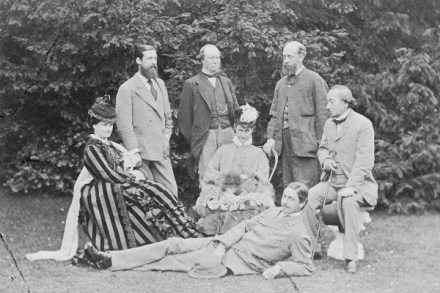
The latest issue of the Spectator is full to bursting with sparkling and varied book reviews. Here are some extracts from those reviews: Sam Leith reviews two new books (one by Douglas Hurd and Edward Young, the other by Dick Legend) that, to some extent, debunk the Tory legend of Benjamin Disraeli. ‘Disraeli…, as Hurd and Young see it, was … ‘one of the first career politicians’, for better and for worse. For better: he understood the importance of party discipline; it was on his watch that Conservative Central Office came into being to manage elections and water the grass roots, and on his watch that the parliamentary party started to be briefed on the contents of the bills that the government was to bring forward.

Why Ed Miliband should stop paying his union dues

From our UK edition

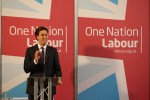
Ed Miliband’s relationship with Len McCluskey was defined in a brief camera shot at the Labour party conference in 2010. After praising trade unions, Miliband added that he would have no patience with ‘waves of irresponsible strikes’. Several rows back, McCluskey, who three days earlier had helped Ed defeat his brother David in the leadership election, was filmed shaking his head and shouting ‘Rubbish!’ Given that McCluskey’s Unite union pays most of Labour’s bills, his word was seen as a veto. This was the new deal. McCluskey and his colleagues bestowed their patronage upon Ed not because they thought he would be a strong leader, but for rather the opposite reason: they expected acquiescence. In many ways, Ed has justified their faith.

Letters: MPs’ salaries, Ruby the Heartstealer, and how to avoid washing up

From our UK edition

Tax breaks for families Sir: Hugo Rifkind is wrong to imply (6 July) that the current income tax system is indifferent to family structure, and thus the Conservative party’s attempt to give tax breaks to married couples is ‘a blatant attempt at social engineering’. Is it not social engineering when the current system demands more tax from a single-earner family than a dual-earner family, even if the total income is the same? Milton Friedman once said: ‘We tend to talk about an individualist society, but it really isn’t, it’s a family society.’ Hugo makes the mistake of seeing society as a collection of individuals, but in the real world most important financial decisions are taken by families or households.