Trott
From our UK edition
From our UK edition
From our UK edition
From our UK edition
From our UK edition
From our UK edition
From our UK edition
From our UK edition
From our UK edition
From our UK edition
From our UK edition
Scandal at the Co-op Sir: Martin Vander Weyer makes a good point. The Revd Paul Flowers may be a flawed individual, but he is not responsible for Co-op Bank’s woes (Any Other Business, 23 November). His appointment might be symptomatic of a complacency about ‘good’ and ‘bad’ banking that suited certain politicians, but surely now we need a full inquiry into the Lloyds takeover of HBOS and the Co-op takeover of Britannia. I would also like to see the terms compared to the Santander acquisition of Bradford & Bingley. The true scandal is the collusion of politicians, regulators and senior bankers. In the meantime, I hope Paul Flowers gets the help he needs.
From our UK edition
Third-class thinking A report by the Institute of Economic Affairs recommended standing-room-only third-class carriages as an alternative to longer trains and platforms. What was third-class rail travel originally like? — Until the 1844 Railway Act third-class travel generally meant an open carriage with holes drilled in the floor to let the rainwater out. The Act demanded that all carriages conveying humans be covered. Seats were usually provided. — In 1872 the Midland Railway became to first company to abolish second class, by removing leather seat backs from second-class carriages and adding leather upholstery to the seats of third-class carriages. Of human bondage Three women were found apparently living in slavery in south London.
From our UK edition
Home Alex Salmond, the First Minister of Scotland, outlined Scottish National Party plans for independence, which included keeping the pound and armed forces of 15,000, replacing the BBC with the Scottish Broadcasting Service and introducing random breath tests. The Ministry of Defence said it would investigate claims that in 1972 an Army plainclothes undercover unit shot dead people in Northern Ireland unconnected with paramilitary activity. A bomb containing 132lbs of home-made explosives failed to go off properly in a car parked at Victoria Square in central Belfast. Rape at the hands of under-age perpetrators is seen as ‘normal and inevitable’ among children in some areas, according to the Office of the Children’s Commissioner for England.
From our UK edition
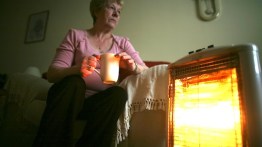
Fanciful predictions of all the deaths that will result from climate change, decades into the future, are regularly thrown into public debate. Less attention has been given to a real statistic from the here and now, released by the Office of National Statistics this week, which shows the effects of one of the policies designed to tackle climate change: high energy prices. It emerged this week that there were 31,000 ‘excess’ deaths in England and Wales last winter, almost a third more than the previous year. Almost all were, in effect, British pensioners who died of the cold. It’s odd: Britain is a rich country with a massive welfare state — and we know how to heat and insulate houses. We also send millions away in overseas aid.
From our UK edition

From our UK edition
Last night, Sebastian Payne described Boris Johnson as being a politician who 'prides himself on being one of the few politicians who gets away with saying the unsayable'. He was covering the Mayor of London's lecture to the Centre for Policy Studies, where Boris said the following: 'Whatever you may think of the value of IQ tests, it is surely relevant to a conversation about equality that as many as 16 per cent of our species have an IQ below 85, while about 2 per cent have an IQ above 130. The harder you shake the pack, the easier it will be for some cornflakes to get to the top.

From our UK edition
Yes Trinny Woodall I’m Trinny, I’m an alcoholic and I’m an addict. When asked whether addiction is a disease, I didn’t have to think twice. Knowing that I have a disease is how I manage to have a healthy life today. All I can tell you about addiction is my experience. I grew up in a very normal home. Both my grandfather who was an alcoholic and an uncle who was alcoholic died of this illness. When I went to my first rehab I kept wondering: why I am an addict? They told me: ‘Don’t be concerned with why you have developed this disease. It’s in you, you have it, and you need to live healthily knowing you have it for life.’ Nobody starts taking whatever it is they’re addicted to because they hate it.

From our UK edition
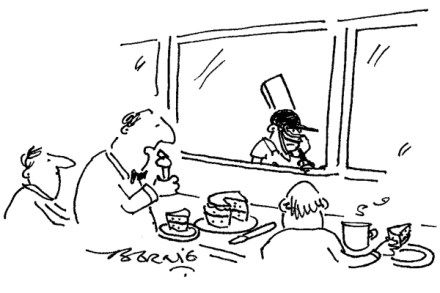
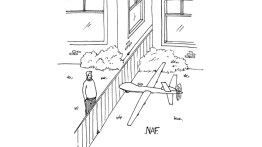
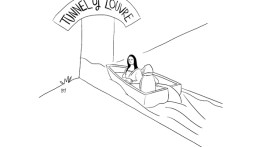
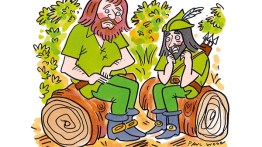
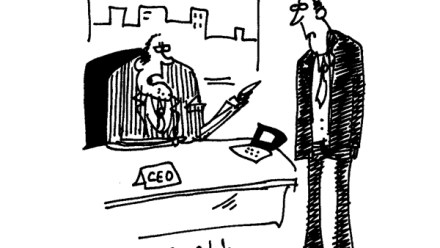
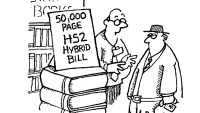
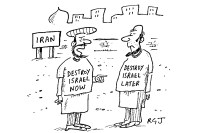
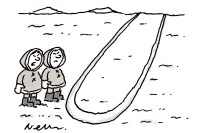
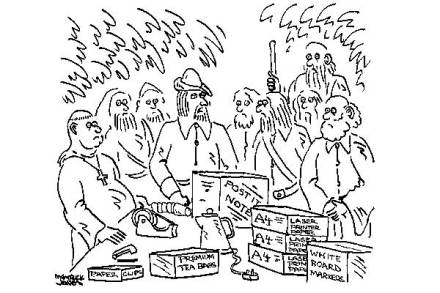
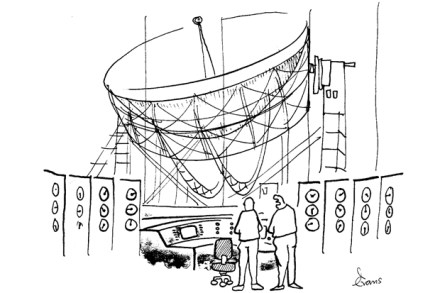
Nine cartoonists are shortlisted for the first ever Michael Heath Award for cartooning. The theme of the contest, sponsored by John Lobb, is ‘Man in Motion’. Work by four of the artists was printed in last week’s issue; four more are below. The winner will be published next week. Thanks to all who entered — and congratulations to those shortlisted.
From our UK edition
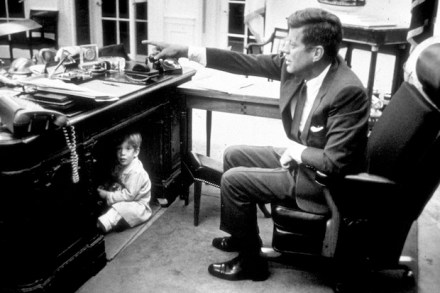
6 December 1963 …That we here highly resolve that the dead shall not have died in vain... Lincoln, a hundred years ago at Gettysburg. And President Johnson, in his noble speech to Congress, echoed the words in tribute to John Fitzgerald Kennedy. Earlier in November we in this country had been wondering how long Remembrance Sunday could remain. Wondering whether the poppy symbolism of the First World War meant very much to those who fought in the Second, the youngest of them now moving towards their forties. That President Kennedy should have become the spokesman of those who fought in war and yearned for peace was natural. But he became also a symbol of youth and hope to a whole generation that was too young to fight and that also yearned for peace.
From our UK edition
From our UK edition