Civilization
From our UK edition
From our UK edition
From our UK edition
From our UK edition
From our UK edition
From our UK edition
From our UK edition
From our UK edition
From our UK edition
From our UK edition
From our UK edition
From our UK edition
From our UK edition
From our UK edition
From our UK edition
From our UK edition
From our UK edition
Why girls do better Sir: Isabel Hardman notes that girls now outperform boys at every level in education (‘The descent of man’, 3 May), implying that this is a symptom of a wider cultural malaise. In fact, boys lost their edge in 16+ exams in 1970, long before their advantages in other areas began to disappear. ‘Child-centred’ reforms were already well advanced when the infamous Plowden report was published in 1967, and informal practices such as ‘discovery learning’ and ‘whole language’ gave girls a decided edge. This was conclusively demonstrated in trials conducted between 1997 and 2005 by the Scottish Office.
From our UK edition
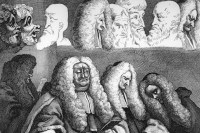
Judges in jail Barrister and part-time judge Constance Briscoe was jailed for 16 months for perverting the course of justice in charges related to the Chris Huhne affair. She is far from the first judge to end up behind bars. — In 2009 Marcus Einfield, a former judge at Australia's federal court, was given three years for lying over a speeding offence: he said he had lent his car to a friend who in fact had been killed in a car accident three years earlier. — Just last week Kazakh judge Kuplash Otemisova was jailed for four-and-a-half years for 'making a wrong court ruling', by releasing a Russian businessman who had been convicted of ordering murder.
From our UK edition
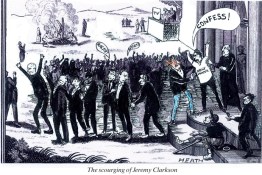
Home AstraZeneca’s board rejected an increased takeover bid of £63 billion by Pfizer. Commenting on the bid in Parliament, Vince Cable, the Lib Dem Business Secretary, said: ‘We see the future of the UK as a knowledge economy, not as a tax haven.’ A second strike by RMT union members on the London Underground was suspended after talks. Jeremy Paxman is to leave Newsnight next month after 25 years. Jeremy Clarkson was given a warning by the BBC for mumbling the counting-out rhyme, ‘Eeny, meeny, miney, mo. Catch a nigger by his toe’, in footage never broadcast. Harriet Harman, the deputy Labour leader, tweeted: ‘Anybody who uses the N-word in public or private in whatever context has no place in the British Broadcasting Corporation.
From our UK edition
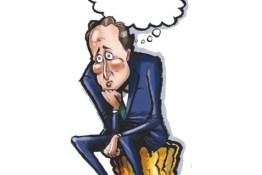
[audioplayer src="http://traffic.libsyn.com/spectator/TheViewFrom22_8_May_2014_v4.mp3" title="James Forsyth and Isabel Hardman look forward to the general election next year" startat=766] Listen [/audioplayer]In almost a decade as Conservative leader, David Cameron has tended to avoid talking about his political philosophy. He has presented himself as a pragmatist, suspicious of anything ending in ‘-ism’ — and the very opposite of a swivel-eyed ideologue. There is something to be said for this, but it raises the great question: what is a Conservative government for? There was no clear answer at the last election and so no clear result from that election. Voters had turned away from Labour, but were not quite sure how their lives would be better under the Conservatives.
From our UK edition