Secretary
From our UK edition
From our UK edition
From our UK edition
From our UK edition
From our UK edition
From our UK edition
From our UK edition
From our UK edition
From our UK edition
Commons inheritance Emily Benn, granddaughter of Tony and niece of Hilary, has won the right to stand for Labour in Croydon South. Which party produces the most political dynasties? Current MPs who had a parent in the Commons: CONSERVATIVE James Arbuthnot, Richard Benyon, Dominic Grieve, Ben Gummer, Nick Hurd, Andrew Mitchell, Nicholas Soames, Mark Pawsey, Laura Sandys, Robin Walker, Bill Wiggin LABOUR Hilary Benn, John Cryer, Lindsay Hoyle, Anas Sawar, Andy Sawford, Alison Seabeck d.u.p. Ian Paisley Jnr Air scares The loss of a second Malaysian Airways airliner means that the number of worldwide casualties in civilian air disasters — 827 so far this year — has already exceeded that of last year, when 459 died. But it does little to disturb the steady downwards trend.
From our UK edition
Give the women a chance Sir: Melissa Kite’s article about the reshuffle seems downright unfair (‘A misogynistic reshuffle’, 19 July). Whatever David Cameron’s motives may be, the women he has promoted to cabinet and other posts in his government are presumably intelligent and hardworking and have certainly demonstrated great stamina. This is true of anyone who reaches these levels in politics. They are no doubt excited to be facing extremely tough challenges, but they must also be quite nervous. Instead of giving them congratulations and encouragement, the best Ms Kite can offer is a prediction that none of them will be very successful.
From our UK edition
Home David Cameron, the Prime Minister, told Parliament that President Vladimir Putin of Russia should end his country’s support for separatists in Ukraine, some of whom it had provided with a training facility in south-west Russia. Licences to export arms to Russia were found still to be in place. Theresa May, the Home Secretary, announced a public inquiry into the death of the Russian dissident Alexander Litvinenko, a former KGB officer who died in 2006 in a London hospital after he was poisoned with polonium. Nick Clegg, the Deputy Prime Minister, was criticised by some MPs from rival parties for appearing on television sampling tequila instead of somehow doing something about the crisis. Prince George of Cambridge celebrated his first birthday.
From our UK edition
Dominic Grieve was a worthy attorney-general whose career was helped by this magazine: nine years ago, he was named Spectator Parliamentarian of the Year, beneath the nose of David Cameron, then nearing the end of his successful campaign for the Conservative leadership. But Grieve’s remarks this week, in which he suggested that the Prime Minister would be seen to be as bad as Putin if he pursues proposals to give Parliament ultimate authority over laws in this country, underline why his position as a member of the government had become untenable. One of the few redeeming features of David Cameron’s reshuffle is that it added a certain clarity to our position with the European Court of Human Rights.
From our UK edition
From our UK edition
Think we’ve done enough to avoid another financial crisis? Think again, says Liam Halligan. Sure, there’s no shortage of commentators (and stockbrokers) insisting the outlook is rosy and share prices will keep on rising. But alarming evidence is amassing that the global recovery is shaky, stock markets are over-hyped and large western banks remain a serious liability. Liam discusses his Spectator cover piece on this week's podcast with Adam Memon, Head of Economic Research at the Centre for Policy Studies. Over in Westminster, it’s holiday time for MPs.
From our UK edition
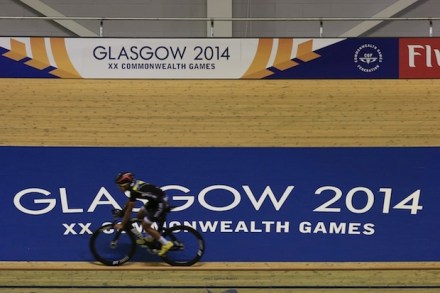
In choosing this September for the Scottish referendum on independence, the SNP was presumably hoping Scots voters would be basking in the glory of a successful Commonwealth Games. There is every reason to hope that the games, which opened in Glasgow this week, will emulate the London Olympics for organisational skill and, moreover, will help to sell an often-maligned city to the world. But why does it follow that Scotland needs to be independent of the UK to organise and enjoy such an event? If these games had been marred by pettifogging bureaucracy or financial constraints imposed by Whitehall, or if someone in London had trampled on Glasgow’s bid and put forward London or Birmingham instead, there would be every reason for Scots to feel aggrieved.
From our UK edition
In this week's View from 22 morning review, Douglas Murray, James Forsyth and Mary Wakefield discuss the weekend's main stories. Can Europe really enforce sanctions on Putin, in the wake of the shooting down of MH17? And what has been the fallout over the weekend from Cameron's reshuffle?
From our UK edition
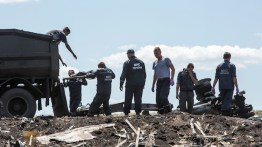
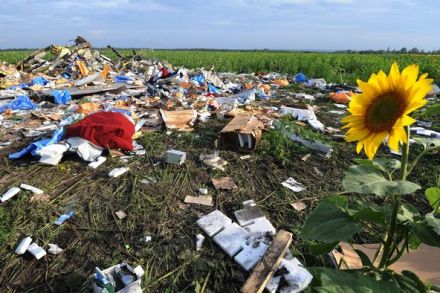
The Ukrainian government has failed to secure the crash site, as much as 25 square kilometres of territory, where debris from flight MH17 has fallen. The site is in rebel-held eastern Ukraine and the region's pro-Russian separatists have prevented international observers from the Organisation for Security and Co-operation in Europe from examining it. There are even reports that a drunk separatist gunman fired a warning shot to forestall investigators from conducting their examinations despite assurances from rebel commanders that observers would have safe access to the crash site.
From our UK edition
From our UK edition
From our UK edition
From our UK edition