The Spectator

The Spectator at war: All at sea

From our UK edition

From ‘News of the Week’, The Spectator, 8 August 1914: ‘The question that every man is asking is, What news of the Fleet? As we write on Friday it is almost impossible to answer this question. All we know is that our Fleet is in the North Sea and doing its duty. In all human probability it is as we write heavily engaged in action, but how that action goes it is impossible to say. Modern naval battles take up almost as much room as modern land battles, and it is quite possible that a fight begun off the North of Scotland may be decided far to the South, or actually off the Dutch coast.
Warsi resignation: David Cameron replies

From our UK edition

[audioplayer src="http://traffic.libsyn.com/spectator/TheViewFrom22_07_August_2014_v4.mp3" title="Douglas Murray and Tim Stanley discuss Baroness Warsi's resignation" startat=462] Listen [/audioplayer]Dear Sayeeda, Thank you for your letter today, in which you set out your reasons for resigning from the Government. I was sorry to receive this. I realise that this must not have been an easy decision for you to make and very much regret that we were not able to speak about your decision beforehand. I understand your strength of feeling on the current crisis in the Middle East – the situation in Gaza is intolerable.

The Spectator at war: Are the lights going out?

From our UK edition

From ‘News of the Week’, The Spectator, 8 August 1914:  ‘A good many excellent people are talking now as if the present war would mean the destruction of all civilization. That, we venture to say with all respect, is rubbish. Civilization is a far tougher plant than these good people imagine. That the war is a terrible evil, and that it will bring great sufferings, we admit as fully as can the most determined pessimist. It is, indeed, because we feel this so deeply that we have struggled hard in favour of those preparations which alone could have averted war, or, at any rate, might greatly have shortened it. Nevertheless the war, frightful as it must be in its consequences, is not, in any true sense, without parallel, nor will its effects be permanent.

The Spectator at war: ‘The great war has come…’

From our UK edition

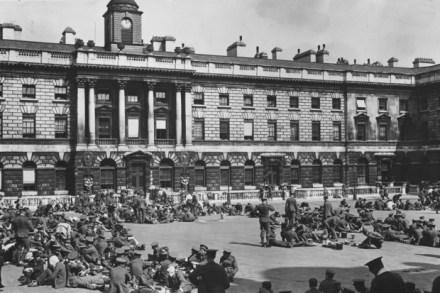
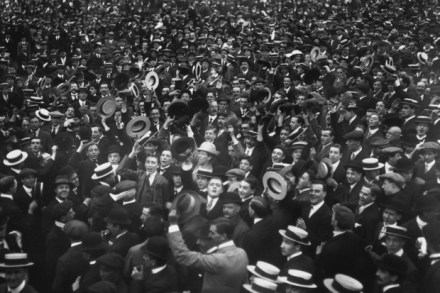
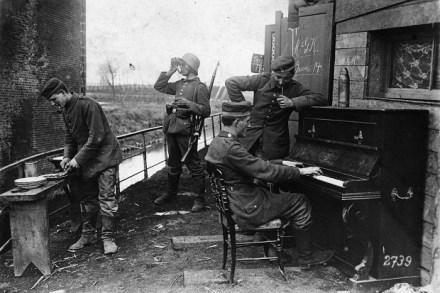
This is the first in a series of daily extracts from the Spectator during the course of the first world war. The aim is not to tell the full story of the conflict, or even to provide a full assessment of our coverage of it — that requires deeper expertise and a wider view. Our regular archive writer Molly Guinness will continue to provide such a perspective. Instead, we’ll seek to give an impression, week by week and page by page, of the atmosphere of the time, with a minimum of commentary and hindsight.

Germany’s forgotten war

From our UK edition

Britain is braced for the anniversary of the outbreak of world war one. Memorials and events are taking place across the country this weekend. Not so in Germany, where reticence reigns.  This week’s Spectator features a piece by Antonia Oettingen, a descendant of Karl Max von Lichnowsky, the Kaiser’s ambassador in London from 1912-1914. She explains why Germany is shy about the Great War. 'In 1912 Kaiser Wilhelm had an ambitious task for my great-great-great uncle Karl Max von Lichnowsky. He sent him to London to be our ambassador there, with orders to try to ensure Britain’s neutrality (at the very least, in cases of conflict with Russia and France).