Lamp
From our UK edition
From our UK edition
From our UK edition

From our UK edition
From our UK edition
From our UK edition
From our UK edition
From our UK edition
From our UK edition
From our UK edition
From our UK edition
From our UK edition
From our UK edition
Not in their name The BBC decided to start calling the Islamic terror group Isis by the acronym IS instead. Some organisations who are retaining the name: — Isis Equity Partners London-based private equity group — The Isis Student magazine at Oxford University — Isis day spa and hair salon in Oxford (not to mention hair salons in Birmingham, Ascot, Sunningdale and Writtle) — HMP Isis Young Offenders’ Institution in Thamesmead — Isis Motors Secondhand car dealership in Hayes, Middlesex — Spirit of Isis Ethically sourced crystal shop in Bedford Fighting faiths It was claimed that more British Muslims are fighting for jihadist forces than have joined HM Forces. What is the declared religion of British servicemen? Christian 86% No religion 12.
From our UK edition
We do remember them Sir: I applaud Tazi Husain’s defence of the role played by Baroness Warsi at Westminster Abbey during the first world war and his own role in driving forward the Tempsford Memorial Trust (Letters, 23 August). But he is mistaken in believing that soldiers of the Indian army (and other Imperial forces) are not commemorated. The whole point of war memorials in the UK is to remember and honour the fallen of the town, village or institution that they came from, in that place. Few if any UK residents who fell in 1914–18 would have originated from the subcontinent. The proper place for such memorials would be their home towns in India (I use the word in its imperial, not current, context).
From our UK edition
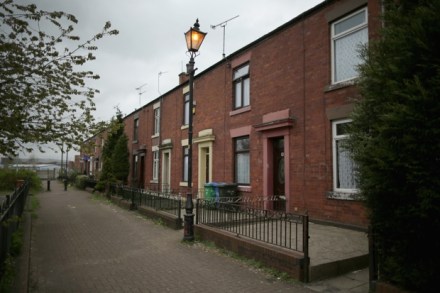
If Rotherham council were a family, its children would have been removed by social services long ago, and Ma and Pa Rotherham would be safely behind bars. Professor Alexis Jay’s report, which was published this week, reveals depravity on an industrial scale in the South Yorkshire town. At least 1,400 children, Prof. Jay estimates, were subjected to sexual exploitation between 1997 and 2013. Many were raped multiple times by members of gangs whose activities either were or should have been known about. Children were trafficked around the country to be abused. Those who put up resistance were beaten. And when they complained they were treated with contempt by the people who were employed to protect them.

From our UK edition
Home Theresa May, the Home Secretary, said that Britons who went to Syria or Iraq to fight could be stripped of their citizenship, if they had dual nationality or were naturalised. Her words came during a search for the identity of the British man in a video of the beheading of the American journalist James Foley. David Cameron had returned to London from his holiday in Cornwall to confer with security officials, but decided against recalling Parliament. In revenge the Daily Mail carried photographs of him in a wetsuit, which gave him a phocine look. Lord Dannatt, the former Chief of the General Staff, suggested Britain should deal with President Bashar al-Assad of Syria, but Philip Hammond, the Foreign Secretary, said: ‘That would poison what we are trying to achieve.
From our UK edition
From our UK edition
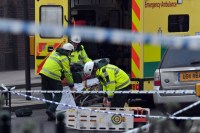
999, what’s your emergency? This time, it’s one right at the heart of the ambulance service, as Mary Wakefield reveals in this week’s Spectator. Paramedics are fleeing and needless calls are mounting. But why is the government refusing to take notice? And why are paramedics being denied the respect they deserve? Mary discusses her findings in this week’s podcast with Fraser Nelson and Julia Manning, chief executive of 2020Health. The Prime Minister heads off on Saturday to Brussels for one of his least favourite events: the European Union summit. In her column, Isabel Hardman suggests that EU summits haven’t been kind to Cameron, and that things aren’t about to change. But can he find his ‘European way’?
From our UK edition
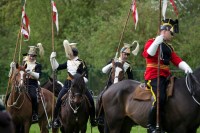
‘News of the Week’ in The Spectator, 29 August 1914: THERE is cause for manly anxiety, there is cause for stern determination; above all, there is cause for unflagging energy in military preparation; but there is no cause for despair, or even for despondency. If the effort of will is maintained by the nation, and if good sense, courage, and the calmness not of fatalism but of resolution strung to the very last point remain ours, we must win. We say this in no boasting spirit; but because time is with us and against our enemies. Those who fight with the sense that all is lost unless they can win quickly may get a certain superficial advantage from their desperation, but let us never forget that "if Tear-'em is a good dog, Holdfast is a better.
From our UK edition
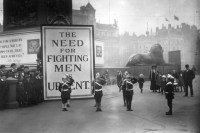
From ‘Left behind’, The Spectator, 29 August 1914: In the poorer streets a kind of holiday atmosphere prevails, and a sort of excitement which is in a measure pleasurable fills the air… All the children are intensely excited. Many fathers have ‘gone to the war’, but not quite so many as are said to have gone by little boys and girls who cannot bear to be behind their friends and neighbours in importance. It is a tremendous step up in the world to have relations ‘at the front’, and ‘the front’ has a very wide meaning to children. Indeed, it seems to include the whole of England, except London.
From our UK edition
This is an extract from this week's Spectator, available tomorrow. Subscribe from just £12 for 12 issues here. If Rotherham council were a family, its children would have been removed by social services long ago, and Ma and Pa Rotherham would be safely behind bars. Professor Alexis Jay’s report, which was published this week, reveals depravity on an industrial scale in the South Yorkshire town. At least 1,400 children, Prof. Jay estimates, were subjected to sexual exploitation between 1997 and 2013. Many were raped multiple times by members of gangs whose activities either were or should have been known about. Children were trafficked around the country to be abused. Those who put up resistance were beaten.