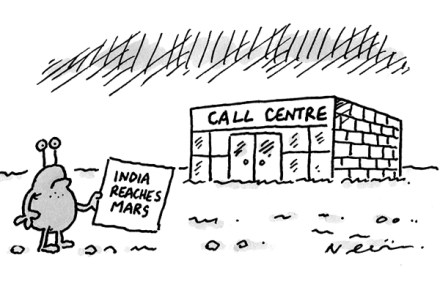
Call Centre
From our UK edition
From our UK edition
From our UK edition
From our UK edition
From our UK edition
From our UK edition
Degrees of ability Sir: Nick Cohen has written an amusing piece on PPE (‘Crash course’, 27 September), marred by lazy journalism. I never said that Cameron was ‘my ablest pupil’, an impossible judgment to make. What I said was that he was ‘one of my ablest pupils’. He was also, incidentally, one of the nicest. And I cannot help feeling that a degree which produced two Nobel prize winners in economics — Hicks and Meade — and three of the greatest philosophers of the 20th century — Isaiah Berlin, Strawson and Dummett — must have a bit more to be said for it than Nick Cohen and other journalists suggest.
From our UK edition
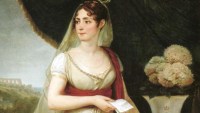
Paisley power Paisley pyjamas were in the news. While associated with the town in Renfrewshire, whose mills produced the patterns from 1805, what we know as paisley was first popularised in France thanks to its part in the courtship between the power couple of the day: Napoleon and Josephine. — While stationed in Egypt in 1798 he sent her a shipment of Kashmiri shawls which did not immediately grab her eye. She described the design as 'ugly and expensive but light and warm. I have serious doubts that this fashion will last.' — But she later changed her mind and was painted wearing one of the shawls, leading to mass popularisation. Who sexts?
From our UK edition
Home The Commons, having been specially recalled, passed, by 524 votes to 43, a motion supporting ‘the use of UK air strikes to support Iraqi, including Kurdish, security forces’ efforts against Isil in Iraq’. Only after four days did RAF Tornados from Akrotiri in Cyprus find some targets in Iraq to bomb. In support of her contention that Isil’s ‘hateful ideology has nothing to do with Islam’, Theresa May, the Home Secretary, in a well-received speech at the Conservative party conference, quoted the Qu’ran: ‘Let there be no compulsion in religion’ (Sura 2:256).

From our UK edition
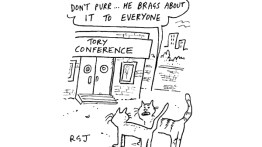
If the Labour party conference in Manchester felt like a funeral, the Conservatives’ gathering in Birmingham had the air of a wedding. It had jazz bands, champagne bars and a near-universal mood of celebration — which is odd, given that every opinion poll and bookmaker reckons the Tories are on course to lose power next year. Almost every speech delivered from the floor was more substantial, forceful and credible than any delivered at the Labour party conference. And one of the highlights was the tour de force delivered by Theresa May. For almost two decades the job of Home Secretary has been a political graveyard. Theresa May has made it into a power base. Several home secretaries tried to deport Abu Qatada; she succeeded.

From our UK edition
From our UK edition
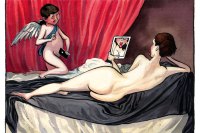
Why is everyone obsessed with taking naked photos of themselves? From celebrities to politicians, people can’t seem to stop taking explicit ‘selfies’. It’s the ultimate expression of our increasingly puerile and narcissistic society, says Rod Liddle in this week’s issue. Rod joins Freddy Gray on this week’s podcast, along with Maria Miller MP, the former culture secretary, who is currently campaigning for a change in the law to make revenge porn illegal. From sex to politics. The Tory party conference finished yesterday, and James Forsyth, our political editor, and Isabel Hardman, our assistant editor, join the podcast from Birmingham. They take a look at the highs and lows of the conference season. Are Ukip an insurmountable obstacle to Tory victory?

From our UK edition
From The Spectator, 3 October 1914: Quick results must not be expected. It must be remembered that in military as in political affairs it is a comparatively easy task to prophesy, but in both cases the prophets are always apt to have much too ambitious a time-table. Events which are expected to happen in a few days or a week take a month or a couple of months to arrive. We expect movements to mature to-morrow which, in fact, are not carried out till the prophets have almost forgotten their predictions. A notable example occurred at the beginning of the present week. The optimists were all talking about envelopments, but these are still to seek, and in all probability will take a long time to enter the region of practical strategy. But though our progress may be very slow, it is sure.
From our UK edition
From ‘Voluntary and compulsory service’, The Spectator, 3 October 1914: We do not suggest that the voluntary principle should be abandoned during this war. The system is being worked for all it is worth; it is answering well, thanks to the splendid spirit of the country; and it would be absurd to change it mid-way for another system.
From our UK edition
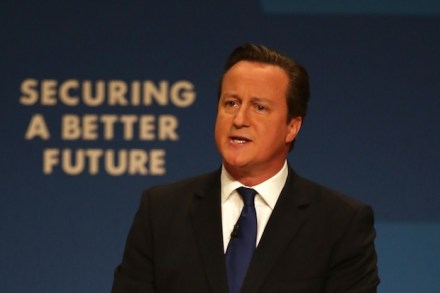
listen to ‘David Cameron's speech to the Conservative conference’ on audioBoom.

From our UK edition
From The Spectator, 3 October 1914: All Britain and all the Empire have during the week been congratulating Lord Roberts on his eighty-second birthday. His vigour, physical, intellectual, and moral, is marvellous. In spite of his years, he is able to give an enormous deal of help to the nation in its need. His suggestion for the supply of saddles and bridles was specially useful. But though there has been a good response, many more are needed. It is a disgrace just now to have a full saddle-room.
From our UK edition
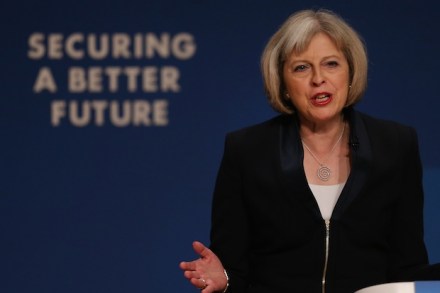
Our values will prevail in the fight against terrorism and extremism Thank you, Alexander, for that thoughtful and inspiring speech. listen to ‘Theresa May's speech on terrorism and extremism’ on audioBoom It’s difficult for most of us here in this hall to really appreciate the effects of stop and search. You see, most of us are white. Most of us are of a certain age. Well, we’re certainly not teenagers anymore. But imagine walking home, or driving to work one day, and being stopped by the police. Imagine, having done nothing wrong, you are patted down, you have your pockets turned inside out, and your possessions examined.

From our UK edition
From The Spectator, 3 October 1914: There has been a good deal of speculation of late as to the total sum of German casualties. It is clear that they are very much greater than the official returns acknowledge. The best way to estimate them is by our own. These, since the beginning of the war, have been about thirty per cent of the men engaged. But the Germans have in the western theatre had at least one million two hundred thousand men in the field. It is difficult, then, to put their losses in killed, wounded, prisoners, and missing much below four hundred thousand, and they are probably heavier. To this stupendous figure must be added the losses on the Russian frontiers.
From our UK edition
From The Spectator, 3 October 1914: THERE is no great change to be chronicled in the western theatre of the war. The Germans still stick with splendid courage and tenacity to their trenches, but the counter-attacks by which they are defending themselves have none of them succeeded. It is true that they have inflicted great losses upon us and our allies, but their own losses are probably greater still. We have not succeeded as yet in turning their right flank, but all the same the left wing of the Allies has made a considerable advance to the north. As we move forward the Germans have to make similar movements to avoid envelopment, and thus the two armies are still keeping opposite to each other, till we may say with Macbeth: "What, will the line stretch out to the crack of doom!

From our UK edition
Isabel Hardman and James Forsyth were both at George Osborne's speech this afternoon.
From our UK edition
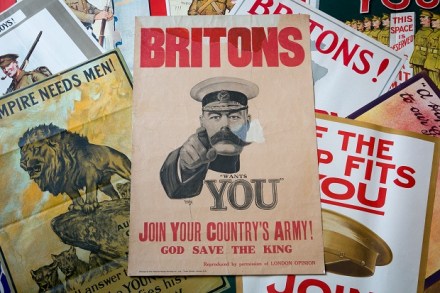
From The Spectator, 26 September 1914: [TO THE EDITOR OF THE " SPECTATOR."] SIR,—Devon recruiters are in despair at the raising of the standard of height to 5 ft. 6 in., for the average height of our West Country men is apparently low. To the non-military mind it seems difficult to understand why the man of 5 ft. 6 in. should be expected to fight better than his brother who is 5 ft. 5 in. One suspects that smartness of appearance on parade has something to do with the reissue of this regulation. If so, why not form a separate regiment of short men to be known as the "Five-Footers "? They would come to be known as the "Little Uns," and most of ua would be apt to add to "little un" the title "plucky.

From our UK edition
From The Spectator, 26 September 1914: [TO THE EDITOR of THE "SPECTATOR."] Sir,—I am having put up in our parish church a brass on which is inscribed the names of all parishioners who are serving in the present war. A space will be left after each name in which the fortune of the parishioner can be inserted at the end of the war. Of course it will take a little time to know who is serving or will serve and to make the brass, but the fact that such a brass is in contemplation has been announced in the hopes that it may be some little encourage- ment to recruiting.