The Spectator

The Spectator at war: Stiff upper lip

From our UK edition

From The Spectator, 10 October 1914: American visitors have been surprised at the apparent absence of emotion in England at such a crisis as the present. They can see, they say, no signs that we realize the tremendous nature of the points at issue. The English people, they think, are not taking things seriously. Yet all the time there are signs, if they knew where to look for them, that we are moved as we have never been moved before. "If we let anybody, even our nearest and dearest, know what we feel, we may be unmanned. We must keep a tight hold, and especially on ourselves, or we may lose control." It is not indifference, but grim determination, which makes England so quiet.

The Spectator at war: Terror from above

From our UK edition

From The Spectator, 10 October 1914: The Germans must really be in very desperate straits if, as is alleged, they are straining every nerve to prepare a hundred Zeppelins and other aircraft to hover over London and bombard our capital from the clouds. No doubt the first appearance of the visitors will have an alarming effect on London, but it will soon be found that their efforts can only be local, and that even if St. Paul's and Westminster Abbey are damaged, and a small number of people are killed in the streets—say, one per ten thousand of the population— terror will soon turn to indignation and contempt.

The Spectator at war: The lines are drawn

From our UK edition

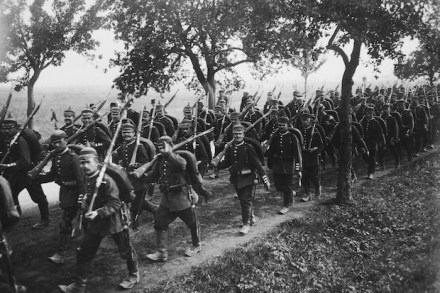
From The Spectator, 10 October 1914: FRIDAY'S news from the western theatre of the war shows that we have already almost reached the condition of "chock-a-block" described in our leading article. The two opposing armies, the greater part of them strongly entrenched, face each other at close quarters in a line drawn from Switzerland to the North Sea—a line not straight, but bending north very nearly at right angles at Noyon, and then heading fairly straight for Dunkerque, upon which fortress port the Allies' extreme left wing will very soon rest. Now will come the time for a military genius, for a commander who is able to take into his mind a vast series of facts and arrange and co-ordinate them in such a way that he will be able to defeat his enemy.

The Spectator at war: Keeping the nation sweet

From our UK edition

From The Spectator, 3 October 1914: ALREADY we are engaged in the exacting task of creating an army during time of war ; and it is possible that to that task we may add the process of creating an industry. Mr. J. W. Robertson-Scott, who has written much on agricultural matters over the signature "Home Counties," contributes to the current number of the Nineteenth Century a striking examination of the conditions under which he considers it would be possible at the present moment to organize a sugar supply from home-grown beet. The opportunity for invention, and for intervention, is plain, and the chances are more favourable than the most enthusiastic advocate of beet could have dreamt of a year ago.

The Spectator at war: Attack and defence

From our UK edition

From The Spectator, 3 October 1914: The essential value of a fortress is to act as an anvil upon which the field army, or relieving army, outside, which is the hammer, may pound the assailants to atoms. If there is such an army out- side, the parts are reversed—the besiegers, since they must stick to their position, become, as far as the relieving army is concerned, the besieged. It is the relieving army which can choose the place to hit and the time to hit. Unless the besiegers should prove to have enough troops to push it off and drive it away, the field army, when it gets to the proper distance, will strike the iron on the anvil and break it in pieces.

The Spectator at war: Compulsory service

From our UK edition

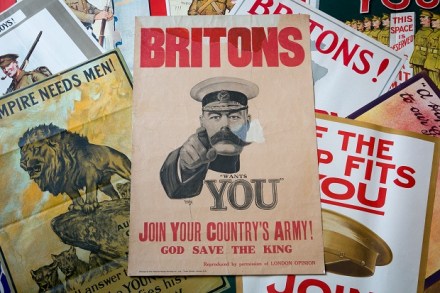
From The Spectator, 3 October 1914: We do not suggest that the voluntary principle should be abandoned during this war. The system is being worked for all it is worth ; it is answering well, thanks to the splendid spirit of the country ; and it would be absurd to change it mid-way for another system. But we cannot help reflecting that if we had had the scheme of National Service—of compulsory training for home defence, which is a different thing from conscription—recommended so earnestly and powerfully by Lord Roberts we should not now be in the throes of painfully improvising an Army....When the war is over there will be a steady demand fur the surest, cheapest, and most beneficial method of military defence—compulsory training for the youth of the country.