Sofa
From our UK edition
From our UK edition
From our UK edition
From our UK edition
From our UK edition
From our UK edition
From our UK edition
From our UK edition
From our UK edition
From our UK edition
From our UK edition
From our UK edition
From our UK edition
From our UK edition
From our UK edition
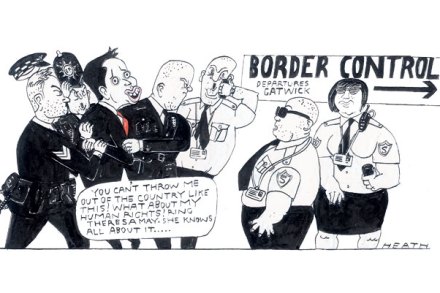
Italy’s to-do list Sir: You would expect a long letter of rebuttal by a piqued senior diplomat in response to the many barbs that Nicholas Farrell packed into his piece about Italy (‘The dying man of Europe’, 25 October). Among the most painful ones were that Italy is ‘almost doomed’ and parts of it are ‘hopeless’, which are far too simplistic statements. Mr Farrell is remarkably complacent in his negative bias. But beyond the sea of clichés, the piece offers a useful to-do list. So I will limit myself to a brief comment on its title, highlighting some details not mentioned in the article: if decline is the issue, there are plenty of people in Italy who are trying to tackle it — among them a new wave of Italian politicians.
From our UK edition
What's special about Rochester What is special about Rochester and Strood? — Rochester has the second oldest cathedral and school in Britain, after Canterbury. — Medway, the unitary authority area in which the constituency is situated, has one of the highest rates of private home-ownership in Britain, with 92 per cent of homes in private hands. — Rochester has one of the few remaining airports in Britain with only grass runways – though it has filed a planning application to build a paved runway. — Morrisons in Strood was Gordon Brown's first engagement after announcing the date of the 2010 general election. — Strood was once the largest producer of steam rollers in Britain.
From our UK edition
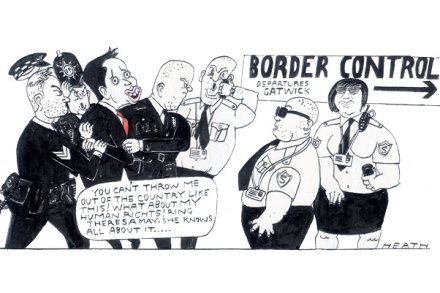
Home The last British combat troops turned over Camp Bastion in Helmand to Afghan forces and withdrew from Afghanistan after 13 years and 453 deaths. Michael Fallon, the Defence Secretary, spoke of ‘whole towns and communities being swamped by huge numbers of migrants’. He later withdrew the word ‘swamped’, but David Blunkett, a former Labour home secretary who used the word 12 years ago, said: ‘I believe that both Michael Fallon and I were right to speak out.’ This came after Angela Merkel, the Chancellor of Germany, responded to an idea of David Cameron, the Prime Minister, that European Union migration could be renegotiated; she said: ‘Germany will not tamper with the fundamental principles of free movement in the EU.
From our UK edition
In the 2005 general election this magazine supported the Conservatives, with one exception — we urged voters in Medway not to vote for a deeply unimpressive Tory candidate by the name of Mark Reckless. Our then political editor, Peter Oborne, went so far as to write a pamphlet in support of the Labour rival, Bob Marshall Andrews, who had a commendable record of sticking it to Tony Blair. Reckless, by contrast, had nothing to commend him. He lost by just 213 votes — suggesting that The Spectator’s intervention had been decisive. But nothing, it seems, will prevent Reckless from being elected as Ukip’s second MP in two weeks’ time. The Ukip momentum in Rochester & Strood now looks unstoppable.
From our UK edition
From our UK edition
The chances are that by now either you or someone you know well has begun to practise ‘mindfulness’ — a form of Buddhism lite, that focuses on meditation and ‘being in the now’. In the past year or so it’s gone from being an eccentric but harmless hobby practised by contemporary hippies to a new and wildly popular pseudo–religion; a religion tailor-made for the secular West. But separating meditation from faith is a dubious business, suggest Melanie McDonagh. In this week’s podcast, the comedian Ruby Wax, who has written a best-selling book about mindfulness and is now touring with Sane New World, and Andy Puddicombe, founder of the Headspace app, join Mary Wakefield to discuss the merits of mindfulness.
From our UK edition
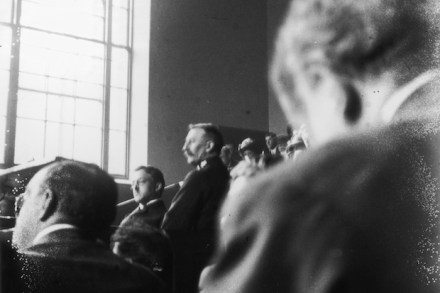
From The Spectator, 31 October 1914: THE most important event of the past week is the entrance of Turkey into the war, announced in the newspapers of Friday. For some time the Committee of Union and Progress, the gang of desperate and intriguing adventurers who control the Porte, have been doing their best by various unfriendly acts to provoke Russia and Britain into a declaration of war. Having failed in this, and probably also being warned that a peace party of considerable dimensions was growing up in Constantinople, they decided to force war by active hostilities, and on Thursday sent their ships to bombard peaceful Russian towns on the Black Sea coast.