The Spectator

From the archives | 22 January 2015

From our UK edition

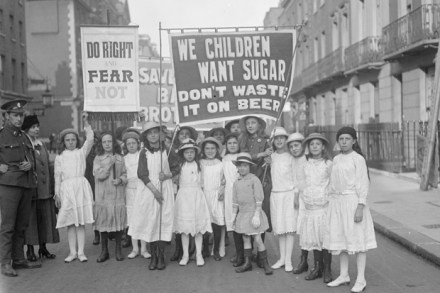
From ‘Economic quackery’, The Spectator, 23 January 1915: Ever since the war began there has been a tendency to rely upon the government, instead of relying upon ourselves and upon the operation of economic laws. The political mischief resulting is the establishment of what is virtually an uncontrolled Cabinet autocracy. The economic mischief, though it has already made itself evident in one important particular, may only be realized years hence. The instance to which we refer is the case of sugar. The public and the government worked themselves up into a panic at the beginning of the war over the price of sugar, with the result that Mr McKenna was permitted to gamble in sugar with many millions of the nation’s money.
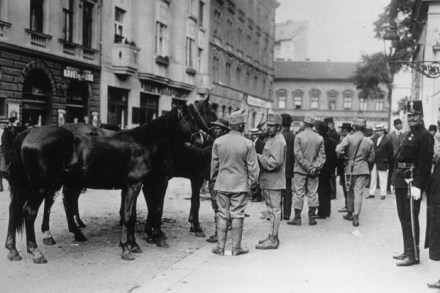
The Spectator at war: German hospitality

From our UK edition

From The Spectator, 23 January 1915: The Press Bureau has published, at the request of the Russian Embassy, a narrative of the insults, privations, and assaults suffered by Russian subjects in Germany after the outbreak of war. All the facts have been carefully verified, and the names of the chief victims are given. The story of the violent treatment which the staff of the Russian Embassy endured is already well known, but here we have the first detailed evidence of the cruel treatment of the hundreds of Russians who were convoyed to the frontier. As an example we may mention the case of one party of sixty travellers who were not allowed for seventy hours to leave the railway carriages more than once. All this time they were refused not only food but water.

The Spectator at war: Terror without panic

From our UK edition

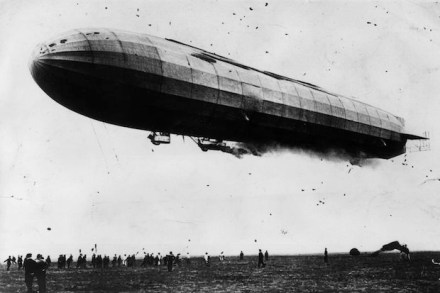
From ‘News of the Week’, The Spectator, 23 January 1915: WE have written elsewhere of the raid by German airships on Tuesday night, but may mention here the bare facts. The airships, of which there were apparently three, were seen at 1.30 in the afternoon off the Dutch coast, and they must have reached England after dark. Their presence was unsuspected till bombs began to fall on Yarmouth about 8.30. Considerable damage was done to houses, but some of the bombs did not explode. One bomb actually went right through a house without injuring anybody. A men and a woman, however, were killed. Later King's Lynn was visited by the airships, which on the way dropped bombs near Brancaster, Heacham, Snettisham, and Sandringham.

The Spectator at war: War of words

From our UK edition

From The Spectator, 16 January 1915: A VOICE FROM THE FRONT [To the editor of the “Spectator”] SIR,— You may be interested to hear that the other day—in a place which the Censorship regulations forbid me to mention —I saw a number of soldiers surrounding an officer who was reading the Spectator to them; and in another place I saw a private give a packet of treasured cigarettes to a comrade for a three-weeks-old copy of the Spectator. He felt he bad got a good bargain. Pray do all you can to get the men in England to undertake their proper share of the work we are doing out here for them.

The Spectator at war: Compulsory service | 17 January 2015

From our UK edition

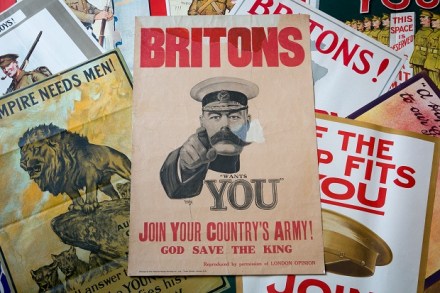
From ‘Compulsory Service’, The Spectator, 16 January 1915: COMPULSORY service has not come yet, but it is drawing very near, and will certainly come unless some miracle should intervene—as, for example, the conquest of this country or the sudden collapse of our enemies. Those who dispute our statement that compulsion is coming must be very poor readers of the signs of the times, or else have paid no attention to Lord Haldane's speech in the House of Lords on Friday week. In that speech Lord Haldane, with great emphasis and with perfect clearness, laid down the principle which we have preached in these columns for the last seven or eight years when supporting the policy of Universal National Service.

Spectator letters: A GP’s cry of distress and a defence of Stephen Hawking

From our UK edition

Dreadful treatment Sir: I worked as a GP through the Thatcher, Major, Blair, and Brown eras, apart from a spell as an A&E doctor, and never experienced such a depressing and worrying time for the NHS as now (‘Wrong diagnosis’, 10 January). There was frequently strain on the service from underfunding, but not the crisis we are now experiencing across the country, proving to me fundamental mismanagement and policy errors. When this government finally revealed its NHS ‘reforms’, which were kept quiet before the 2010 election, I was convinced the health service was under great threat, and that the electorate was being deviously misled. This crisis was predicted in the risk register, which Andrew Lansley refused to publish.

Three people to ask about free speech in Britain

From our UK edition

Not Charlie Some cases which make Britain a pretty poor champion of free speech: — In 2005 Bristol pub landlord Leroy Trought was given an Asbo and told to remove a sign for his car park, calling it ‘the porking yard’, after complaints to police that it was ‘racially and sexually offensive’. — In 2006, Angie Sayer, landlady of the New Inn, Wedmore, Somerset, was questioned by police for using a Welsh flag in a St George’s Day darts match and inviting participants to ‘slay the dragon’. — In 2010 street-preacher Dale McAlpine was arrested, locked in a cell for seven hours and had his DNA and fingerprints taken after telling a passer-by that he thought homosexuality was sinful.