Incident
From our UK edition
From our UK edition
From our UK edition
From our UK edition
From our UK edition
From our UK edition

From our UK edition
From our UK edition
From our UK edition
From our UK edition
From our UK edition
A disaster for unionists Sir: I share Alex Massie’s view that ‘this election is going to be a disaster’ for us unionists (‘Divided we fall’, 28 February). It is almost too painful to recall that it will mark the 60th anniversary of a great victory in May 1955 when the Tories, standing as Scottish Unionists, won more seats north of the border than their opponents and helped give Anthony Eden a secure majority. Under the baleful influence of George Osborne, who could not care less about the constitution, there seems little chance that the Tories will redeem themselves by proposing the one remaining policy that could save the Union: a new constitutional settlement for the UK based on the federal model.
From our UK edition
A dangerous hobby Three men from Greater Manchester were arrested and held in the UAE after being seen writing down the numbers of aircraft. — Plane-spotting can be risky. In 2001 14 Britons were arrested in Greece after allegedly taking photos at an air base in Kalamata. Eight were sentenced to three years; imprisonment for spying and the other six were given suspended sentences. (All were overturned on appeal.) — In 2010 two British men were arrested at Delhi airport after being seen taking photos of planes from a hotel room. — Trainspotters have had problems too. In 2008 a 15-year-old boy was held under terror legislation after taking photographs of Wimbledon station for a school project.
From our UK edition
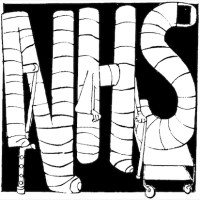
To adapt Aeschylus’s aphorism on war and truth, the first casualty in a general election campaign is objectivity. Over the next eight weeks NHS staff can expect nothing but saccharine praise from politicians who are falling over themselves to say how wonderful the health service is, how committed they are to it. The Conservatives may revive their ‘NH-yes’ slogan, promising to safeguard its budget. Labour proposes to protect it from what few reforms the Conservatives promise and even Ukip is posing as ‘the party of the NHS’. A true friend of the NHS, however, would accept that all is not well, and that ‘protecting’ its current structure is an act of cruelty rather than kindness.

From our UK edition
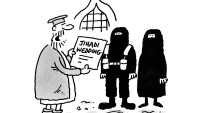
Home The man seen in several Islamic State videos of hostages being beheaded, nicknamed Jihadi John by the British press, was revealed as Mohammed Emwazi, aged 26, born in Kuwait but raised from the age of six in London. He was said to have had help with anger management at his secondary school, Quintin Kynaston Academy in St John’s Wood. An advocacy group called Cage produced a recording of him complaining that MI5 had questioned him after he had to turn back from a ‘safari’ in Tanzania in 2009. General Raymond Odierno, the chief of staff of the US army, said he was ‘very concerned’ about British defence cuts. Lance Corporal Joshua Leakey of the Parachute Regiment was awarded the Victoria Cross for bravery in Afghanistan.
From our UK edition
From our UK edition
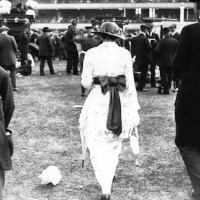
From ‘Ascot in Wartime’, The Spectator, 6 March 1915: [To the Editor of "THE SPECTATOR"] SIR,—There has been much discussion recently over the question of the Epsom Grand Stand. As to the rights and wrongs involved in that discussion I hardly think there can be two opinions. But, Sir, I ask your permission to address you on a larger issue. It is proposed, we are told, to hold the Ascot races this year as usual. The proposal seems to many people simply outrageous, and we who think thus would deeply appreciate and welcome a candid opinion on the subject from the Spectator, and as a regular reader I ask you most earnestly to give your views on this grave proposal.
From our UK edition
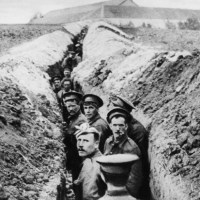
From ‘The “Willing” Badge’, The Spectator, 6 March 1915: A final ground for giving badges to those who have offered themselves and been rejected must be mentioned. Under any scheme for the presentation of badges a register should be kept giving in general terms the ground on which each man was rejected — namely, medical reasons, such as heart weakness, and so on; physical defects, as, for example, some small deformity or some defect of vision; or, again, some such ground as inability to reach the standard of height or the standard of chest measurement. In the last two cases it may well be that the government will come to see that after all small men can fight and march quite as well as big men, and endure hardship even better.
From our UK edition
From ‘A Plea for Posterity’, The Spectator, 6 March 1915: A good many people have latterly argued that as posterity will enjoy the advantages of a successful war, so posterity may honourably be left to pay for those advantages in the shape of yearly interest upon a swollen National Debt. This is always the argument of the man who wishes his obligations to be met by other people. If our ancestors had acted upon this principle, the country would never have been free from a crushing burden of Debt, ever increasing with each new war. In the Napoleonic Wars, lasting for over twenty years, burdens of which the present generation has no conception were imposed upon the taxpayer to meet a very large part of the daily cost of the war.

From our UK edition
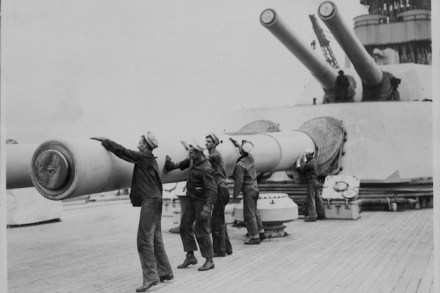
From ‘The New Naval Measures and the United States’, The Spectator, 6 March 1915: Britain proposes to stop all German imports and exports by the general pressure of her naval strength, whereas the United States says that we ought to use this pressure only in accordance with what have hitherto been regarded as the laws of blockade. The United States says, in effect: “Proclaim a blockade such as we have experienced of read of in past wars – a proper blockade with legal sanction and everything handsome about it – and we shall have no right to complain, even though none of our trade can pierce the line. What we cannot tolerate is that you should net upon a general principle, and that we should never know how and where the stroke will fall upon our trade.
From our UK edition
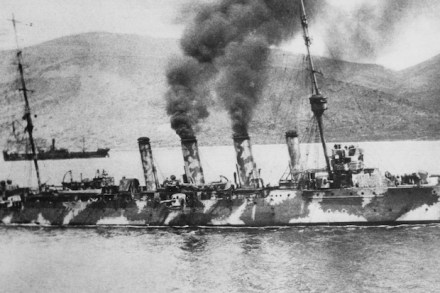
From ‘News of the Week’, The Spectator, 6 March 1915: THE advance made during the week by our naval force in the Dardanelles has been most satisfactory. As we write our ships are engaged with the great group of forts at the Narrows, while in the Gulf of Saros, opposite the neck of the Gallipoli Peninsula, French and British ships have doubled the bombardment and have been able to take some of the enemy's works in reverse. By the time these pages are in our readers' hands it is most probable that the action in the Narrows, where the Straits are only about half a mile broad, will have been decided. Nothing above ground, whether of earth or stone, is able to stand the fire of the Allies' squadron, which numbers in all some fifty-two vessels.
From our UK edition
From ‘On Commas’, The Spectator, 27 February 1915: I CAN picture the development of the misled reformer who introduced the comma into the languages of men. His laborious finger lost itself time after time among the elaborate pothooks of his generation; time after time he declared in a hissing voice that script was a fiend and time after time he led back his wandered finger to the beginning of the long crude sentence and renewed the slow chant that divinely revealed the thoughts of his distant friend. He had little access to print and was bothered with the bad writing of his many correspondents, but whether he was Jew or German or French or a rather unlikely Englishman this witness sayeth not.