Documentary
From our UK edition
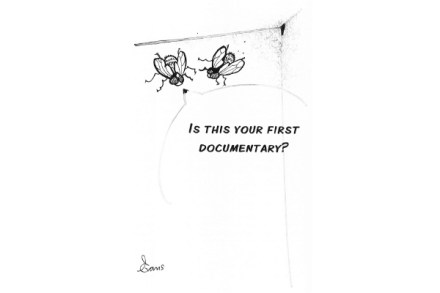
From our UK edition
From our UK edition
He used to be rampant. Nowadays he’s just couchant.’
From our UK edition
From our UK edition
‘I don’t know for certain but she could be the god of multitasking.’

From our UK edition
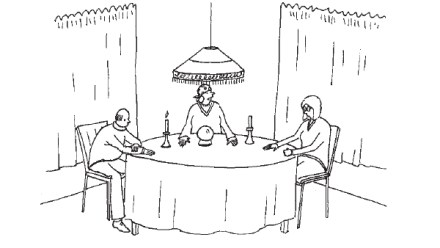
Before you proceed, Spirit, I must tell you that this conversation may be recorded for training purposes.’
From our UK edition
‘Couldn’t you stop growing your beard now, Roger?’
From our UK edition
‘Which is your best nightmare?’
From our UK edition
‘Stop! Do not attempt to move him to a different postcode!’
From our UK edition
‘Cut! Can you strut and fret less!’
From our UK edition
In defence of Kids Company Sir: Your piece ‘The problem with Kids Company’ (14 February) bears an important message: charities need to be transparent and accountable. That’s why Kids Company was independently audited twice last year alone, and our financial structures and functioning put to the test. We also have auditors working alongside us, verifying
From our UK edition
Gun lords The House of Lords shooting range is to be turned into a cupboard, having previously survived an attempt by Labour MPs in 1997 to turn it into a crèche. — The range was constructed in 1916 for the Palace of Westminster Rifle Club, which managed to convince the Lord Great Chamberlain that rifle


From our UK edition
To listen to Greek government ministers addressing the outside world during their breaks from negotiations with eurozone leaders this week, it would be easy to form the impression that Greece had a mighty economy upon which all other eurozone countries were pathetically dependent. ‘Europe is going through the difficult process of understanding that Greece has

From our UK edition
Home The annual rate of inflation fell to 0.3 per cent as measured by the Consumer Prices Index (or to 1.1 per cent by the Retail Prices Index). The Bank of England predicted a touch of deflation in the spring. Unemployment fell by 97,000 to 1.86 million in the last quarter of 2014. The FTSE share
From our UK edition
From our UK edition
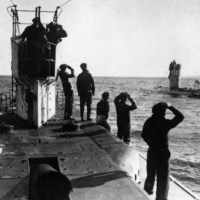
From ‘News of the Week’, The Spectator, 20 February 1915: We are very glad to see that the Admiralty have rewarded the captain and crew of the merchant steamer ‘Laertes,’ which skilfully escaped from a German submarine attack last week. Although his vessel was unarmed and rather slow, Captain Propert came through unhurt both by
From our UK edition
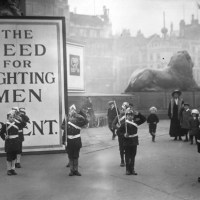
From ‘The psychology of drill’, The Spectator, 20 February 1915: One is tempted to divide all men under drill into two classes — the precipitate and the tardy. Every one who has listened to a drill instructor’s words knows that the first part of a command is cautionary. For instance, in ‘Right-turn’ there is a
From our UK edition
From ‘The Finance of the War’, The Spectator, 20 February 1915: According to Mr. Lloyd George’s estimate, the three Allied Powers together will have expended on war purposes by December 31st next something like £2,000,000,000. British expenditure, he estimates, will exceed that of each of the other two Powers by something between £100,000,000 and £150,000,000.

From our UK edition
From ‘News of the Week’, The Spectator, 20 February 1915: The great event of the week ought to have been the beginning of the blockade by Germany of the whole of the shores of the British Islands. Strangely enough, however, Der Tag passed in complete calm, and we are now informed by German wireless that

From our UK edition
From ‘Labour Problems and the War’, The Spectator, 13 February 1915: The ultimate object of all Trade Union regulations is to improve the pecuniary position of the wage-earner. How far that object is attained by Trade Union methods is a matter of very keen controversy. There are economists, like the late Mr. T. S. Cree,

From our UK edition
From News of the Week, The Spectator, 13 February 1915: In the House of Commons on Thursday Mr. Asquith made three notable announcements. In future Sir John French will send twice a week a communication summarizing the doings of the British Force. Evidently “Todgers’s can do it when it likes.” Next Mr. Asquith explained that