Sub
From our UK edition
From our UK edition
From our UK edition
From our UK edition
From our UK edition
An instinctive Tory faith Sir: For once Bruce Anderson does not exaggerate: David Cameron did indeed win golden opinions for his ‘high intellect and low cunning’ at the 1992 election (‘The boy David’, 25 April), putting him among the most brilliant products of the Conservative Research Department over its long history. He contributed magnificently to the widely praised briefing material that the department produced for Tory candidates, in particular its 350-page Campaign Guide (a publication now discontinued after appearing at elections for 120 years, despite Cameron’s own boast that this is the ‘most organised’ campaign in his career). But there was more.
From our UK edition
Home The British economy grew by 0.3 per cent in the first quarter of 2015, the slowest quarterly growth for two years. The Institute for Fiscal Studies pointed out many absurdities in party election promises, noting that most people would see tax and benefit changes that reduced their income; it said that the Conservative and Liberal Democrat plan to increase the personal allowance to £12,500 would not help the 44 per cent of people who now pay no tax, that Labour’s promised 10p tax band would be ‘worth a princely 50 pence a week to most income-tax payers’ and that it could not be sure whether the reintroduction of a 50p rate for high earners would raise any extra money for the Treasury.
From our UK edition
One-way stretch A study at Louisville University in Kentucky concluded that collisions are twice as likely in one-way streets as in similar streets with two-way traffic. — The one-way street is an older concept than many might imagine. Pudding Lane, where the Great Fire of London began in 1666, was one of the world’s first one-way streets. An order restricting cart traffic to one-way travel on that and 16 other lanes around Thames Street was issued in 1617. — Data on traffic flow at the time is hard to come by, but the idea was not copied for over 300 years, until Mare Street, Hackney, became a one-way street in 1924. Blavatnik’s billions Ukrainian-born businessman Len Blavatnik was named by the Sunday Times as Britain’s richest man, worth £13.2bn.
From our UK edition
When election day dawns, it’s worth bearing in mind that two million more people will be going to work than when David Cameron came to power. On an average day in Britain, there are 1,500 fewer reported crimes than there were before Theresa May was made Home Secretary. Some 2.2 million pupils now attend independent schools within the state system — schools given freedom through Michael Gove’s reforms. There is nothing theoretical about the advantages of Conservatism: they can be seen in classrooms, workplaces and streets all over Britain. But all this progress could be brought to a halt within the next week. If Ed Miliband is elected, it will not be the richest who suffer most. They may pay more in tax — but, on the whole, they can afford to.
From our UK edition
From our UK edition
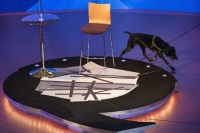
Welcome to the Spectator's live coverage of the special edition of Question Time with David Cameron, Ed Miliband and Nick Clegg. We'll be providing live analysis of the final TV programme with each of the party leaders from 8pm. This page will automatically reload.
From our UK edition
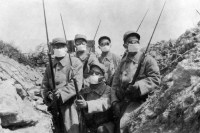
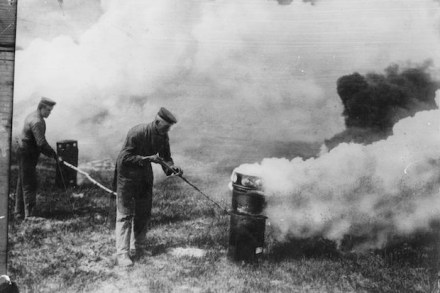
From ‘The Military Situation’, The Spectator, 1 May 1915: EXCEPT for the terrible death-roll, there is nothing to disquiet us in the second battle of Ypres, the embers of which are glowing as we write. The Germans have once more made a determined attempt to break our line and to reach Dunkirk and Calais, and they have failed as they failed at the end of last October, and as they will fail try as many times and as long as they will. They may plot with all the chemists of Germany to invent new asphyxiating gases; they may borrow the stink-pots of China; they may devise new methods of frightfulness at once devilish and childish; but they will not break the British line, or the Belgian line, or the French line, except temporarily.
From our UK edition
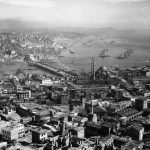
From ‘The Khalifate’, The Spectator, 1 May 1915: It seems that the Ottoman Empire is likely to crumble away, and in that event, whether it happens soon or late, the question of the Khalifate will cause many searchings of heart to the Mohammedan world. In an intimate and most important sense Britain is concerned in this matter. The spiritual security and satisfaction of Moslems vitally concern the British Empire.
From our UK edition
Andrew Roberts Biographer The Cameron ministry of 2010-15 will go down in history as having made Britain as the most successful economy in the developed world, despite it having inherited a near-bankrupt nation from a Labour party that spent money like a drunken sailor on shore leave. Ordinarily that should be enough to have it returned to power with a huge majority, but we live in gnarled, chippy, egalitarian times.
From our UK edition
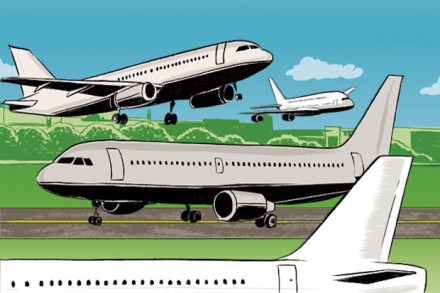
Britain's airport wars are still ongoing. After the election, the Davies Commission is expected to announce how to expand capacity. The main options are new runway at Heathrow, at Gatwick, or 'Heathrow Hub' (extending Heathrow's runway). Each of them is keen to get their case across to Spectator readers - so much so that they have each asked The Spectator to examine their proposals. Heathrow Hub has invited Isabel Hardman, the Spectator's assistant editor, to make a short film on its case, and its challengers. Here it is.

From our UK edition
From ‘Cabinet Responsibility’, The Spectator, 1 May 1915: The maintenance of Cabinet responsibility, that is, the responsibility of the Cabinet as a whole for the acts of individual Ministers, is of the utmost importance for the welfare of the nation. It is only through such Cabinet responsibility that the country can hope to obtain a strong, coherent, and therefore successful administration of its affairs.
From our UK edition
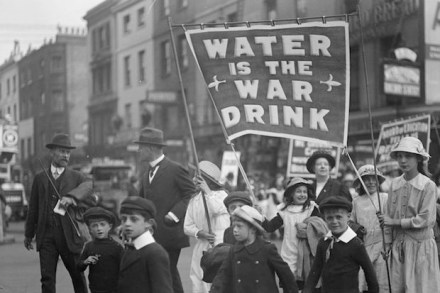
From ‘News of the Week,’ The Spectator, 1 May 1915: The Government plans for dealing with the liquor problem have ended, as we feared, in "a moist relentment" of small beer and large taxation. Mr. Lloyd George, whom we must entirely exempt from our condemnation of the Government's cowardly opportunism, evidently failed to induce his colleagues to deal adequately with the obstacles which drink is putting in the way of our national efficiency for war purposes. They would not seize an opportunity which will never occur again for giving the nation a free hand in dealing with the liquor problem, and in delivering us from a monopoly which experience has shown may prove a great danger in a national crisis.
From our UK edition
From 'News of the Week', The Spectator, 1 May 1915: SINCE our last issue the western extremity of the western theatre of the war has been the scene of furious fighting in which the French, Belgians, and British have been engaged. The special feature of this second battle of Ypres, one of the greatest of the war, was the use by the Germans of asphyxiating gases contrary to the most solemn pledges made by them at the Hague Conferences. These deadly gases were not a by-product of the high explosives used in shells, such, for example, stele the gas generated by our Lyddite, but were employed with the deliberate object of poisoning. They were for the greater part manufactured in huge retorts in the German trenches and were then blown by the wind on to the lines of the Allies.
From our UK edition
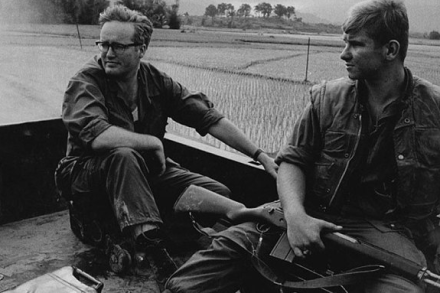
Dick West, a foreign correspondent and longtime contributor to The Spectator, has died. Here's a profile we ran about him in 1989. One side of Richard West's character is his contrariness. At a time when others fear salmonella he refuses to have his breakfast eggs kept in the refrigerator. At the height of the Band Aid fundraising success, Bob Geldof was added to his list of pet hates. More recently he has criticised the blandness of the Independent ('for Guardian readers with money') and praised the Sun ('a fine newspaper'). His resistance to received opinions lends originality to his writing. He is by no means a simple apologist for the Right. Poland grants him entry visas, but not South Africa.

From our UK edition
In 1914 some 1,500 men from ‘Churchill's Little Army’, the First Royal Naval Brigade, retreated from the defence of Antwerp to the Netherlands. As a neutral country the Netherlands was obliged to intern any soliders from warring armies that crossed its borders to stop them re-joining the fight. The men were put in the ‘English Camp’ (or ‘HMS Timbertown’) in Groningen, where they were based until the war ended. From ‘With the interned sailors in Holland’, The Spectator, 24 April 1915: Sir—Réveille sounding at 6.30 every morning rouses us from our bunks, ready to face another day in Holland. We have little to do before breakfast at 7.
From our UK edition
Today is the 100th anniversary of the first landings of the Gallipoli campaign by Anzac troops. The battle to take control of the Dardanelles and Bosphorous to open a supply route to Russia and force the Ottoman Empire out of the war would, in its eight months, leave 130,000 dead. The Spectator was to report the first news of the landings in its 1 May 1915 issue. Here, from 'News of the Week' in the 24 April 1915 issue, The Spectator speculates about the course of action in the Dardanelles: The other important event of the week has been the landing of a British force at Enos, the most westerly point of Turkish territory in Europe, the point just beyond which the new Bulgarian frontier begins.

From our UK edition
