Dad 2
From our UK edition
From our UK edition
From our UK edition
From our UK edition
From our UK edition
From our UK edition
From our UK edition
From our UK edition
From our UK edition
What we’re building Sir: I was surprised and frustrated to read Ross Clark’s piece on housing associations in last week’s edition of your magazine (‘Stop moaning, start building’, 25 July). Surprised because it seemed to misrepresent the facts concerning housing associations, and frustrated because the analysis offered by Mr Clark ignores the key role that housing associations play in ending the housing crisis. Housing associations — which vary hugely in geography, size and function — have consistently supplied tens of thousands of new homes year after year. For example, last year they built 40,000 homes — a third of all new homes — and they matched every £1 of public investment with £6 of their own money.
From our UK edition
Safe house Lord Sewel is unique in leaving the House of Lords in disgrace. Until the House of Lords Reform Act 2014, only a treason conviction earned you expulsion from the House of Lords, and that only since 1870. At least two peers have been executed for treason, Simon Fraser, 11th Lord Lovat, and William Maxwell, 5th Earl Nithsdale, but both well before this date. — Thanks to the 2014 Act it is now possible to have your Lords membership terminated on two grounds: being jailed for a criminal offence with a sentence of more than one year, or failing to turn up for a whole session. But you cannot be ejected for non-attendance if prevented from attending through disqualification: by, say, an 11-month jail sentence.
From our UK edition
Home A man died when 1,500 migrants tried to enter the Channel Tunnel terminal in Calais in one night. The night before, 2,000 had tried. Theresa May, the Home Secretary, spoke of spending money on fences. The Foreign Office warned travellers to the Continent via Calais that they should be prepared to return by a different route, what with migrants and French strikers. George Osborne, the Chancellor of the Exchequer, visited Paris for talks with French ministers about Britain’s place in the European Union. Chris Froome won the Tour de France for the second time in three years, although some spectators threw urine at him and some even suggested that he had a little motor hidden in his bicycle.
From our UK edition
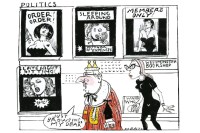
The shaming of Lord Sewel was a classic tabloid exposé. The fact that a peer of the realm (albeit one appointed by Tony Blair) was caught on camera apparently ingesting Class A drugs in the company of prostitutes is a good enough story in itself. The fact that the peer in question was chairman of the Lords privileges and conduct committee while he was doing so makes it very near to red-top nirvana. Since the publication of the story — and scores of lavish accompanying photographs — the peer’s Pimlico flat has been raided by police (who battered down a door to gain access), and Lord Sewel has resigned from the House of Lords, expressing the correct and noble sentiment that he can ‘best serve the House by leaving it’.
From our UK edition
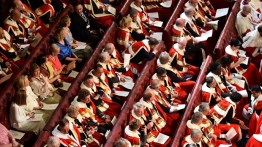
From 'The Problem of Public Assistance’, The Spectator, 31 July 1915: In one respect big reforms are actually easier in times of national emergency than in times of peace, for the collective purpose of the nation is in the crisis of a great war more firmly set, and therefore better able to overcome sectional and private vested interests. On the other hand, it is somewhat difficult to secure adequate consideration for any important new proposal at a time when public attention is absorbed in the movements of a great war. On the whole, the former consideration is in the present matter perhaps the more important.
From our UK edition
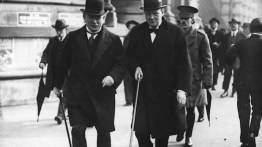
From ‘The new standard’, The Spectator, 24 July 1915: If a change must be made at all, it is worthwhile to make a great change, to put right our mistakes, to get any happiness that a rearrangement can give us. We fear that at first a new way of life may come rather hard upon the more prosperous and highly skilled of the servant class, many of whom must be turned out of place. But, on the other hand, we hear constant complaints that servants are scarce because new careers are opening before women, and if the race of indoor manservants died out altogether we do not imagine that anyone would seriously regret the loss.
From our UK edition
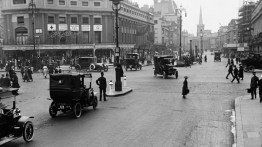
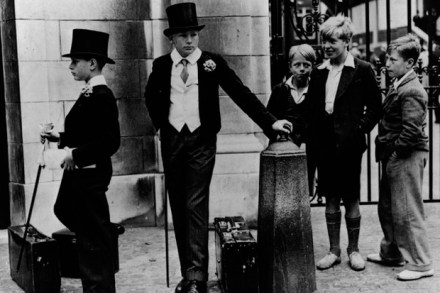
From 'The New Standard', The Spectator, 31 July 1915: Where food and service are concerned we believe there are a fair number of people who will be glad of some necessity which shall compel them to lead a simpler life. It is not that they do not enjoy their fine food and the ease which comes of much waiting-on. They like it far too well voluntarily to relinquish it: On the other hand, the prospect of being obliged to do differently is not without attraction. The burden of "the plant" often wearies them. They feel themselves to be entangled in the paraphernalia of hyper-civilization—almost enslaved by it. It is odd that this time of enforced retrenchment should accomplish an enfranchisement, but we believe that after the war it will in many cases do so.
From our UK edition
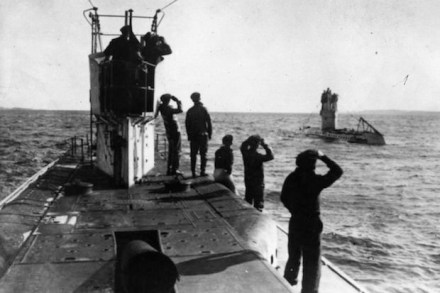
From 'The American Note to Germany', The Spectator, 31 July 1915: German submarine methods cannot possibly continue on their past lines without sooner or later sacrificing another American life. The German submarines could no doubt continue, on a small scale, to sink merchantmen bringing supplies to Britain if they made full inquiries as to the nationality of the crews, and provided for their safety by towing them in their boats to somewhere near the land. Such precautions have been taken in two or three cases during the last few days. But they could not continue their warfare on anything but a small scale. The sacrifice of non-combatant lives is inherent in the German plan as hitherto practised.
From our UK edition
From 'The Struggle in Russia', The Spectator, 31 July 1915: We must not write more than a few lines, but we cannot do less, in admiration of the Russian endurance, doggedness, and skill. If we indulged our inclination in this respect, we should write an article about nothing else. All our sympathy and deep respect goes out to these splendid men. Inferior to their enemy in everything which is implied by long preparation, they are making good the defects during the bad time—for the good time is coming, never doubt that—by a wonderful example of stubbornness and resolution. Every soldier salutes them, every civilian raises his hat. Their reward is sure and will be well earned.

From our UK edition
The spat between Boris Johnson and Theresa May over the acquisition of three second hand ones from the German police has the air of a dormitory water pistol fight that has left an unprepared Johnson standing in dripping pyjamas. It has become a received wisdom that the incident raises questions about Johnson’s fitness for high office. But does it? May’s claim that water cannon are dangerous is somewhat at odds with them being in routine use in Northern Ireland and deployed 364 times in the past four years without problems. The 67 reported issues regarding the ex-German water cannon are mostly trivial and have all been resolved to the satisfaction of the Metropolitan Police. One, for example, involved an instruction panel in German inside one vehicle.


From our UK edition
From 'Coal and its Problems', The Spectator, 24 July 1915: The high price of domestic coal, though undoubtedly an immediate injury to the country, will prove an ultimate benefit. Politicians never seem capable of understanding that high prices if left alone kill themselves, first by reducing consumption, and secondly by stimulating production. The only condition under which this proposition fails is whore the supply is con- trolled by a ring. In that case it is possible for the controllers of the ring artificially to maintain extravagant prices for the benefit of themselves and their shareholders.
From our UK edition
From ‘Germania contra mundum’, by Lord Cromer, The Spectator, 24 July 1915: What, therefore, are we and our Allies fighting for? Without attempting to deal fully with the considerations which may be adduced in connexion with each separate branch of this subject, it may perhaps be as well to make a catalogue— and possibly an incomplete catalogue—of the objects which we seek to attain. In the first place, we are fighting for the maintenance of the British Empire and for our own existence as a nation. It may be hoped that the truth of this statement is now very generally recognized by the people of this country. There appears every reason to hold that it is now fully recognized by the people of that "Greater Britain" which lies overseas.

From our UK edition
From ‘The Pacificist Vision’, The Spectator, 24 July 1915: It must not be supposed that the majority of Americans are pacificists, but there are enough pacificists to force a strong tide of feeling through the country. In the West an advanced pacificisin—what seems to us, when we reflect on the probable results, a hopelessly unthinking pacificism—is very popular. As an illustration of this present wave of pacificism we must refer to an article by Mr. Sydney Brooks, a student of American affairs, which was published in the Daily Mail on Monday. Mr. Brooks says:— "A friend of mine who has lately returned from a visit to America tells me that wherever he travelled he heard the Song of the Pacifist.
