The Spectator

Letters | 16 July 2015

From our UK edition

Unions led astray Sir: Leo McKinstry’s article on the current problems in the trade unions (‘Counter-strike’, 11 July) brings back unhappy memories of the last time a similar situation arose. This was probably best known for Arthur Scargill’s attempt to use his position as head of the NUM for his own self-aggrandisment. I lived through that era and remember it well. I knew union members who were frightened of their ‘leaders’, a situation the founders of the trade union movement would have found incredible. In 1974 I attempted to transfer my union membership to a new location. Two representatives of the local branch came to see me, and were all smiles until I mentioned I wanted to opt out of the political levy.

Portrait of the week | 16 July 2015

From our UK edition

Home The government postponed a Commons vote on relaxing the Hunting Act in England and Wales after the Scottish National Party said it would oppose the changes. Scottish police admitted that a crashed car off the M9, reported to them on a Sunday, was not examined until the Wednesday, when one of the two passengers inside it was still alive. She died three days later. A case of H7N7 bird flu was found at a poultry farm near Preston, Lancashire, where 170,000 chickens were slaughtered. British people were being urged by the Foreign Office to leave Tunisia because ‘a further terrorist attack is highly likely’. Up to 5,000 were flown home.

Gambling on Iran

From our UK edition

Iran is, beyond doubt, a sponsor of terrorism and this week it has been made much stronger. It has (again) agreed not to make a nuclear bomb and in return trade sanctions are being dropped — so money will start to flow in once more. We can be sure that the cash will soon find its way to Hezbollah in Syria, and to what remains of Bashar al-Assad’s regime. A stronger Iran means a longer and bloodier Syrian civil war, a more vulnerable Israel and a further injection of money and arms into the world’s deadliest war zones. None of this is in doubt. The question is whether, after this week’s deal, Iran will be less likely to menace the region as a nuclear power.

The Spectator at war: Scout’s honour

From our UK edition

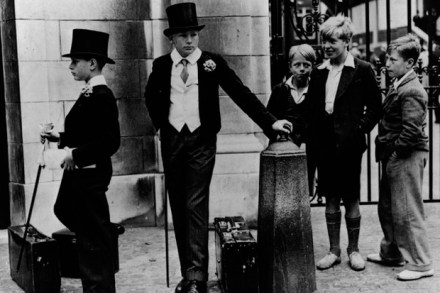
From ‘Education and Honour’, The Spectator, 17 July 1915: Under a voluntary system—which indeed takes off the lid, as General Baden-Powell would say—service rendered to the country depends entirely upon a man's own feelings as to what he ought to do. In other words, his service will be in proportion to his recognition of personal obligation—in proportion to his honour. In what are called the upper classes the war has shown this sense of honour to be extremely high. The young man who has been to a Public School or to one of the Universities and who remains at home without adequate excuse doing nothing is so rare as to be very conspicuous. In other classes it is otherwise. Among the so-called lowest class men have responded pretty freely to the call.

Answering the call of duty

From our UK edition

From ‘Education and Honour’, The Spectator, 17 July 1915: The young man who has been to a Public School or to one of the Universities and who remains at home without adequate excuse doing nothing is so rare as to be very conspicuous. In other classes it is otherwise. Among the so-called lowest class men have responded pretty freely to the call. The so-called lower middle class, though in this there are of course brilliant exceptions, has perhaps answered less freely than any other class. In this class may be found, we fancy, most of the smug complacency which assumes that the fighting has necessarily to be done by other people, and that the Empire and the home will somehow be saved by efforts in which it is not necessary to take any part.

The Spectator at war: Match point

From our UK edition

From ‘Possibilities of Taxation’, The Spectator, 17 July 1915: Since the day when Bob Lowe attempted to impose a tax on matches the cost of production has been immensely reduced and the consumption has increased enormously. Matches are now so cheap that even a tax which doubled their price would not hurt the consumer. Good matches can he bought for threepence for a dozen small boxes, each containing about fifty; which works out to about two hundred matches for a penny. The result of this cheapness is that people constantly strike two or three matches when with moderate care one would suffice. A tax of at least one penny a dozen boxes should be imposed.