Rooftop
From our UK edition
From our UK edition
From our UK edition
From our UK edition
From our UK edition
From our UK edition
From our UK edition
From our UK edition
From our UK edition
From our UK edition
From our UK edition
Have faith, Nick Sir: Rarely have I read an article as powerful as Nick Cohen’s (‘Why I left’, 19 September). As a lifelong Tory, all I feel qualified to say is that I think I understand. I am certain, however, that Messrs Corbyn, McDonnell et al will soon be consumed by the fire of their own hatred, and disappear in a puff of acrid smoke. Have faith in the British electorate, Nick. Jem Raison Shipston on Stour, Warwickshire No mention of Paula Sir: With regards to Simon Barnes’s article about drugs in sport (‘Our drugs cheat’, 19 September), I have not ‘outed’ Paula Radcliffe as anything, let alone as a drugs cheat.
From our UK edition
Available for parties Labour deputy leader Tom Watson said that leaving his party to join the Liberal Democrats would be like ‘leaving the Beatles to join a Bananarama tribute band’. Is there such a thing? Bananaruma is a Leicester-based band led by the head of arts at a local secondary school. They advertise an hour-long show, for which they bring their own professional PA system with full lighting show. So far they have had one booking, at the Stamford Arms in Groby on 25 July. Tickets cost £20, including a three-course meal, with a bottle of bubbly thrown in for tables of six who booked before 1 July. Sporting chances The chief medical officer for World Rugby suggested that the game’s rules might have to be changed to reduce the risk of serious injury.
From our UK edition
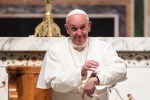
On Tuesday, Pope Francis set foot in the United States for the first time in his life. His plane touched down at Andrews Air Force Base, Maryland, where American presidents depart and arrive on Air Force One. But, according to a Spanish journalist on the papal plane, this was not how Francis had wanted to arrive. He would have preferred to cross over from Tijuana, the grubby Mexican city menaced by drug gangs from which countless migrants slip across the border into California. In other words, if the report is true, the Pope wished to turn his arrival into a political gesture, aligning himself with America’s 11.
From our UK edition
Home In a speech at the Shanghai stock exchange, George Osborne, the Chancellor of the Exchequer, announced a feasibility study into the trading of Chinese and British shares in both countries. At least half of all British banknotes in circulation are held overseas or used in the black market, a Bank of England report suggested. The political impasse in Northern Ireland continued. Sir David Willcocks, the director of choirs, died, aged 95. Brian Sewell, the art critic, died aged 84. Jackie Collins, the author of titillating blockbusters, died aged 77. An outbreak of highly drug-resistant gonorrhoea was detected in the north of England, from Oldham to Scunthorpe.
From our UK edition
From our UK edition
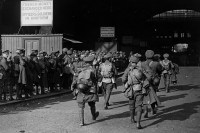
From ‘The will of the majority’, The Spectator, 18 September 1915: The minority may declare, as have some of the trade union leaders, that they are the people—though in reality they are only a twentieth part of the community—and have a right to say what shall and what shall not be done in this country. In the last resort they will find that nineteen-twentieths are stronger than one-twentieth. This country is a crowned democratic republic in which ‘the people’ means ‘the people’, and not a junta of Jacobins… If the State decides that it must have compulsory military service, just as it has decided that it must take some 35 per cent of the incomes of the rich, there can be no tolerance of resistance to either decree.
From our UK edition
From our UK edition
From our UK edition
From our UK edition
From our UK edition