The Spectator

Elizabeth the Great

From our UK edition

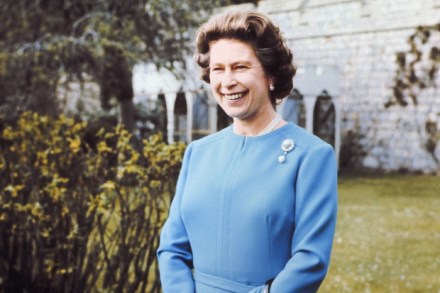
That the Queen has lived to become our longest-reigning monarch — a milestone which she will mark quietly with a lunch next Wednesday — is in itself a sign of the golden age of prosperity which has been the second Elizabethan age. Over the 63 years of her reign, life expectancy for women has increased by a dozen years, to 83. The Queen may be remarkable for her age, but she is far from alone in modern Britain for having lived to a great age in good health. A team of 12 is now needed to send out royal telegrams congratulating those of her subjects to celebrate their 100th birthday. To the increase in longevity over the past six decades can be added huge economic and social advancements.
Portrait of the week | 3 September 2015

From our UK edition

Home The Government decided after all to retain the rules preventing ministers and their departments from publishing campaign material, ‘with some exceptions’, in the month before the referendum on membership of the European Union. The Electoral Commission said the planned wording for the referendum, ‘Should the United Kingdom remain a member of the European Union?’ could favour the status quo, and proposed adding the words ‘or leave the European Union?’ The government said it accepted the change, but Parliament must decide. Net migration to the UK had reached the unprecedented level of 330,000 in the year to March, according to the Office for National Statistics.

Muscular economics

From our UK edition

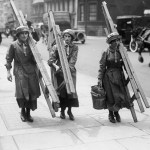
From ‘War bonuses’, The Spectator, 4 September 1915: War means a demand for human muscle… At the moment the brain-worker is at a discount. The demand for lawyers, for writers, for musicians, for painters has declined. The only brain-workers who are much wanted are the comparatively small number of people necessary to direct industrial and war operations. Therefore it is inevitable that the wages of manual workers should rise, and it is useless to oppose that upward movement even when it is based on excuses which will not bear examination.

Letters | 27 August 2015

From our UK edition

Trimming the ermine Sir: I am a new boy in the House of Lords compared with Viscount Astor — though I did hear Manny Shinwell speak — but he is right that it is bursting at the seams, and something needs to be done about it (‘Peer review’, 22 August). I detect signs of a consensus that the right number of peers is about 450. It is 782 at the moment. In the 16 divisions since the election, the largest number of peers voting was 459. The Lords values its crossbenchers and if their number were set at one fifth of the total, that would yield 90 on this figuring. The remaining 360 could then be proportioned out according to strength in the Commons, with each political grouping being given the freedom to decide how it got from here to there.

Portrait of the week | 27 August 2015

From our UK edition

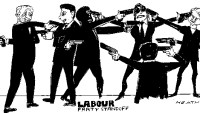
Home Harriet Harman, the acting leader of the Labour party, said that 3,000 people had had any votes they cast in the Labour leadership contest set aside. Voters for the contest had been reduced from 610,000 to 553,954, mostly because people could not be found on the electoral register, but 1,900 alleged sympathisers with the Greens and 400 Conservatives had been debarred, not to mention Mark Serwotka, the general secretary of the Public and Commercial Services union. It was admitted that in mid-August the chimes of Big Ben were up to six seconds out. A 1950s Hawker Hunter jet in an air display at Shoreham in West Sussex crashed in a ball of fire on a main road, killing 11 people; the pilot was critically injured.

Gamblin’ man

From our UK edition

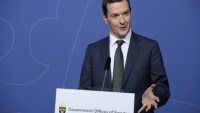
When George Osborne visited Sweden, Finland and Denmark  the stock markets of each country promptly fell by about 5 per cent. As soon as he left, they recovered. A coincidence, of course: Osborne’s tour coincided with stock-market jitters, but this nonetheless forced him to look over the precipice — and panic. Britain, he warned, was ‘not immune to what goes on in the world’. Not for the first time, we saw his lips moving but heard Gordon Brown’s voice. ‘We are much better prepared than we would have been a few years ago for this kind of shock,’ he added. If only this were true. As the Chancellor knows, we are far more vulnerable than we were last time.