Gay
From our UK edition
From our UK edition
From our UK edition
From our UK edition
From our UK edition
From our UK edition

From our UK edition

From our UK edition
From our UK edition
From our UK edition
From our UK edition
From our UK edition
Suicide and assisted dying Sir: As a mental health practitioner, I am grateful to Douglas Murray (‘Death watch’, 29 August) for his incisive commentary on the impact of legalised euthanasia on people with psychiatric conditions. Supporters of assisted dying argue that a permissive act would be tightly framed, but the scope would inevitably widen, as has occurred in Holland. Although Lord Falconer and fellow travellers would bar people of unsound mind from the intended provision, this would soon be challenged as discriminatory: because effectively, a person would be punished for losing decision-making capacity. If proponents of euthanasia are really so rational, while their opponents are blinded by emotion or faith, how can this anomaly be justified?
From our UK edition
Peers’ peers Forty-five new peers were created. Are we alone in having an upper house of parliament made up of appointed cronies? FRANCE Senate has 348 members elected for six-year terms by 150,000 state officials known as ‘grandes electeurs’. GERMANY Bundesrat is made up of 69 members delegated by governments of individual states. ITALY Senate composed of 321 members, of whom 315 are elected for five-year terms by voters aged 25 and above, and 6 appointed as senators for life. JAPAN House of Councillors composed of 242 members elected for six-year terms under a system of proportional representation. UNITED STATES Senate has 100 members, two for each state excluding Washington DC, directly elected by the public.
From our UK edition
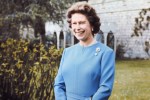
That the Queen has lived to become our longest-reigning monarch — a milestone which she will mark quietly with a lunch next Wednesday — is in itself a sign of the golden age of prosperity which has been the second Elizabethan age. Over the 63 years of her reign, life expectancy for women has increased by a dozen years, to 83. The Queen may be remarkable for her age, but she is far from alone in modern Britain for having lived to a great age in good health. A team of 12 is now needed to send out royal telegrams congratulating those of her subjects to celebrate their 100th birthday. To the increase in longevity over the past six decades can be added huge economic and social advancements.

From our UK edition
Home The Government decided after all to retain the rules preventing ministers and their departments from publishing campaign material, ‘with some exceptions’, in the month before the referendum on membership of the European Union. The Electoral Commission said the planned wording for the referendum, ‘Should the United Kingdom remain a member of the European Union?’ could favour the status quo, and proposed adding the words ‘or leave the European Union?’ The government said it accepted the change, but Parliament must decide. Net migration to the UK had reached the unprecedented level of 330,000 in the year to March, according to the Office for National Statistics.

From our UK edition
From ‘War bonuses’, The Spectator, 4 September 1915: War means a demand for human muscle… At the moment the brain-worker is at a discount. The demand for lawyers, for writers, for musicians, for painters has declined. The only brain-workers who are much wanted are the comparatively small number of people necessary to direct industrial and war operations. Therefore it is inevitable that the wages of manual workers should rise, and it is useless to oppose that upward movement even when it is based on excuses which will not bear examination.
From our UK edition
From our UK edition

From our UK edition

From our UK edition

From our UK edition