Baton
From our UK edition
From our UK edition
From our UK edition
From our UK edition
From our UK edition
From our UK edition
From our UK edition

From our UK edition
From our UK edition

From our UK edition
From our UK edition
From our UK edition
Biblical suggestions Sir: I wish to offer a couple of comments on Matthew Parris’s observation that although his ‘Christian atheism’ provides him with a moral framework, he feels the urge to help people in need, yet feels let down because Jesus offers no guidance about who to help and to what degree (‘Christianity is silent on my great moral dilemma’, 5 September). Jesus wants us to use our minds and our experiences, rather than simply applying set rules, and here is an example of how this works. Take the golden rule of ‘Do unto others’, add to it the Good Samaritan, and stir in the parable of the sheep and the goats, and there’s a fighting chance that the Syrian refugees will not be left to drown.

From our UK edition
Old bags The government announced details of a compulsory 5p charge for single-use plastic bags in shops. Plastic bags have only been around since 1960, when they were first produced by the Swedish firm Akerlund and Rausing, later to give the world the Tetrapak. The first store to use them was Strom, a shoe-shop chain whose owner had complained paper bags were too weak. The first plastic bags had cord handles; a design with integral handle was patented in 1965 by the Swedish company Celloplast, which went on to enjoy a decade of monopoly. Places of refuge David Cameron said that Britain would take 20,000 more Syrian refugees over the next five years. According to UN High Commissioner for Refugees, the UK had a population of 126,055 in 2013, the 25th highest in the world. Who had the most?

From our UK edition
Home David Cameron, the Prime Minister, told Parliament that he had authorised the killing, on 21 August, by means of an RAF drone, of a British citizen near Raqqa in Syria, Cardiff-born Reyaad Khan, 21, an adherent of the Islamic State. Ruhul Amin, from Aberdeen, also an Islamic State activist, whose killing had not been approved in advance, died in the same attack, along with another Islamic State supporter who was with them. Mr Cameron called the strike a lawful ‘act of self-defence’. Khan was said by government sources to have been plotting an attack during the VJ Day commemorations in London on 15 August, and although that had been thwarted, he was thought still to have a ‘desire to murder’ people in Britain.

From our UK edition
Not even Jeremy Corbyn lamented the death of Reyaad Khan, who was killed by an RAF drone in Syria after joining the Islamic State. He was a straight-A student from Cardiff who had the freedom to do anything with his life, but chose to turn his back on Britain and join a band of Islamofascists. He had been working hand-in-glove with Junaid Hussain, a talented computer hacker from Birmingham who fled to Syria; the two of them had been making detailed plans for attacks on Britain. But the RAF’s involvement in the strike marks a new chapter in British warfare. The motive for the action was simple: Khan was planning to inflict great harm on British people, and in the absence of alternatives, the RAF struck when they had the chance.
From our UK edition
From our UK edition
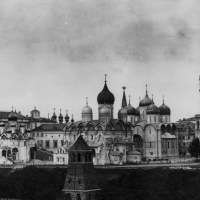
From ‘The situation in Russia’, The Spectator, 11 September 1915: A new Russia has been arising within the old while the war has been going on. We have heard little of it, but we believe that the changes are deep and wide. A people cannot fight for liberty and justice without discovering that those ideas daily react upon their own practice. We read in fragmentary messages of the parties in the Duma calling a truce to their old differences, of political indulgence to the Jews, of more freedom to workmen to organise themselves, and so forth. This new heart in the nation knows that it must cease to beat if Germany should win the war. The rising Russia looks for a leader, and the Tsar is there at the very right moment.
From our UK edition
The following article is by an ex-serviceman who served in Afghanistan. They’re making a list, they’re checking it twice - and Number 10 will know whether you’ve been naughty or nice. And if you've been very naughty, you'd better watch out for a metallic glint in the sky. Britain doesn't have anything called a 'kill list', but it does have something called ‘JPEL’ - whose existence the government will neither confirm nor deny. The ‘Joint Priority Effects List’ is not new, nor is the very use of such a list. As with Special Forces operations, the UK government – with good reason – will consistently refuse to comment on its existence.

From our UK edition
That the Queen has lived to become our longest-reigning monarch is in itself a sign of the golden age of prosperity which has been the second Elizabethan age. Over the 63 years of her reign, life expectancy for women has increased by a dozen years, to 83. The Queen may be remarkable for her age, but she is far from alone in modern Britain for having lived to a great age in good health. A team of 12 is now needed to send out royal telegrams congratulating those of her subjects to celebrate their 100th birthday. To the increase in longevity over the past six decades can be added huge economic and social advancements. Almost all of it would, of course, have happened whoever was on the throne — and, as the Queen recognises, no matter who was in Downing Street.
From our UK edition
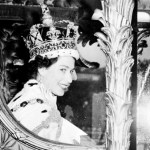
This leader was originally published in The Spectator on 5 June 1953, following the coronation of Elizabeth II on 2 June. The splendour of the Coronation of Elizabeth II is over. It was a bright symbol, and its light will not fade quickly. Yet if the Queen lives as long as her loyal subjects have hoped, prayed, sung and, in the past few glorious days, shouted at the tops of their voices, most of us will never see another Coronation. On normal expectations some three out of every five people now living in the United Kingdom will have to make the best of the memory of this one. In any case full participation in the ceremony could only be for a few of the Queen’s subjects throughout the world.
From our UK edition