Newspaper 4
From our UK edition
From our UK edition
From our UK edition

From our UK edition
From our UK edition
Forgiveness in the Quran Sir: Canon Andrew White (‘God’s man in Baghdad’, 21 November) said he could not find any forgiveness in the Quran, and asks to be informed if anyone finds any mention of it. I would be delighted to assist. Any reader of the Quran would note that 113 of its 114 chapters begin with a pronouncement of God’s limitless mercy and beneficence. In fact ‘forgiveness’ and ‘mercy’ are mentioned roughly 100 and 200 times respectively. An entire chapter of the Quran is devoted to the quality of mercy (Surah Rahman). The living embodiment of such values was the Prophet Muhammad. Did he not demonstrate the pinnacle of clemency when he forgave Wahshi, the criminal who murdered and mutilated his uncle Hamza?
From our UK edition
Amen corner Digital Cinema Media, a company which distributes adverts to cinemas, refused to allow an advert which involves the recitation of the Lord’s Prayer by, among others, the Archbishop of Canterbury. Some other battles over the prayer: — Campaigners want Alberta to follow other Canadian states, where recitation of the Lord’s Prayer in state schools is already banned. In the latest battle the Pembina Hills School Division voted by 30 to three to let the prayer still be recited. — Last year cheerleaders at a high school football game in Oneida, Tennessee, were accused of violating the US First Amendment, which forbids the state from promoting one form of religious worship.
From our UK edition
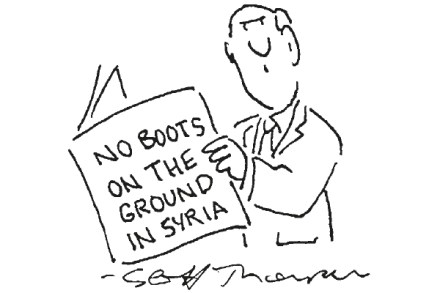
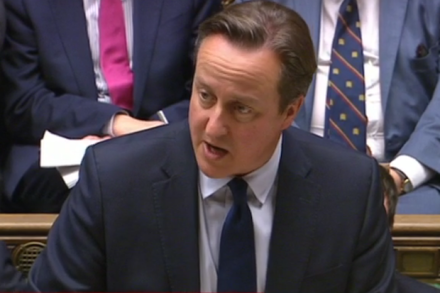
Home David Cameron, the Prime Minister, announced, as part of the Strategic Defence and Security Review, plans for two 5,000-strong ‘strike brigades’ that could respond to terrorist attacks on Britain. Spending on defence would go up by £12 billion, keeping it above 2 per cent of GDP. The estimate for replacing Britain’s four Trident ballistic missile submarines rose from £25 billion to £31 billion. The Nimrod maritime patrol aircraft, scrapped in 2010, would be replaced with nine Boeing P-8s. Aircraft for the Navy’s two new aircraft carriers would be ready by 2023. The government made preparations for a vote in the Commons in favour of Britain bombing Islamic State targets in Syria.

From our UK edition
By now, George Osborne had hoped to have completed his austerity programme. Instead, he finds himself making what is, still, the most ambitious round of cuts of any finance minister in the developed world. The Chancellor is paying the price for the leisurely pace that he decided to take in the last parliament - due to his habit of buying time by deferring pain. The Chancellor still doesn’t seem to be in too much of a rush. In his spending review statement this week, he decided to spend some £83 billion more over the parliament than he said he would at the general election. Foreign aid is not just protected, but will increase by some £3 billion - more than the budget for the Home Office.
From our UK edition
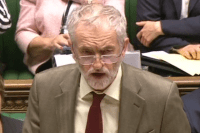
I would like to thank the Prime Minister for providing an advance copy of his remarks. After the despicable and horrific attacks in Paris a fortnight ago the whole House will, I’m sure, agree that our first priority must be the security of Britain and the safety of the British people. So when we consider the Prime Minister’s case for military action in Syria, the issue of whether what he proposes strengthens - or undermines - our national security must be front and centre stage. There is no doubt that the so-called Islamic State group has imposed a reign of terror on millions in Iraq, Syria and Libya. All that ISIS stands for and does is contrary to everything those of us on these benches have struggled for over generations.
From our UK edition
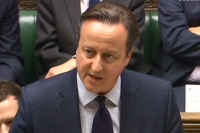
David Cameron has just followed up his earlier response to the Foreign Affairs Select Committee by telling the House of Commons that the UK must now get involved in action against Islamic State in Syria.
From our UK edition
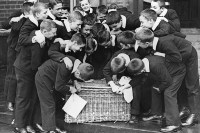
Savoury Rich olives salted à la Grecque with herbs Provence Waitrose family hamper: Not Provencal or Greek but Moroccan, these black Beldi olives, sprinkled with dried herbs, are plump, soft and not too salty. — Clare Asquith Mini crocq salami bites Harrods Montpelier hamper: Little parcels of meaty joy to go with cheese and wine. A snack to gorge on. — Sebastian Payne Parmesan, rosemary and chilli crackers Ottolenghi hamper: I’d eat a beer mat fried with Parmesan and chilli, and rose-mary gilds the lily. My mother-in-law would have scoffed the lot. If I hadn’t. — Sam Leith Salami Fattoria La Vialla hamper: Salami can be so chewy you wonder what the meat is. But this is impeccable; succulent and not too peppery.
From our UK edition
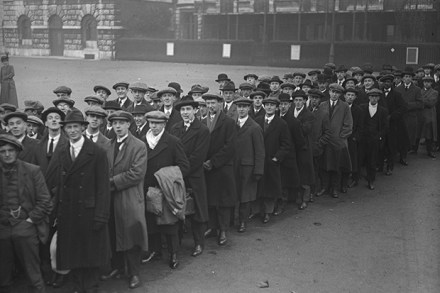
From ‘Public loans and private savings’, The Spectator, 27 November 1915: In the nature of things there is no reason for the permanent maintenance of the existing gulf between capitalists and wage-earners. Every wage-earner ought to be to some extent himself a capitalist, and every capitalist certainly ought to be in one way or another a worker.
From our UK edition
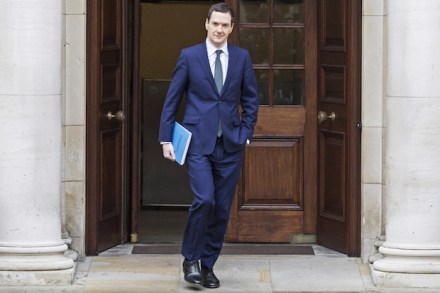
Mr Speaker, this Spending Review delivers on the commitment we made to the British people that we would put security first. To protect our economic security, by taking the difficult decisions to live within our means and bring down our debt. To protect our national security, by defending our country’s interests abroad and keeping our citizens safe at home. Economic and national security provide the foundations for everything we want to support. Opportunity for all. The aspirations of families. The strong country we want to build. Five years ago, when I presented our first Spending Review, our economy was in crisis and there was no money left. We were borrowing one pound in every four we spent. Our job then was to rescue Britain.

From our UK edition
From our UK edition
I thank the Prime Minister for his statement. As I said to him in the House last week the first duty of a state is to protect its citizens. At the moment the country’s overwhelming focus is on the threat we face from terrorism and on how we can best ensure the defeat of ISIL. Labour supports the increased expenditure to strengthen our security services that he has announced to protect against the threat of terrorism. However, faced with the current threat the public will not understand or accept any cuts to frontline policing. Everyone will be very concerned about the warnings we now know he has had from security officials and the police that police cuts will reduce very significantly the ability to respond to a Paris-style attack.

From our UK edition
With permission, Mr Speaker, I would like to make a Statement on the National Security Strategy and Strategic Defence and Security Review. Mr Speaker, our national security depends on our economic security, and vice versa. So the first step in keeping our country safe is to ensure our economy is, and remains, strong. Over the last five years we have taken the difficult decisions needed to bring down our deficit and restore our economy to strength. In 2010, we were ordering equipment for which there was literally no money. The total black hole in the defence budget alone was bigger than the entire defence budget in that year. Now it is back in balance.
From our UK edition
From our UK edition
From our UK edition
From our UK edition
From our UK edition