Exit 2
From our UK edition
From our UK edition
From our UK edition
From our UK edition
From our UK edition
From our UK edition

From our UK edition
From our UK edition
From our UK edition
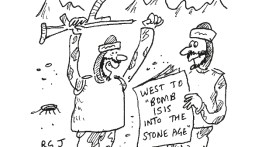
Bombers without borders Sir: To define this week’s debate as being about ‘bombing Syria’ (‘The great fake war’, 28 November) is ludicrous. That’s not what it’s about. It’s about fighting Isis. Whatever you call them, and wherever they are. The current deal, under which we bomb Isis in Iraq but not in Syria, is as if we are content to fight them in Yorkshire but not in Lancashire. If people do not think we should be engaging Isis at all, that’s a different argument. But I would ask, ‘Where do they need to get to before you would engage them?’ Two years ago, we had a similar situation to today. The vote was similarly not about ‘bombing Syria’. It was about fighting and punishing Assad, which was a bad idea.
From our UK edition
The first warmist The first attempt to quantify the link between CO2 in the atmosphere and global temperatures was attributed to Swedish chemist Svante Arrhenius, in a paper in the Philosophical Magazine and Journal of Science in 1896. He was working on a theory to explain the oscillation between ice ages and interglacial periods. He calculated that increasing the concentration of carbonic acid (as CO2 was then known) in the atmosphere would result in a global temperature increase of 8 to 9˚C. — His extrapolation was not that man-made carbon emissions were dangerous; but that the rate of coal-burning was cancelling out the process of CO2 absorption caused by limestone weathering.
From our UK edition
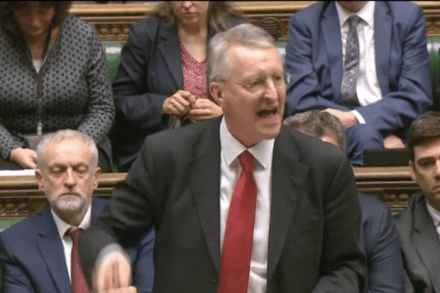
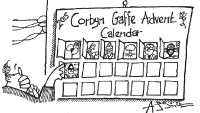
Home The House of Commons voted on air strikes in Syria. Labour MPs had been allowed a free vote by their party amid much ill-feeling. Members of the shadow cabinet shouted at Jeremy Corbyn, the leader of the opposition, when he tried to insist that the formal Labour party policy should be to oppose air strikes. Mr Corbyn said: ‘We’re going to kill people in their homes by our bombs.’ Hilary Benn, the shadow foreign secretary, said: ‘Inaction has a cost in lives, too.’ Peter Sutcliffe, the Yorkshire Ripper, who murdered 13 women, was said to have been successfully treated for schizophrenia and was being considered for transfer from Broadmoor hospital to prison.

From our UK edition
The Islamic State is as monstrous an enemy as we have seen in recent history. It crucifies and decapitates its victims, holds teenage girls in slavery and burns captives alive. It is wrong to call it a medieval force, because such institutionalised barbarity was seldom seen in medieval times. As far as five centuries of records from the Ottoman Empire can establish, stoning was authorised only once. Isis now regularly stones suspected adulterers to death. It is not seeking inspiration from the Middle Ages. We are witnessing a modern form of evil — and it is spreading fast.
From our UK edition
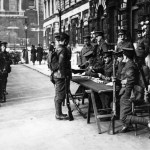
From ‘Payment of members’, The Spectator, 4 December 1915: If the country could be polled at the present time, there is probably no subject upon which greater unanimity could be secured, apart from the general question of prosecuting the war, than that of payment of Members of Parliament. Barring Members themselves and the political agents whom they employ, it may be safely said that the whole country condemns the continuance of the salary of £400 a year… The excuse that some of these men make is that they draw the £400 in order to save poorer men from the odium of being alone in accepting pay.
From our UK edition
Thank you very much Mr Speaker. Before I respond to the debate, I would like to say this directly to the Prime Minister: Although my right honourable friend the Leader of the Opposition and I will walk into different division lobbies tonight, I am proud to speak from the same Despatch Box as him. My right honourable friend is not a terrorist sympathiser, he is an honest, a principled, a decent and a good man and I think the Prime Minister must now regret what he said yesterday and his failure to do what he should have done today, which is simply to say ‘I am sorry’.
From our UK edition
The Islamic State is as monstrous an enemy as that has emerged in recent history. It crucifies and decapitates its victims, holds teenage girls in slavery and burns captives alive. It is wrong to call it a medieval force, because such institutionalised barbarity was seldom seen in medieval times. As far as five centuries of records from the Ottoman Empire can establish, stoning was authorised only once. Isis now regularly stones suspected adulterers to death. It is not seeking inspiration from the Middle Ages. We are witnessing a modern form of evil — and it is spreading fast.
From our UK edition
Welcome to Coffee House’s coverage of the Syria debate in the House of Commons yesterday. Here are the best speeches in favour of and against the motion, with full quotes and audio clips. 10:15pm: The foreign secretary Philip Hammond has closed the debate on behalf of the government, making the case for the airstrikes: 9:45pm: Shadow foreign secretary Hilary Benn has delivered a rousing speech in favour of the airstrikes that received huge applause from both sides of the Commons. There was a standing ovation for Benn, led by former Tory Cabinet minister Andrew Mitchell from Tory backbenches. Quite extraordinary.
From our UK edition
From our UK edition
From our UK edition
From our UK edition
From our UK edition