The Spectator

Letters | 29 October 2015

From our UK edition

We should all be feminists Sir: Articles proclaiming the death of feminism are appearing like clockwork in the press at the moment (‘Bad winners’, 24 October). Each time, it prompts feminists to respond passionately, demonstrating that far from being over, feminism is experiencing a resurgence. Witness the crowds that gathered at the Feminism in London conference at the weekend, or the stats which refuse to budge: the 19 per cent gender pay gap, the 54,000 pregnant women who are discriminated against at work each year, and the two women per week who die at the hands of a partner or former partner. But there is a more serious underlying issue.

Portrait of the week | 29 October 2015

From our UK edition

Home After it was twice defeated in the Lords on its plans to reduce working tax credits, the government announced a review of the workings of Parliament, to be led by Lord Strathclyde, the former leader of the House of Lords. Peers had voted for a motion by Lady Hollis of Heigham to delay the measures until the introduction of ‘full transitional protection’ for those who would suffer loss, and for a motion by Lady Meacher to delay them until the government had responded to an analysis by the Institute for Fiscal Studies. The IFS had said that three million working families would be on average £1,300 a year worse off.

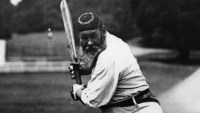
From the archives: W.G. Grace’s legacy on the Western Front

From our UK edition

From ‘W.G.’, The Spectator, 30 October 1915: The late Dr. W.G. Grace had become in his lifetime a legend, and he is likely to remain a legend as long as Englishmen play games. Never was such a cricketer; and it is almost safe to say that there will never be such a cricketer again, for the perfection of pitches and the high organisation of the game have left less scope than there used to be for a man to achieve so great a mastery over his fellows. In this respect cricket is like war; in first-class cricket, as in war among first-class Powers, there is the same human material for personal ascendancy, but there is less opportunity for ascendancy to be practised… It is not stretching the fancy too far to trace the effects of ‘W. G.

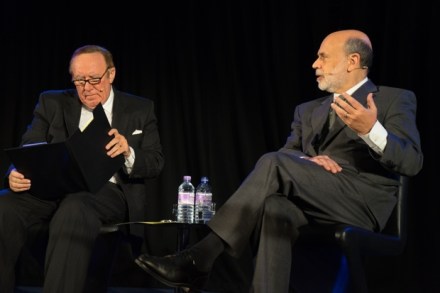
Ben Bernanke reveals the biggest financial risk in the global economy

From our UK edition

Last night, The Spectator hosted a discussion between Ben Bernanke and Andrew Neil about the financial crisis and its aftermath. Mr Bernanke, who was chairman of the US Federal Reserve during the crash and Great Recession, spoke about a number of different topics. Initially, conversation focussed on the buildup to the crash. 'What made the crisis so bad at the time was the panic it triggered,' said Mr Bernanke. He suggested that while subprime mortgages were actually a relatively small asset class, their links to so many other types of credit led to panic.

Technology podcast special: the disruptive impact of digital innovation

From our UK edition

This podcast was sponsored by King and Wood Mallesons. Is technological change a good thing for the British economy? In this View from 22 special podcast, The Spectator's Fraser Nelson discusses the disruptive impact of new technologies with Julian David, CEO of Tech UK, Andrew Pinnington, CEO of Hailo and Rob Day, a partner at King and Wood Mallesons. What does digital innovation look like and what can businesses do, if anything, to prepare for it? How is the British economy coping with the speed of technological changes through new innovations like Uber and Airbnb? Which industries have struggled the most to cope with new innovations? And are big or small businesses most likely to suffer from disruption?

Letters | 22 October 2015

From our UK edition

Scotland isn’t failing Sir: It will take more than Adam Tomkins descending from the heights of academe to persuade the Scots that education, health, policing and everything else in Scotland is failing (‘The SNP’s One-Party State,’ 17 October). Scots aren’t stupid: they have heard all this before from the unionist press, and they don’t believe it. That’s why, after seven years in power, support for the SNP is still growing. Meanwhile, the Tories continue to have dreadful results in Scotland, despite having an articulate and personable leader in Ruth Davidson and no competition any more from the Lib Dems.

The human factor | 22 October 2015

From our UK edition

Just over 30 years ago, Margaret Thatcher’s government decided to look at local government finance. A young aide, John Redwood, outlined ‘some kind of poll tax which is paid by every elector’. Discussions continued, and bright young men (including the young Oliver Letwin) assured the Prime Minister that the figures would all stack up. Unpopular to start with, perhaps, but necessary. Later, Kenneth Baker had a niggle: ‘If I’m on Question Time and I’m asked “Why must the Duke and the dustman pay the same?” there’s no answer.’ Last week the energy secretary Amber Rudd was on Question Time.