The Spectator

The French way of war

From our UK edition

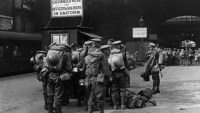
From ‘The Example of France’, The Spectator, 20 November 1915: France is an example to the world and to posterity of how a nation can bend itself to the work in hand, and labour with its whole body, its whole mind, and its whole soul. The more we know of the splendid details of this devotion the better. We think that we Englishmen know a good deal more of the ways of devotion than we are generally credited with, and we are learning daily in a geometrical progression. But even so, we cannot fail to help ourselves by watching and admiring the wonderful performance of a people whose circumstances brought them more quickly and more really into contact with war than we ourselves were brought… Beyond the rampart which we defend lie the barbarians yearning to advance.

A further selection of books of the year — the best and most overrated of 2015

From our UK edition

Daniel Hahn  I suspect many people won’t bother to read Katherine Rundell’s The Wolf Wilder (Bloomsbury, £12.99) because it’s a children’s book. Don’t be one of those people. You’d be depriving yourself of a ferociously paced, brilliantly imagined piece of gorgeous, immersive storytelling — and really, why would you want to do that? Set in Russia a century ago, it’s the story of a girl and her friends (some of whom are wolves) forced to be brave, and to right some great wrongs. We began 2015 with the introduction to another bright new talent, following the publication of The Vegetarian by Han Kang (Portobello, £12.99), superbly translated by Deborah Smith.

Cameron’s snooping law would not help our spies. Why does he pretend otherwise?

From our UK edition

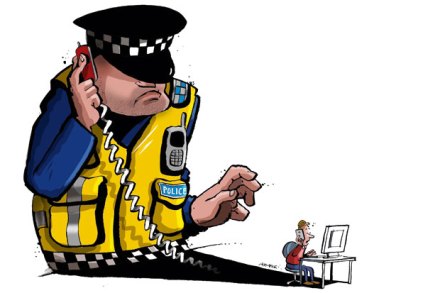
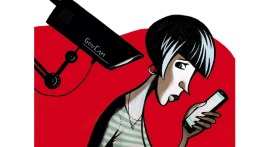
Should the Investigatory Powers Bill be rushed through parliament in the wake of the Paris attacks? David Cameron seemed to suggest so this morning, when he said that the bill was part of his 'full spectrum' response. Britain will be responding to the Paris atrocities, he said, and this… '…means boosting our counter-terrorism capabilities. We should think, absolutely, the bill we’re taking through parliament to strengthen our capabilities to intercept the communications of terrorists is a vital part of this.' Asked if he wanted to speed it up, he replied: 'we ought to look at the timetable'. But why? The Investigatory Powers Bill will confer no new powers on the spies at all – as No10 confirmed in a briefing to journalists this afternoon.

Letters | 12 November 2015

From our UK edition

The C of E should apologise Sir: Peter Hitchens’s article on the allegations against the late Bishop Bell is a welcome intervention in a sorry affair (‘Justice for Bishop Bell’, 7 November). If the best evidence against Bishop Bell was sufficient only to merit his arrest (were he alive), then the recent statements concerning him issued by the church authorities should be withdrawn; if they have better evidence, then that should be published. It should not be forgotten that this is not the first time this year that senior figures in the Church of England have made dubious accusations of child abuse against the dead.

Barometer | 12 November 2015

From our UK edition

A marathon of cheats Russian athletes may be stripped of the medals they won at the 2012 Olympics, but what of the earliest-known drug-taker in the modern Olympics? Thomas Hicks won the 1904 marathon in St Louis after taking two doses of brandy laced with strychnine. —Hicks collapsed on the finishing line and had to be revived. There being no rule at the time against drugs, he was allowed to keep his gold medal. — Not so a man who reached the finishing line ahead of him, fellow American Fred Lorz. He was disqualified after admitting that he had taken a car most of the way. Police, camera, revenue The police and crime commissioner for Bedfordshire is thinking of turning on speed cameras on the M1 24 hours a day. On which roads do most fatalities occur?

Pry another day

From our UK edition

Were David Cameron in any way adept at spin, it would be tempting to think that the publication of the Investigatory Powers Bill had been deliberately timed so as to coincide with the opening of Spectre, the new James Bond film. The debate over the bill has turned into a question of whether we trust our spies, which by and large we do. But the real question to be asked is whether we trust the taxman, the police and our town halls with the powers of espionage — and that is another matter entirely. The Investigatory Powers Bill does not actually contain new powers for the security services, who can already tap phones and access emails and have done for decades.

From the archives: the liberty of the battlefield

From our UK edition

From ‘Soldiers for the land’, The Spectator, 13 November 1915: It is certain that, when the war is over, tens of thousands of soldiers will not want to return to their former urban occupations. No man who has enjoyed the liberty of a greater world and a freer life will be reconciled easily to resuming his job of, say, working a lift, or enduring stuffy hours in a shop, or addressing envelopes in an office. The nearest reproduction of the campaigner’s life which will be normally possible for him will be settlement on the land.

Books of the Year: the best and most overrated of 2015

From our UK edition

Anna Aslanyan  My top title of the year is Satin Island by Tom McCarthy (Cape, £16.99), convincing proof that the best writers of our time are anthropologists, and that James Joyce, were he alive today, would be working for Google. I also enjoyed Ben Lerner’s 10:04 (Granta, £14.99), a self-deconstructing novel whose metafictional plot speaks of the nature of time and of things being endlessly interconnected. My non-fiction pick is Iain Sinclair’s London Overground: A Day’s Walk Around the Ginger Line (Hamish Hamilton, £16.99), the psychogeographer’s passionate take on 21st-century London, a place of perpetual change and chronological resonances.