The Spectator

Barometer: Who was the first warmist?

From our UK edition

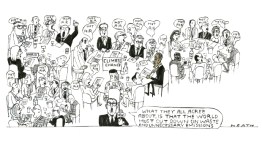
The first warmist The first attempt to quantify the link between CO2 in the atmosphere and global temperatures was attributed to Swedish chemist Svante Arrhenius, in a paper in the Philosophical Magazine and Journal of Science in 1896. He was working on a theory to explain the oscillation between ice ages and interglacial periods. He calculated that increasing the concentration of carbonic acid (as CO2 was then known) in the atmosphere would result in a global temperature increase of 8 to 9˚C. — His extrapolation was not that man-made carbon emissions were dangerous; but that the rate of coal-burning was cancelling out the process of CO2 absorption caused by limestone weathering.
Portrait of the week | 3 December 2015

From our UK edition

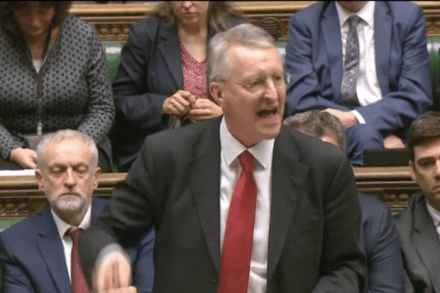
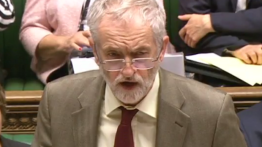
Home The House of Commons voted on air strikes in Syria. Labour MPs had been allowed a free vote by their party amid much ill-feeling. Members of the shadow cabinet shouted at Jeremy Corbyn, the leader of the opposition, when he tried to insist that the formal Labour party policy should be to oppose air strikes. Mr Corbyn said: ‘We’re going to kill people in their homes by our bombs.’ Hilary Benn, the shadow foreign secretary, said: ‘Inaction has a cost in lives, too.’ Peter Sutcliffe, the Yorkshire Ripper, who murdered 13 women, was said to have been successfully treated for schizophrenia and was being considered for transfer from Broadmoor hospital to prison.

It is time to join the fight against IS in Syria

From our UK edition

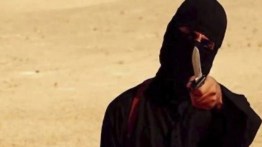
The Islamic State is as monstrous an enemy as we have seen in recent history. It crucifies and decapitates its victims, holds teenage girls in slavery and burns captives alive. It is wrong to call it a medieval force, because such institutionalised barbarity was seldom seen in medieval times. As far as five centuries of records from the Ottoman Empire can establish, stoning was authorised only once. Isis now regularly stones suspected adulterers to death. It is not seeking inspiration from the Middle Ages. We are witnessing a modern form of evil — and it is spreading fast.

Let unions pay MPs

From our UK edition

From ‘Payment of members’, The Spectator, 4 December 1915: If the country could be polled at the present time, there is probably no subject upon which greater unanimity could be secured, apart from the general question of prosecuting the war, than that of payment of Members of Parliament. Barring Members themselves and the political agents whom they employ, it may be safely said that the whole country condemns the continuance of the salary of £400 a year… The excuse that some of these men make is that they draw the £400 in order to save poorer men from the odium of being alone in accepting pay.

Full text of Hilary Benn’s extraordinary speech in favour of Syria airstrikes

From our UK edition

Thank you very much Mr Speaker. Before I respond to the debate, I would like to say this directly to the Prime Minister: Although my right honourable friend the Leader of the Opposition and I will walk into different division lobbies tonight, I am proud to speak from the same Despatch Box as him. My right honourable friend is not a terrorist sympathiser, he is an honest, a principled, a decent and a good man and I think the Prime Minister must now regret what he said yesterday and his failure to do what he should have done today, which is simply to say ‘I am sorry’.

Why it’s time for Britain to join our allies in their fight against the Islamic State

From our UK edition

The Islamic State is as monstrous an enemy as that has emerged in recent history. It crucifies and decapitates its victims, holds teenage girls in slavery and burns captives alive. It is wrong to call it a medieval force, because such institutionalised barbarity was seldom seen in medieval times. As far as five centuries of records from the Ottoman Empire can establish, stoning was authorised only once. Isis now regularly stones suspected adulterers to death. It is not seeking inspiration from the Middle Ages. We are witnessing a modern form of evil — and it is spreading fast.

The best speeches from the Syria airstrikes debate

From our UK edition

Welcome to Coffee House’s coverage of the Syria debate in the House of Commons yesterday. Here are the best speeches in favour of and against the motion, with full quotes and audio clips. 10:15pm: The foreign secretary Philip Hammond has closed the debate on behalf of the government, making the case for the airstrikes: 9:45pm: Shadow foreign secretary Hilary Benn has delivered a rousing speech in favour of the airstrikes that received huge applause from both sides of the Commons. There was a standing ovation for Benn, led by former Tory Cabinet minister Andrew Mitchell from Tory backbenches. Quite extraordinary.

Letters: There is plenty of forgiveness in the Quran

From our UK edition

Forgiveness in the Quran Sir: Canon Andrew White (‘God’s man in Baghdad’, 21 November) said he could not find any forgiveness in the Quran, and asks to be informed if anyone finds any mention of it. I would be delighted to assist. Any reader of the Quran would note that 113 of its 114 chapters begin with a pronouncement of God’s limitless mercy and beneficence. In fact ‘forgiveness’ and ‘mercy’ are mentioned roughly 100 and 200 times respectively. An entire chapter of the Quran is devoted to the quality of mercy (Surah Rahman). The living embodiment of such values was the Prophet Muhammad. Did he not demonstrate the pinnacle of clemency when he forgave Wahshi, the criminal who murdered and mutilated his uncle Hamza?

The many fights over the Lord’s Prayer

From our UK edition

Amen corner Digital Cinema Media, a company which distributes adverts to cinemas, refused to allow an advert which involves the recitation of the Lord’s Prayer by, among others, the Archbishop of Canterbury. Some other battles over the prayer: — Campaigners want Alberta to follow other Canadian states, where recitation of the Lord’s Prayer in state schools is already banned. In the latest battle the Pembina Hills School Division voted by 30 to three to let the prayer still be recited. — Last year cheerleaders at a high school football game in Oneida, Tennessee, were accused of violating the US First Amendment, which forbids the state from promoting one form of religious worship.

Portrait of the week | 26 November 2015

From our UK edition

Home David Cameron, the Prime Minister, announced, as part of the Strategic Defence and Security Review, plans for two 5,000-strong ‘strike brigades’ that could respond to terrorist attacks on Britain. Spending on defence would go up by £12 billion, keeping it above 2 per cent of GDP. The estimate for replacing Britain’s four Trident ballistic missile submarines rose from £25 billion to £31 billion. The Nimrod maritime patrol aircraft, scrapped in 2010, would be replaced with nine Boeing P-8s. Aircraft for the Navy’s two new aircraft carriers would be ready by 2023. The government made preparations for a vote in the Commons in favour of Britain bombing Islamic State targets in Syria.

The ringfence cycle

From our UK edition

By now, George Osborne had hoped to have completed his austerity programme. Instead, he finds himself making what is, still, the most ambitious round of cuts of any finance minister in the developed world. The Chancellor is paying the price for the leisurely pace that he decided to take in the last parliament - due to his habit of buying time by deferring pain. The Chancellor still doesn’t seem to be in too much of a rush. In his spending review statement this week, he decided to spend some £83 billion more over the parliament than he said he would at the general election.  Foreign aid is not just protected, but will increase by some £3 billion - more than the budget for the Home Office.

Full text and audio: Corbyn’s seven questions to Cameron on Syria

From our UK edition

I would like to thank the Prime Minister for providing an advance copy of his remarks. After the despicable and horrific attacks in Paris a fortnight ago the whole House will, I’m sure, agree that our first priority must be the security of Britain and the safety of the British people. So when we consider the Prime Minister’s case for military action in Syria, the issue of whether what he proposes strengthens - or undermines - our national security must be front and centre stage. There is no doubt that the so-called Islamic State group has imposed a reign of terror on millions in Iraq, Syria and Libya. All that ISIS stands for and does is contrary to everything those of us on these benches have struggled for over generations.