The Spectator

State of the Union

From our UK edition

Last year, the United Kingdom came within 384,000 votes of destruction. A referendum designed to crush the Scottish nationalists instead saw them win 45 per cent of the vote — and become stronger than ever. Since then, the SNP has taken almost every Scottish seat in the Commons and is preparing for another landslide in the Holyrood election next year — giving Nicola Sturgeon the power to threaten a second referendum. We may be just a few years away from a second battle for Britain. In her short time as First Minister, Sturgeon has established herself as one of the most formidable politicians in Europe. She has raised a rebel army that she inspires with talk of destiny and dreams — while her opponents drone on about banks and the Barnett formula.

Communion in the trenches

From our UK edition

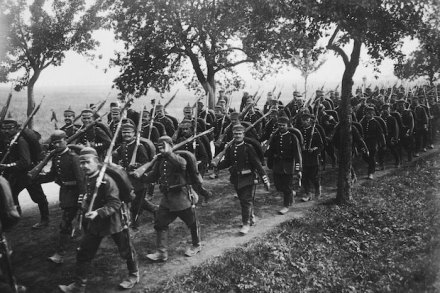
From ‘The Sacrament’, The Spectator, 25 December 1915: We were fairly fagged out, all of us, after a heavy day of it. One by one we scraped the thick, clinging mud off our boots as best we could and took our places at the mess-table. It was a door resting on biscuit-boxes, but we ate what lay on it ready for us as thankfully as if it had been polished mahogany covered with the whitest damask cloth. It was frightfully draughty, and through a shell-hole in one wall came the fitful, silent gleams of the Verey lights as they rose and fell over the trenches. There was an extraordinary silence, broken by nothing louder than the crack of a rifle now and then and the fitful noises of the wind. The guns had stopped their barking and roaring after 50 hours of ceaseless shelling.

Seasonal advice from the great and the good

From our UK edition

Clare Balding I love a good walk on Boxing Day followed by watching the racing at Kempton. Avoid the internet. Be present in the moment, enjoying time with family rather than being distracted by online conversations. Alain de Botton My favourite ritual is reminding everyone involved that we will, of course, be having a sad and tense Christmas; there will be arguments, frustration, bitterness and barely suppressed longings to be elsewhere with other (better, more interesting) people. The food will be mediocre or, if tasty, will exact such passive-aggressive retribution from those who made it that it would have been better to have a sandwich. The children’s presents will be a sickening reminder of materialism and everyone’s inability to be happy without a screen.

Letters | 3 December 2015

From our UK edition

Bombers without borders Sir: To define this week’s debate as being about ‘bombing Syria’ (‘The great fake war’, 28 November) is ludicrous. That’s not what it’s about. It’s about fighting Isis. Whatever you call them, and wherever they are. The current deal, under which we bomb Isis in Iraq but not in Syria, is as if we are content to fight them in Yorkshire but not in Lancashire. If people do not think we should be engaging Isis at all, that’s a different argument. But I would ask, ‘Where do they need to get to before you would engage them?’ Two years ago, we had a similar situation to today. The vote was similarly not about ‘bombing Syria’. It was about fighting and punishing Assad, which was a bad idea.

Barometer: Who was the first warmist?

From our UK edition

The first warmist The first attempt to quantify the link between CO2 in the atmosphere and global temperatures was attributed to Swedish chemist Svante Arrhenius, in a paper in the Philosophical Magazine and Journal of Science in 1896. He was working on a theory to explain the oscillation between ice ages and interglacial periods. He calculated that increasing the concentration of carbonic acid (as CO2 was then known) in the atmosphere would result in a global temperature increase of 8 to 9˚C. — His extrapolation was not that man-made carbon emissions were dangerous; but that the rate of coal-burning was cancelling out the process of CO2 absorption caused by limestone weathering.

Portrait of the week | 3 December 2015

From our UK edition

Home The House of Commons voted on air strikes in Syria. Labour MPs had been allowed a free vote by their party amid much ill-feeling. Members of the shadow cabinet shouted at Jeremy Corbyn, the leader of the opposition, when he tried to insist that the formal Labour party policy should be to oppose air strikes. Mr Corbyn said: ‘We’re going to kill people in their homes by our bombs.’ Hilary Benn, the shadow foreign secretary, said: ‘Inaction has a cost in lives, too.’ Peter Sutcliffe, the Yorkshire Ripper, who murdered 13 women, was said to have been successfully treated for schizophrenia and was being considered for transfer from Broadmoor hospital to prison.

It is time to join the fight against IS in Syria

From our UK edition

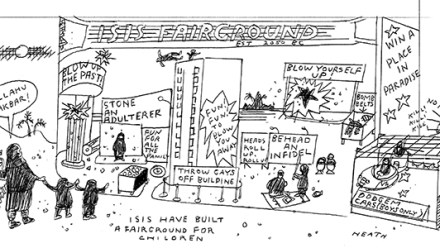
The Islamic State is as monstrous an enemy as we have seen in recent history. It crucifies and decapitates its victims, holds teenage girls in slavery and burns captives alive. It is wrong to call it a medieval force, because such institutionalised barbarity was seldom seen in medieval times. As far as five centuries of records from the Ottoman Empire can establish, stoning was authorised only once. Isis now regularly stones suspected adulterers to death. It is not seeking inspiration from the Middle Ages. We are witnessing a modern form of evil — and it is spreading fast.

Let unions pay MPs

From our UK edition

From ‘Payment of members’, The Spectator, 4 December 1915: If the country could be polled at the present time, there is probably no subject upon which greater unanimity could be secured, apart from the general question of prosecuting the war, than that of payment of Members of Parliament. Barring Members themselves and the political agents whom they employ, it may be safely said that the whole country condemns the continuance of the salary of £400 a year… The excuse that some of these men make is that they draw the £400 in order to save poorer men from the odium of being alone in accepting pay.

Full text of Hilary Benn’s extraordinary speech in favour of Syria airstrikes

From our UK edition

Thank you very much Mr Speaker. Before I respond to the debate, I would like to say this directly to the Prime Minister: Although my right honourable friend the Leader of the Opposition and I will walk into different division lobbies tonight, I am proud to speak from the same Despatch Box as him. My right honourable friend is not a terrorist sympathiser, he is an honest, a principled, a decent and a good man and I think the Prime Minister must now regret what he said yesterday and his failure to do what he should have done today, which is simply to say ‘I am sorry’.

Why it’s time for Britain to join our allies in their fight against the Islamic State

From our UK edition

The Islamic State is as monstrous an enemy as that has emerged in recent history. It crucifies and decapitates its victims, holds teenage girls in slavery and burns captives alive. It is wrong to call it a medieval force, because such institutionalised barbarity was seldom seen in medieval times. As far as five centuries of records from the Ottoman Empire can establish, stoning was authorised only once. Isis now regularly stones suspected adulterers to death. It is not seeking inspiration from the Middle Ages. We are witnessing a modern form of evil — and it is spreading fast.

The best speeches from the Syria airstrikes debate

From our UK edition

Welcome to Coffee House’s coverage of the Syria debate in the House of Commons yesterday. Here are the best speeches in favour of and against the motion, with full quotes and audio clips. 10:15pm: The foreign secretary Philip Hammond has closed the debate on behalf of the government, making the case for the airstrikes: 9:45pm: Shadow foreign secretary Hilary Benn has delivered a rousing speech in favour of the airstrikes that received huge applause from both sides of the Commons. There was a standing ovation for Benn, led by former Tory Cabinet minister Andrew Mitchell from Tory backbenches. Quite extraordinary.