The Spectator

Letters | 28 January 2016

From our UK edition

Levelling the cricket pitch Sir: As a cricket addict and believer in state education, it pains me to agree with Michael Henderson’s assertion that the future of England’s Test side rests in the hands of private schools (‘Elite sport’, 23 January). The high-performing, 1,700-strong school where I am the head teacher has a grass area for sport that is not large enough for a rugby pitch, let alone a cricket square. As far as the coaching, equipment and pitch maintenance required to play our summer game properly, money talks. While we receive £4,000 a year from the government for each sixth-former we educate, at a local independent school parents are charged over £5,600 per term even before ‘extras’ such as exam entry fees are added in.

Portrait of the week | 28 January 2016

From our UK edition

Home Donald Tusk, the president of the European Council, prepared a paper on the four areas of concern between Britain and the European Union, as formulated by David Cameron, the British Prime Minister, for the EU to chew on at a summit in February. Nicola Sturgeon, the leader of the Scottish National Party, said that to hold a referendum on the EU in June would be ‘disrespectful’ to elections being held in Scotland. Tony Blair, the former prime minister, said he thought Scotland would leave the Union if the United Kingdom voted to leave the EU. Lord Parkinson, who as Cecil Parkinson was party chairman when the Conservatives won a landslide in 1983, died, aged 84. Lieutenant-Colonel Henry Worsley died aged 55 after being rescued from his attempt to cross Antarctica unsupported.

‘In’ trouble

From our UK edition

David Cameron wants to get the European Union referendum over with quickly — and understandably so. Things are still going well for him, and his political opposition is in disarray. The ‘in’ campaign will draw heavily upon his personal authority and the public is not (yet) fed up with him. Ideally, he wants to start campaigning next month — and many of his allies are at it already. Opinion polls show a large number of undecided voters. So this may very well be a campaign where a great many are open to persuasion and hoping for a high-quality debate. They will have been disappointed so far. The ‘in’ campaign has been up and running for months, and recently secured large donations from Goldman Sachs and other American megabanks.

Why does EU ‘in’ campaign insist on insulting voters’ intelligence?

From our UK edition

David Cameron wants to get the European Union referendum over with quickly — and understandably so. Things are still going well for him, and his political opposition is in disarray. The ‘in’ campaign will draw heavily upon his personal authority and the public is not (yet) fed up with him. Ideally, he wants to start campaigning next month — and many of his allies are at it already. Opinion polls show a large number of undecided voters. So this may very well be a campaign where a great many are open to persuasion and hoping for a high-quality debate. They will have been disappointed so far. The ‘in’ campaign has been up and running for months, and recently secured large donations from Goldman Sachs and other American megabanks.

The Spectator Podcast: Melanie Phillips on gender, Simon Barnes on bad sport and James Forsyth on Europe

From our UK edition

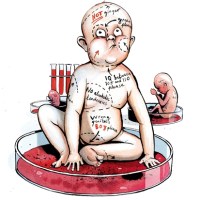
In this week’s issue, Melanie Phillips writes on the issue of gender. She argues that not all children are gender fluid and that it can be dangerous to try and persuade them otherwise. On this week's podcast, Isabel Hardman is joined by Melanie and trans activist and civil servant Jacqui Gavin to discuss whether we should be telling children that they can be whatever gender they want. And is the game over for sport? Simon Barnes argues that, with scandals embroiling tennis, athletics and football, amongst others, the sporting world is in trouble as never before. He says there is a danger that spectators are losing trust and beginning to walk away. Simon is joined by Alex Massie to discuss whether 2016 will be the year that sport finally dies.

Disciplined brutality

From our UK edition

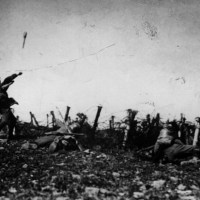
From ‘The Crimes of Germany’, The Spectator, 29 January 1916: It would be a relief, a partial solution, if only one could say that the Germans broke loose from their officers and their habits in a lust of blood and violence. But the terrible fact is that throughout the war we have heard no word of any German regiment being out of hand, or doing otherwise than their officers or the highest authorities desired. They have been a perfectly disciplined army — disciplined to spread red ruin, to oppress, and to bully with a mechanical docility.

Letters | 21 January 2016

From our UK edition

Bureaucratic tyranny Sir: As James Forsyth points out (‘Scary Monsters’, 16 January), David Cameron and other ‘In’ campaign supporters wish voters to base their decision on the short term, as this enables them to highlight the uncertainty and fear factor. But this vote is about the long term, and in 20 years’ time one thing is certain: the ‘ever-closer union’, and all that it means, will exist. What I don’t understand, and what I hope every interviewer will force him to explain, is why David Cameron believes it will be better for Britain to be increasingly ruled by the bureaucratic tyranny that is the EU.

Barometer | 21 January 2016

From our UK edition

Roll out the barrel The price of crude oil dropped below $30 a barrel. Why do we measure it in barrels? — A standard barrel for the purposes of measuring oil is 42 US gallons or 35 imperial gallons. This was the size of a ‘tierce’, a unit for measuring wine in medieval England. — When demand for kerosene provoked an oil rush in Pennsylvania in 1859, producers were so desperate for vessels that they used all kinds of containers. — In August 1866, however, producers met in the town of Titusville to agree on a standard measure. A 42-gallon barrel of oil weighed 300lb:  just enough, it was found, for one man to manoeuvre on his own.