The Spectator

The Spectator podcast: Donald Trump’s angry America

From our UK edition

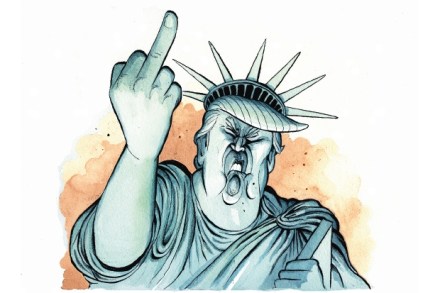
In this week's issue, Freddy Gray discusses Donald Trump's success on Super Tuesday. America has been the world's most benevolent superpower, Freddy says, but now its turning nasty. What does Trump's rise say about America? On the podcast, Freddy tells Isabel Hardman: 'It actually says something quite troubling about America. I think the rise of Trump suggests that America's can-do spirit and very positive outlook on the world is changing. I don't think it's isolationism so much as more a kind of nastiness, that Trump reflects. It's a result of the disappointment in Obama. Trump is a sort of bitter, anti-Obama.
The last of Henry James

From our UK edition

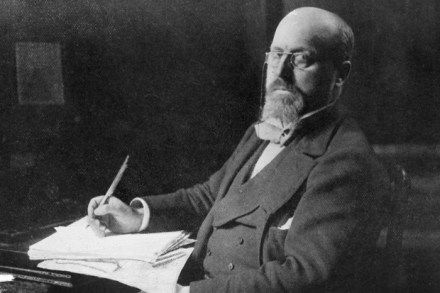
From ‘Henry James’, The Spectator, 4 March 1916: Englishmen are not likely ever to forget the generous thought which inspired the late Henry James to become a naturalised Englishman at the moment of England’s greatest distress… Henry James was good enough to say in substance that he was proud of England and her cause, and that he wished to stand with her in her trial. And now on the sorrowful occasion of his death every Englishman, care he much or little for the great art which the dead man cultivated, will wish to say that he is proud of Henry James.

Letters | 25 February 2016

From our UK edition

In defence of the heads Sir: It is fair for Ysenda Maxtone Graham to criticise heads who garner publicity but neglect the core business of good teaching, if such people exist (‘Big heads’, 20 February). However, targeting Anthony Seldon and Richard Cairns was a mistake. Although both may be what my wife calls ‘media tarts’, Seldon saved two schools which were in great financial difficulties by hugely increasing the number of applicants and Brighton College under Cairns has maintained its trajectory to the upper reaches of the league tables, becoming one of the largest independent schools in the country in the process. Both heads have been outstandingly successful, creating secure and dynamic schools. Both, incidentally, are great classroom teachers.

Portrait of the week | 25 February 2016

From our UK edition

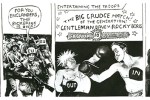
Home David Cameron, having continued talks through the night in Brussels, announced that he had achieved a ‘special status’ for Britain in the European Union and would call a referendum on it for 23 June. One concession he had wrung was that, for seven years, Britain could decide to limit in-work benefits for EU migrants during their first four years in Britain. ‘I do not love Brussels; I love Britain,’ he said. The cabinet met next morning, and six members left by a back door to promote their support for the campaign to leave. The biggest beast among them was Michael Gove, and the others were Chris Grayling, Iain Duncan Smith, Theresa Villiers, John Whittingdale and Priti Patel.

Driven to extremes

From our UK edition

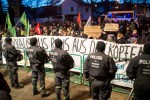
Imagine if Nigel Farage declared that police should be ready to shoot migrants trying to make it from Calais to Britain; saying: ‘I don’t want to do this, but the use of armed force is there as a last resort.’ And imagine that in spite of this — or perhaps because of it — Ukip were to overtake the Labour party in a national poll to become the most popular opposition party. This, in effect, is what is happening in Germany. The words above were spoken by Frauke Petry, leader of Alternative für Deutschland (AfD), the insurgent party which is threatening to make large gains in state elections in three key German regions next month.

What we’re fighting for

From our UK edition

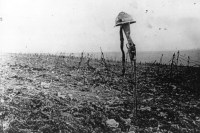
From ‘Justice and Security’, The Spectator, 26 February 1916: If the conditions upon which we are willing to make peace are to be summarised, they cannot be summarised better than by the words Justice and Security. It is for these that we and our Allies are fighting. These are the signs in which we shall win. We do not believe, and never have believed, in the talk about the nation coming out of the war ruined and crippled, and with no capacity left in us to rebuild our civilisation. On the contrary, we are convinced that when the war is over the nation will go forward with renewed energy, not only on the moral and intellectual but on the economic plane.

Cameron fights back: his full statement on the EU deal

From our UK edition

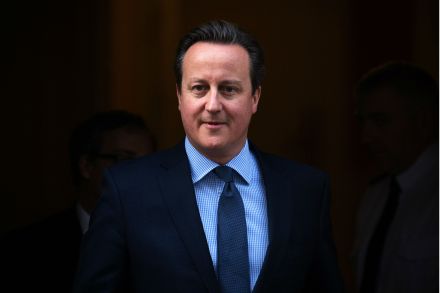
I have spent the last nine months setting out the four areas where we need reform and meeting with all 27 other EU Heads of State and government to reach an agreement that delivers concrete reforms in all four areas. Let me take each in turn. First, British jobs and British business depend on being able to trade with Europe on a level playing field. So we wanted new protections for our economy; to safeguard the pound; to promote our industries – including our financial services industries; to protect British taxpayers from the costs of problems in the Eurozone and to ensure we have a full say over the rules of the single market, while remaining outside the Eurozone. And we got all of those things.

The EU has just called Cameron’s bluff – and won

From our UK edition

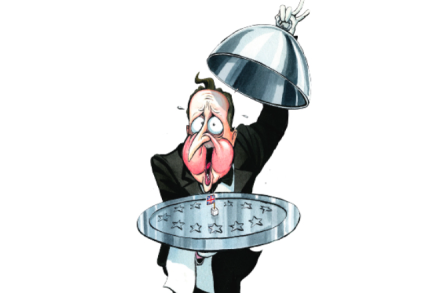
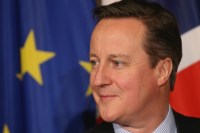
[audioplayer src="http://rss.acast.com/viewfrom22/spectatorpodcastspecial-davidcameronseudeal/media.mp3" title="David Cameron seals the EU deal - but is it any good? Isabel Hardman, James Forsyth and Fraser Nelson discuss" startat=18] Listen [/audioplayer] So in the end, David Cameron’s attempt to renegotiate Britain’s EU membership served to remind us of the case for leaving: the EU is designed in such a way that almost no sensible proposal can be passed. Its negotiations start after dinner, and are designed to drag on until 5am - a formula designed to stifle debate, and to wear people down. The Prime Minister was kept waiting until 10pm to be told that he had agreement on a deal - but one perforated by the bullet holes of other member states.

Letters | 18 February 2016

From our UK edition

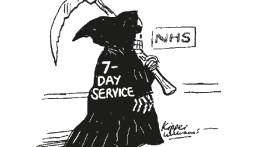
Governmental ignorance Sir: Your leading article (13 February) blames junior doctors for playing with lives in their dispute; but what alternative do they have when confronted with the monumental ignorance of our present government (and the last, and the one before that, for that matter)? The NHS, when it started, was propped up by the amazing dedication of the post-war generation and then the baby-boomers. Even so, by the 1960s it was dependent on cheap foreign labour. If people want a first-class service they have to pay for it. It is about time somebody made our government aware of the facts of life — and the junior doctors seem to have stepped up to the plate.

Portrait of the week | 18 February 2016

From our UK edition

Home David Cameron, the Prime Minister, spent time in Brussels before a meeting of the European Council to see what it would allow him to bring home for voters in a referendum on Britain’s membership of the European Union. The board of HSBC voted to keep its headquarters in Britain. Sir John Vickers, who headed the Independent Commission on Banking, said that Bank of England proposals for bank capital reserves were ‘less strong than what the ICB recommended’. The annual rate of inflation, measured by the Consumer Prices Index, rose to 0.3 per cent in January, compared with 0.2 per cent in December. Unemployment fell by 60,000 to 1.69 million. A dental nurse from Bradford who gave her friend a facelift was struck off the dental register.

The EU must change

From our UK edition

David Cameron’s attempt to renegotiate Britain’s EU membership has served as a powerful reminder of the case for leaving. The EU is designed in such a way that almost no sensible proposal can be passed. If one member state has a good idea, the other 27 members demand a price for approving it, or they demand concessions until it is completely watered down. If the leader of a country protests, the response is clear: What are you going to do? Walk away? You wouldn’t dare. The EU’s power-mongering has a cost. The euro has hideously distorted the economies of the member states that adopted it, and the abolition of so many border controls has worsened the immigration crisis — which, in much of Europe, has fostered a political crisis.