The Spectator

Barometer | 10 March 2016

From our UK edition

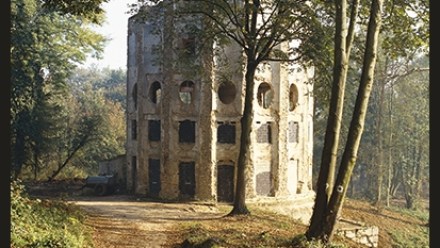
Lonely fortress Weoley Castle in Birmingham was revealed to be the least-visited tourist attraction in England, with 5,205 visitors last year. What is there to see? — It is described as the ruins of a fortified manor house built by the Lords of Dudley as a hunting lodge in the 1270s. Visitors can view the ruins from a platform most days, but can access the stones by special arrangement or for events such as the Easter egg hunt. — It is also possible to hire the Event Space for conferences and corporate events — described as an ‘open-plan multi-functional space with a digital projector and screen, and with room for 30 people’.

Portrait of the week | 10 March 2016

From our UK edition

Home The Bank of England arranged for banks to be able to borrow as much money as they needed around the date of the EU referendum, lest there should be a bank run. After saying in a speech that Britain’s long-term prospects could be ‘brighter’ outside the EU, John Longworth was suspended as director-general of the British Chamber of Commerce, from which he then resigned so that he could speak freely. Four arrests followed the explosion of a bomb in Belfast, which wounded a prison officer working at Maghaberry Prison near Lisburn in Co. Antrim. The law against smoking in public buildings does not apply to prisons in England and Wales, the Appeal Court ruled. The Liberal Democrats called for the legal sale of marijuana through ‘cannabis social clubs’.

Turkey’s blackmail

From our UK edition

Looked at from the narrow perspective of how to deal with the lethal business of human trafficking across the Aegean, this week’s deal between the EU and Turkey shows some encouraging signs. Slowly, the EU seems to be realising that the surest way to stop migrants dying in unseaworthy boats is to adopt similar measures to those used by Tony Abbott the former Australian Prime Minister: turn back the boats, and deport those who land illegally. The Australians paid Malaysia to help handle the migrant problem. The EU is paying Turkey more than £4 billion over the next three years to contain 2.5 million refugees. The problem, however, is that Turkey is being offered more than money.

The Spectator Podcast: the deportation game, Osborne’s leadership chances and the Stepford Students

From our UK edition

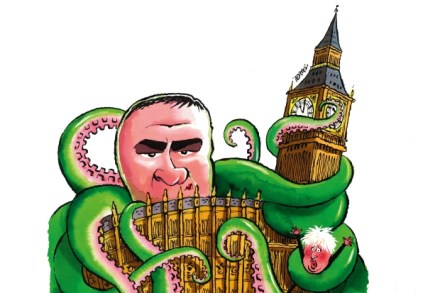
In this week’s cover feature, Rod Liddle and Douglas Murray look at Britain and Europe’s approach to deportation. In Britain, we can’t get rid of jihadis, sex-gang ringleaders and drug lords – so we try to deport old ladies, says Rod. In Europe, it’s worse, says Douglas. Their attitude to migrants is suicidal. Thanks to Britain’s geography and a few sensible decisions by our government, Britain has so far been spared the worst of the migrant crisis. But we should pity most of the other European countries, because they are losing control not just of their borders but of their civilisation and culture.

Against Churchill

From our UK edition

From ‘Colonel Churchill’, The Spectator, 11 March 1916: Colonel Churchill is being found out. The charm, once universal, no longer works, or works only occasionally and on a limited number of those exposed to it… To watch this fevered, this agonised struggle to regain the political fortune which the arch-gambler threw away by his own acts is to witness one of the tragedies of life. But we dare not be compassionate.

Barometer | 3 March 2016

From our UK edition

You can’t do that there ’ere Some of the things which have been banned under Public Spaces Protection Orders, according to a report by the Manifesto Club: Kettering More than four people standing within vicinity of a motor vehicle. Guildford Shouting. Hillingdon Gathering in groups of more than two unless waiting for a bus. Blackpool Engaging in card tricks. Birmingham Wearing face coverings. Shepway Sleeping in a public place. Brent Offering casual work. Shop talk The British Retail Consortium has claimed that 900,000 jobs could be lost by 2025 thanks to the minimum wage and the shift to online sales. Who are the 2.9 million people who work in the retail business? — One third are under 25. — Half work part-time. — 58% are female, 42% male.

Portrait of the week | 3 March 2016

From our UK edition

Home An official analysis by the Cabinet Office said that if Britain left the EU it would lead to a ‘decade of uncertainty’. Opponents of Britain remaining in the EU called the report a ‘dodgy dossier’. George Osborne, the Chancellor of the Exchequer, said that the economy would suffer a ‘profound economic shock’ if Britain left, echoing a communiqué of the G20 which referred to ‘the shock of a potential UK exit’. Boris Johnson revised his suggestion that a vote to leave could bring about a better deal from Brussels; ‘Out is out,’ he told the Times. Sir Jeremy Heywood, the Cabinet Secretary, declared that ministers opposing government policy on the referendum should not be shown government papers on the matter.

The prying game

From our UK edition

One of the marks of a good Home Secretary is a healthy wariness of those in authority who come begging for ever-greater powers. The former Labour Home Secretary Charles Clarke failed on that score. Just over a decade ago, the police persuaded him that they needed the freedom to lock up terror suspects for 90 days without trial. The rebels who defeated the Labour plan were right: ten years later no one has presented a case of a suspect who committed an act of terror because they had to be released before the 90 days were up. Theresa May, who has confronted the police unions with such admirable fortitude, is now showing worrying signs of falling into the same trap as Clarke.

The Spectator podcast: Donald Trump’s angry America

From our UK edition

In this week's issue, Freddy Gray discusses Donald Trump's success on Super Tuesday. America has been the world's most benevolent superpower, Freddy says, but now its turning nasty. What does Trump's rise say about America? On the podcast, Freddy tells Isabel Hardman: 'It actually says something quite troubling about America. I think the rise of Trump suggests that America's can-do spirit and very positive outlook on the world is changing. I don't think it's isolationism so much as more a kind of nastiness, that Trump reflects. It's a result of the disappointment in Obama. Trump is a sort of bitter, anti-Obama.

The last of Henry James

From our UK edition

From ‘Henry James’, The Spectator, 4 March 1916: Englishmen are not likely ever to forget the generous thought which inspired the late Henry James to become a naturalised Englishman at the moment of England’s greatest distress… Henry James was good enough to say in substance that he was proud of England and her cause, and that he wished to stand with her in her trial. And now on the sorrowful occasion of his death every Englishman, care he much or little for the great art which the dead man cultivated, will wish to say that he is proud of Henry James.

Letters | 25 February 2016

From our UK edition

In defence of the heads Sir: It is fair for Ysenda Maxtone Graham to criticise heads who garner publicity but neglect the core business of good teaching, if such people exist (‘Big heads’, 20 February). However, targeting Anthony Seldon and Richard Cairns was a mistake. Although both may be what my wife calls ‘media tarts’, Seldon saved two schools which were in great financial difficulties by hugely increasing the number of applicants and Brighton College under Cairns has maintained its trajectory to the upper reaches of the league tables, becoming one of the largest independent schools in the country in the process. Both heads have been outstandingly successful, creating secure and dynamic schools. Both, incidentally, are great classroom teachers.

Portrait of the week | 25 February 2016

From our UK edition

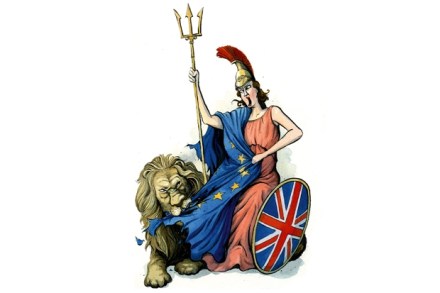
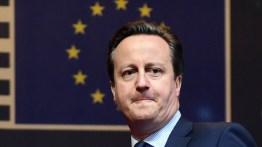
Home David Cameron, having continued talks through the night in Brussels, announced that he had achieved a ‘special status’ for Britain in the European Union and would call a referendum on it for 23 June. One concession he had wrung was that, for seven years, Britain could decide to limit in-work benefits for EU migrants during their first four years in Britain. ‘I do not love Brussels; I love Britain,’ he said. The cabinet met next morning, and six members left by a back door to promote their support for the campaign to leave. The biggest beast among them was Michael Gove, and the others were Chris Grayling, Iain Duncan Smith, Theresa Villiers, John Whittingdale and Priti Patel.

Driven to extremes

From our UK edition

Imagine if Nigel Farage declared that police should be ready to shoot migrants trying to make it from Calais to Britain; saying: ‘I don’t want to do this, but the use of armed force is there as a last resort.’ And imagine that in spite of this — or perhaps because of it — Ukip were to overtake the Labour party in a national poll to become the most popular opposition party. This, in effect, is what is happening in Germany. The words above were spoken by Frauke Petry, leader of Alternative für Deutschland (AfD), the insurgent party which is threatening to make large gains in state elections in three key German regions next month.

What we’re fighting for

From our UK edition

From ‘Justice and Security’, The Spectator, 26 February 1916: If the conditions upon which we are willing to make peace are to be summarised, they cannot be summarised better than by the words Justice and Security. It is for these that we and our Allies are fighting. These are the signs in which we shall win. We do not believe, and never have believed, in the talk about the nation coming out of the war ruined and crippled, and with no capacity left in us to rebuild our civilisation. On the contrary, we are convinced that when the war is over the nation will go forward with renewed energy, not only on the moral and intellectual but on the economic plane.