The Spectator

Barometer | 23 March 2016

From our UK edition

Bottling out Does any country have experience of a sugary drinks tax? — Denmark introduced a tax on sweetened soft drinks in the 1930s which by 2013 was being levied at a rate of €0.22 a litre and brought in €60m a year. — However, the Danish government also estimated that it was losing €38.9m in VAT from illegal soft drink sales. — In 2011, the government also introduced a fat tax, levied at 16 Kroner (£1.78) on food items with more than 2.3% saturated fat, and planned a more general sugar tax. — However, the fat tax was abandoned after 15 months when surveys suggested only 7% of Danes had reduced their fat intake. The tax was, however, blamed for 1,300 lost jobs as Danish shoppers crossed to Germany or Sweden.
Flying start

From our UK edition

From ‘Common-sense and the command of the air’, The Spectator, 25 March 1916: The Air Service will be the great fighting Service, the Service which will seal the fate of nations. We say this, not because the Air Service is a novelty, but because of a plain, undeniable physical fact — the universality of the air… No nation can ever be excluded from the air. Therefore in the last resort the right to live freely and independently will be won and secured by nations in the air.

Belgium is, again, fighting the enemy within

From our UK edition

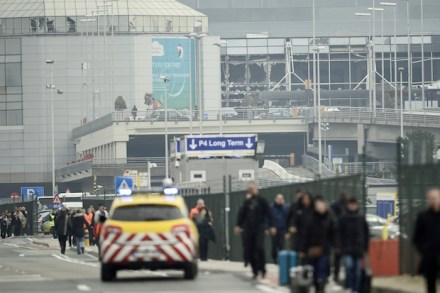
This morning, Belgium became the latest European country to have suffered a major terrorist attack. The scenes in Brussels serve as a grotesque reminder of the war that has not gone away. After the arrest of Salah Abdeslam, chief suspect over atrocities at the Bataclan centre in Paris last November, Belgian officials warned of the prospect of revenge attacks: perhaps spectacular atrocities, aiming at killing hundreds. They came four days later in Brussels airport and Metro — a demonstration of the jihadis’ ability to act quickly. And a reminder that their capacity for atrocity is far from exhausted. After such an attack we can expect to be offered a blizzard of explanations, many of them erroneous.

Letters | 17 March 2016

From our UK edition

More things to ban Sir: In the light of Mick Hume’s piece about politically correct students (‘The left will eat itself’, 12 March), should not Cambridge University be taking immediate steps to remove the works of Cicero from its classics curriculum? After all, like George Washington, he owned slaves. I would only add that, as a former member of Jesus College, I was utterly appalled at its abject surrender to adolescent bigotry and ignorance by the removal of the Benin cockerel. The totalitarian impulse is alive and well. Chris Arthur Durham Scotland and the EU Sir: In half a dozen articles now, your writers have stated that a vote to leave the EU would precipitate Scotland voting to leave the Union.

Why Trump prevailed

From our UK edition

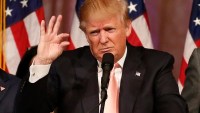
If the Republican party were a company, it would now file for bankruptcy. Donald Trump, arguably the most grotesque candidate ever to have run for the Oval Office, seems certain to be the party’s presidential nominee. The former favourite, Marco Rubio, lost in his home state of Florida on Tuesday and has now bowed out of the race. After seven years of deeply unimpressive government from a divisive and ineffectual Democratic president, American conservatism has been unable to offer voters a convincing alternative. A candidate as flawed as Hillary Clinton should be easy to beat.

Portrait of the week | 17 March 2016

From our UK edition

Home In the Budget, George Osborne, the Chancellor of the Exchequer, kept talking of the ‘next generation’. He outlined cuts of £3.5 billion in public spending by 2020, to be ‘on course’ to balance the books. Personal allowances edged up for lower taxpayers, with the higher-rate threshold rising to £45,000. A ‘lifetime Isa’ for under-40s would be introduced. Corporation tax would go down to 17 per cent by 2020. Small-business rate relief was raised: a ‘hairdresser in Leeds’ would pay none. Fuel, beer, cider and whisky duty would be frozen. To turn all state schools into academies (removing local authorities from education), he earmarked £1.5 billion.

Portugal’s choice

From our UK edition

From ‘Portugal and the war’, The Spectator, 18 March 1916: Portugal in coming into the war may seem to have taken a bold step, but she has really taken the only line of safety.  Our alliance with Portugal has been in existence since 1373. When German merchant vessels sought shelter in the Tagus it was known to the whole world that at any moment Britain — if the event did not come about in any other way — might call upon Portugal to fulfil the terms of one of the most ancient and best known treaties in existence and support her actively in the war.

Full text of Jeremy Corbyn’s Budget speech

From our UK edition

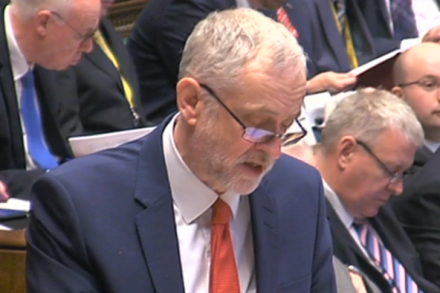
[audioplayer src="http://rss.acast.com/spectatorpolitics/georgeosbornesbudget-2016/media.mp3" title="Fraser Nelson, Isabel Hardman and James Forsyth discuss the Budget"] Listen [/audioplayer]Thank you Mr Deputy Speaker. The Budget the Chancellor has just delivered is actually a culmination of six years of failure. This is a recovery built on sand and a Budget built on failure. The Chancellor has failed on the budget deficit failed on debt, failed on investment, failed on productivity, failed on the trade deficit, failed on his own welfare cap and failed to tackle inequality in this country. And today Mr Deputy Speaker, he’s announced growth is revised down. Last year, this year, every year they forecast business investment revised down, government investment revised down.

George Osborne’s 2016 Budget: full audio and text

From our UK edition

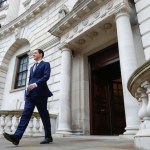
Mr Deputy Speaker, Today I report on an economy set to grow faster than any other major advanced economy in the world. I report on a labour market delivering the highest employment in our history. And I report on a deficit down by two thirds, falling each year and – I can confirm today – on course for a budget surplus. The British economy is stronger because we confronted our country’s problems and took the difficult decisions. The British economy is growing because we didn’t seek short term fixes but pursued a long term economic plan. The British economy is resilient because whatever the challenge, however strong the headwinds, we have held to the course we set out.

Budget 2016 – the key announcements

From our UK edition

[audioplayer src="http://rss.acast.com/spectatorpolitics/georgeosbornesbudget-2016/media.mp3" title="Fraser Nelson, Isabel Hardman and James Forsyth discuss today's Budget"] Listen [/audioplayer] Sugar tax on drinks with over 8pc sugar from 2018. A tax on the poor. Chunky growth downgrades. This year, GDP to grow at 2.0pc (down from 2.4pc) next years at  2.2pc (down from 2.5pc) and at 2.1pc (down from 2.4pc) in 2018/19. Debt target published just six months ago has been missed already because debt/GDP ratio is still rising. Corporation tax to be cut to 17pc by 2020, an improvement on previous 18 per cent target. About the only bit of good news. A mighty £1.

Barometer | 10 March 2016

From our UK edition

Lonely fortress Weoley Castle in Birmingham was revealed to be the least-visited tourist attraction in England, with 5,205 visitors last year. What is there to see? — It is described as the ruins of a fortified manor house built by the Lords of Dudley as a hunting lodge in the 1270s. Visitors can view the ruins from a platform most days, but can access the stones by special arrangement or for events such as the Easter egg hunt. — It is also possible to hire the Event Space for conferences and corporate events — described as an ‘open-plan multi-functional space with a digital projector and screen, and with room for 30 people’.

Portrait of the week | 10 March 2016

From our UK edition

Home The Bank of England arranged for banks to be able to borrow as much money as they needed around the date of the EU referendum, lest there should be a bank run. After saying in a speech that Britain’s long-term prospects could be ‘brighter’ outside the EU, John Longworth was suspended as director-general of the British Chamber of Commerce, from which he then resigned so that he could speak freely. Four arrests followed the explosion of a bomb in Belfast, which wounded a prison officer working at Maghaberry Prison near Lisburn in Co. Antrim. The law against smoking in public buildings does not apply to prisons in England and Wales, the Appeal Court ruled. The Liberal Democrats called for the legal sale of marijuana through ‘cannabis social clubs’.

Turkey’s blackmail

From our UK edition

Looked at from the narrow perspective of how to deal with the lethal business of human trafficking across the Aegean, this week’s deal between the EU and Turkey shows some encouraging signs. Slowly, the EU seems to be realising that the surest way to stop migrants dying in unseaworthy boats is to adopt similar measures to those used by Tony Abbott the former Australian Prime Minister: turn back the boats, and deport those who land illegally. The Australians paid Malaysia to help handle the migrant problem. The EU is paying Turkey more than £4 billion over the next three years to contain 2.5 million refugees. The problem, however, is that Turkey is being offered more than money.

The Spectator Podcast: the deportation game, Osborne’s leadership chances and the Stepford Students

From our UK edition

In this week’s cover feature, Rod Liddle and Douglas Murray look at Britain and Europe’s approach to deportation. In Britain, we can’t get rid of jihadis, sex-gang ringleaders and drug lords – so we try to deport old ladies, says Rod. In Europe, it’s worse, says Douglas. Their attitude to migrants is suicidal. Thanks to Britain’s geography and a few sensible decisions by our government, Britain has so far been spared the worst of the migrant crisis. But we should pity most of the other European countries, because they are losing control not just of their borders but of their civilisation and culture.

Against Churchill

From our UK edition

From ‘Colonel Churchill’, The Spectator, 11 March 1916: Colonel Churchill is being found out. The charm, once universal, no longer works, or works only occasionally and on a limited number of those exposed to it… To watch this fevered, this agonised struggle to regain the political fortune which the arch-gambler threw away by his own acts is to witness one of the tragedies of life. But we dare not be compassionate.